


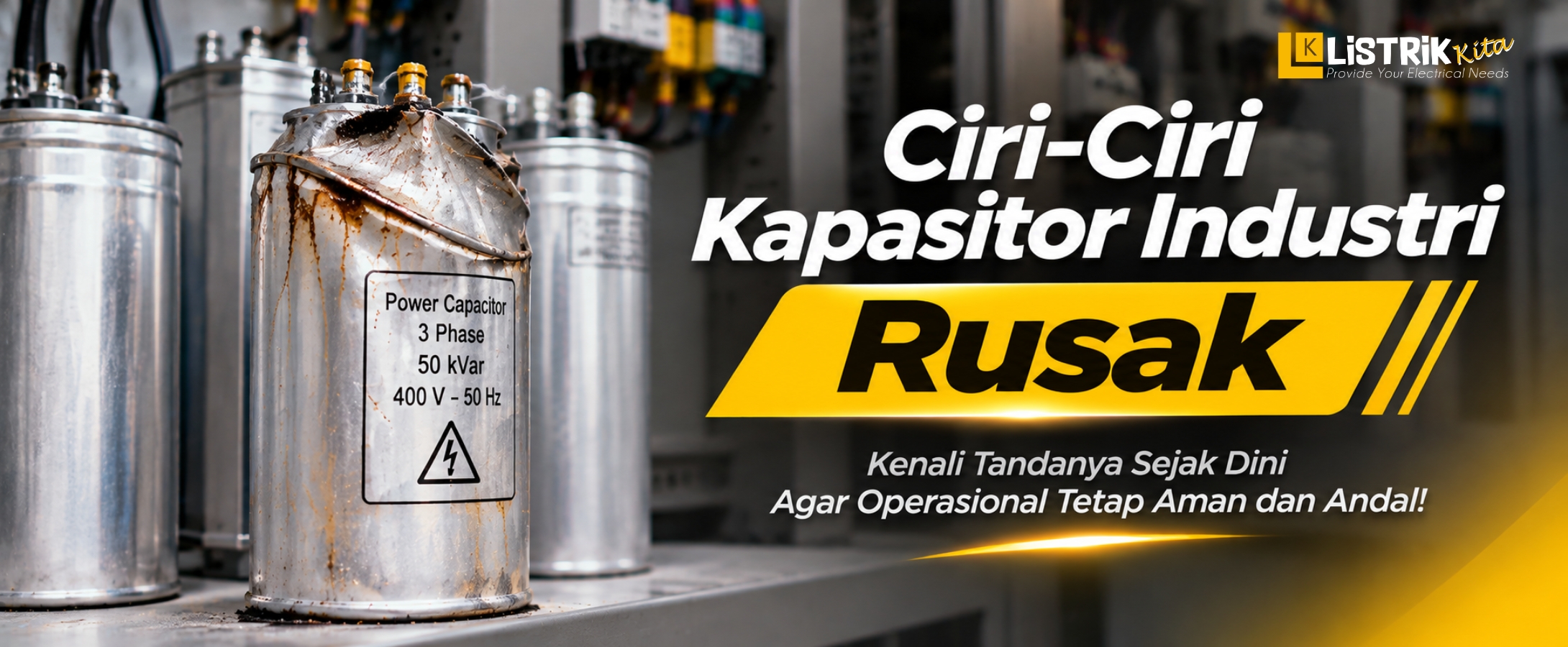
Capacitors are important components in industrial electrical systems. They are used in various applications, including electric motors and capacitor banks, to support the performance of electrical systems. Since capacitors can operate continuously in demanding conditions, their performance may decrease over time. Listrik Kita is an official Schneider Electric distributor that provides original and warranted products for various electrical needs.
Knowing the signs of a damaged industrial capacitor can help identify problems before they affect machine operation. Capacitor damage is not always easy to see. In some cases, the problem can be identified through physical changes, unusual machine symptoms, or measurement results from a suitable testing device.
Physical Signs of a Damaged Industrial Capacitor
A visual inspection can be a good first step when checking a capacitor. Several physical changes may indicate that the component is no longer in good condition.
Swollen or Broken Capacitor
One of the easiest signs to notice is a change in the capacitor's shape. A capacitor that looks swollen, cracked, or broken may indicate internal damage or abnormal pressure inside the component.
If this condition is found, the capacitor should not simply be used again. Further inspection is needed to identify the cause of the damage and determine whether the component is still suitable for use.
Liquid or Oil Leakage
Some types of capacitors contain liquid or other materials as part of their construction. Liquid or oil leaking from the capacitor can be a sign of damage.
A leak should not be ignored, especially when it occurs together with changes in the capacitor's shape or color. The capacitor should be checked as soon as possible to prevent the problem from affecting nearby components.
Discoloration or Burn Marks
A capacitor exposed to excessive heat may show changes in its external appearance. Darkened, discolored, or burnt-looking areas can indicate that the capacitor has experienced abnormal heating.
This condition should be inspected because overheating can affect the capacitor's service life and performance.
Burning Smell
A burnt or unusual smell around a capacitor should also be taken seriously. It may be caused by excessive heat or damage to the internal parts or insulation.
If a burning smell appears together with other physical signs, inspect the capacitor and the related electrical system immediately.
Symptoms of a Damaged Capacitor in Machines and Loads
Capacitor damage is not only visible from the outside. Changes in machine performance can also indicate that a capacitor is no longer working properly.
Induction Motor Fails to Start or Only Hums
In certain applications, a capacitor helps a motor achieve the required starting condition. When the capacitor has a problem, the motor may have difficulty starting or may only produce a humming sound without rotating normally.
When this happens, the capacitor should be checked along with other components related to the motor starting system.
Reduced Motor Performance or Torque
A capacitor with reduced performance can affect the way a system operates. One possible symptom is lower motor performance or reduced torque compared with what the load normally requires.
This condition can affect production performance, especially when the machine needs the motor to operate consistently.
Motor Overheating
A motor operating under abnormal electrical conditions may experience a higher temperature. If a motor becomes hotter than usual, the capacitor and other related components should be inspected.
Continuous overheating can shorten the motor's service life and increase the risk of system failure.
Higher Current or Increased Energy Consumption
A capacitor that is no longer performing properly can affect the efficiency of an electrical system. One possible indication is a change in current or higher energy consumption than normal.
For this reason, changes in electricity usage can also be considered when checking the condition of an electrical system.
Capacitor Bank Does Not Work Properly
In systems that use capacitor banks, damage to one or more capacitor units can reduce the effectiveness of reactive power compensation. This can result in a less optimal power factor and affect the overall efficiency of the electrical system.
Regular inspection of capacitor banks is important to make sure that each capacitor unit continues to operate according to the requirements of the installation.
Signs of a Damaged Capacitor from Test Results
Besides visual inspection and machine symptoms, the condition of a capacitor can be checked using a suitable testing device. Measurement results can help determine whether the capacitor is still operating within its expected condition.
Capacitance Value Drops Below the Specification
Every capacitor has a capacitance value stated in its specifications. If a measurement shows that the capacitance has dropped significantly from the specified value, the capacitor may have lost some of its performance.
The measured value should be evaluated based on the manufacturer's specifications and allowed tolerance.
Capacitor Has a Short Circuit
A damaged capacitor may also show a short circuit condition. This means there is an unwanted electrical connection inside the component.
A capacitor suspected of having a short circuit should not simply be put back into operation. It needs to be inspected and handled according to proper electrical safety procedures.
Capacitor Has an Open Circuit
A capacitor can also fail in an open circuit condition. In this situation, the capacitor can no longer perform its intended electrical function.
A test result showing an open circuit is an indication that the capacitor requires further inspection or replacement.
Why Should a Damaged Industrial Capacitor Be Handled Quickly?
A capacitor that already shows signs of damage should not be left unchecked for too long. A faulty component can affect the performance of motors, capacitor banks, and the overall electrical system.
Regular inspection can help identify problems at an early stage. In addition to checking the physical condition, technicians should monitor changes in machine performance and perform measurements using suitable testing equipment.
If you need capacitors for industrial applications, choose a product with specifications that match your electrical system and application. Buy Schneider Electric capacitors at Listrik Kita to get original and warranted products for various industrial electrical needs. Make sure to select the right capacitor type and specification so your system can operate properly and efficiently.
