


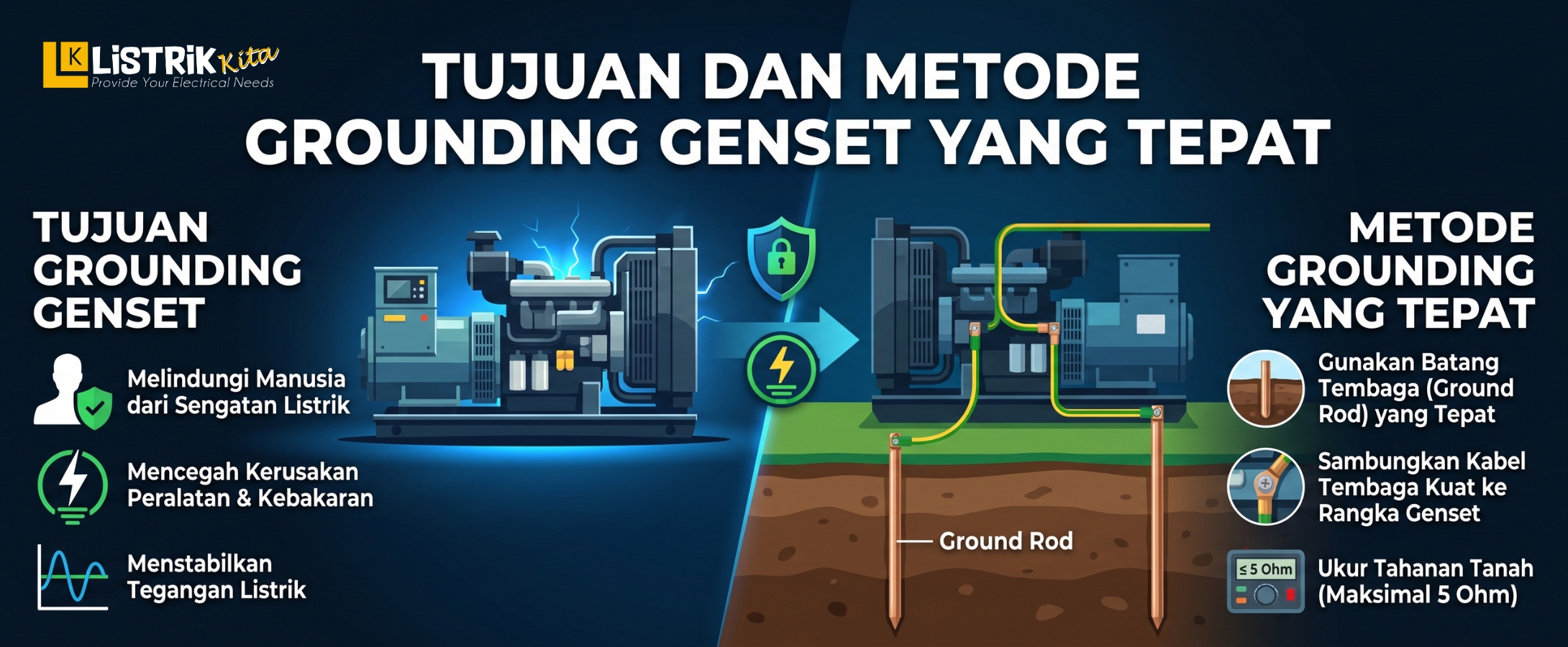
Safety is one of the most important factors in any power generation installation. One of the systems that supports electrical safety is grounding. Listrik Kita is a Nurinda partner that provides original and warranty-backed products, including generator sets for various electrical applications. However, having a generator alone is not enough. A properly designed grounding system is also needed to support safe operation and allow the protection system to work properly.
Purpose and Benefits of Generator Grounding
Generator grounding is the process of connecting certain parts of an electrical system and exposed metal parts of equipment to earth through a conductive path. Its main purpose is to provide a safe path for fault current and reduce the risk of electric shock, equipment damage, and electrical system problems.
What Is Grounding in a Generator?
Grounding is part of an electrical system that connects specific equipment or system points to earth. In a generator installation, grounding may involve the generator frame, neutral point, distribution panel, and other equipment connected to the generator.
When a fault occurs, such as leakage current or contact between a live conductor and a metal part, grounding provides a path for the fault current. This allows protective devices to detect abnormal conditions and disconnect the power supply as intended.
Why Does a Generator Need Grounding?
A generator produces electrical energy that can become dangerous when insulation faults or current leakage occur. Without a properly designed grounding system, exposed metal parts can become hazardous during a fault.
Grounding also helps establish a clearer electrical reference point. This is especially important when a generator is used as the main power source or as a backup power source.
Benefits of Proper Generator Grounding
A properly designed and installed grounding system provides several benefits:
- Reduces the risk of electric shock to operators.
- Provides a path for fault current to earth.
- Helps protective devices operate properly.
- Reduces the risk of electrical equipment damage.
- Improves the overall safety of the installation.
With proper grounding, fault conditions can be handled more effectively, reducing risks to people and equipment.
What Happens Without Proper Generator Grounding?
Improper grounding can increase safety risks and prevent protection systems from operating as intended. In some situations, fault current may not have an effective path to activate the protective device.
Incorrect grounding and neutral arrangements can also cause current to flow through unintended paths. For this reason, generator grounding should be designed based on the generator configuration, distribution system, load characteristics, and protection devices being used.
Common Grounding Methods for Generators
Not every generator installation uses the same grounding method. The appropriate method depends on the characteristics and requirements of the electrical system.
Solid Grounding
Solid grounding is a method where the neutral point of the power source is connected to the grounding system without significant additional impedance.
What Is Solid Grounding?
With this method, the connection between the neutral point and ground has low impedance. When a ground fault occurs, fault current can flow through this path, allowing the protection system to detect the fault and disconnect the circuit.
Advantages and Disadvantages of Solid Grounding
One advantage is its relatively simple design. However, ground fault current can become high, so the capacity of the equipment and protection system must be properly considered.
Impedance Grounding
Impedance grounding uses an impedance component between the generator neutral point and the grounding system. This method can be used to limit the amount of ground fault current.
What Is Impedance Grounding?
The impedance may use a resistor or reactor depending on the system design. By limiting fault current, thermal and mechanical stress on electrical equipment can be reduced during a fault.
When Is Impedance Grounding Used?
This method can be considered for installations that require better control of ground fault current. The selection should consider generator capacity, distribution system configuration, load characteristics, and the protection system.
System and Equipment Grounding
System grounding and equipment grounding are closely related, but they serve different purposes.
Difference Between System and Equipment Grounding
System grounding refers to grounding a specific point in the power system, such as the neutral point. Equipment grounding, on the other hand, connects exposed metal parts that people may touch to the grounding system.
Examples include generator frames, electrical panels, enclosures, and other metal equipment. If an insulation fault occurs, equipment grounding provides a path for fault current and helps reduce the risk of dangerous touch voltage.
Why Is Equipment Grounding Important for Generators?
All parts that require grounding should have connections that match the installation design. Grounding conductors should also have suitable sizing and routing so they can perform their function during a fault.
Neutral Arrangement and Bonding
In addition to grounding, the relationship between the neutral and grounding system must also be considered. An incorrect arrangement can cause neutral current to flow through grounding conductors.
The Function of Neutral in a Generator System
The neutral point acts as a reference in certain electrical systems and is an important part of power distribution. Whether the generator neutral should be bonded to ground depends on the system design and the configuration of the power source.
What Is Neutral Bonding?
Neutral bonding is the connection between the neutral conductor and the grounding system at a designated point. The bonding point should be clearly designed to prevent unwanted parallel paths for neutral current.
Single Point Bonding in Generator Systems
In certain systems, single point bonding is used to ensure that the neutral-to-ground connection is made at a designated location. This helps prevent neutral current from flowing through grounding paths in an unintended manner.
How to Choose the Right Generator Grounding Method
The grounding method should not be selected based only on the generator type. The complete electrical system must also be considered.
Consider the Generator Electrical System
Consider the power source configuration, number of phases, distribution system, and how the generator is connected to the electrical panel and loads.
Consider the Type of Load
Load characteristics are also important. Residential installations, commercial buildings, industrial facilities, and systems with sensitive equipment may have different grounding requirements.
Match the Grounding System with Protection Devices
Grounding should work together with protection devices such as MCBs, MCCBs, protection relays, and ground fault protection devices. A properly designed system should allow faults to be detected and handled quickly.
Follow Applicable Electrical Standards
Generator grounding should be designed and installed according to applicable electrical standards and by qualified personnel. Testing and inspection are also important to ensure that the grounding system remains in proper condition.
Generator grounding is an important part of an electrical system because it directly affects personal safety, equipment protection, and the performance of protection systems. Common methods include solid grounding, impedance grounding, system and equipment grounding, as well as neutral arrangement and bonding. Each method has its own characteristics and should be selected according to the installation design and electrical requirements.
If you are looking for a Nurinda e genset for residential, commercial, building, or other applications, Listrik Kita provides original Nurinda products with warranty coverage. Explore the available Nurinda e genset products at ListrikKita.com and find the option that matches your electrical needs.
