


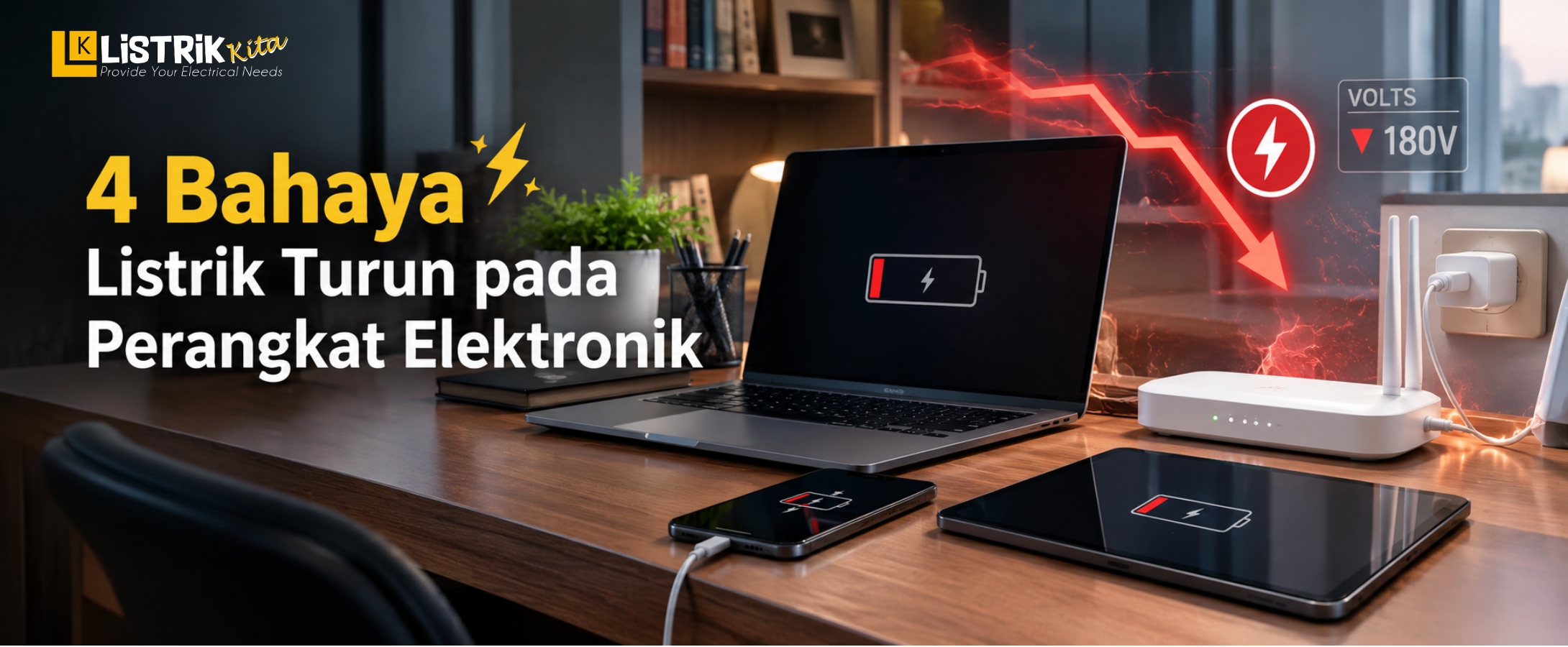
Have you ever noticed your lights suddenly becoming dim or an electronic device turning off and restarting? These can be signs that the electrical voltage is dropping or becoming unstable. If it happens occasionally, the effect may not be immediately noticeable. However, repeated voltage drops can affect the performance and durability of electronic devices. Listrik Kita is an official Schneider Electric distributor providing original and warranted products, including electrical devices designed to support reliable electrical systems.
What Does Low Voltage Mean?
Low voltage, also known as undervoltage, occurs when the voltage supplied to a device is below its expected operating level. Electrical equipment is designed to operate within a specific voltage range to perform properly.
Voltage drops can happen for several reasons, including excessive electrical loads, long cable distances, incorrect cable sizes, poor connections, or problems with the power supply network.
A device may still turn on when the voltage drops, but that does not always mean it is operating safely. Some equipment, especially devices with motors or sensitive electronic components, can be affected when the power supply is not within the proper range.
4 Reasons Low Voltage Can Be Dangerous for Electronics
1. It Makes Motors Work Harder
Equipment such as refrigerators, air conditioners, water pumps, washing machines, and compressors use motors to operate. When the voltage drops, the motor may have difficulty maintaining the same performance as it would under normal voltage conditions.
In some situations, the motor may draw more current to maintain its power. If this continues for a long period, the motor temperature can increase. Excessive heat can affect the components inside the motor and increase the risk of damage.
That is why frequent voltage drops should not be treated as a minor issue, especially when several motor-driven appliances are operating at the same time.
2. It Can Damage Digital Components
Modern electronic devices use more digital components and electronic control systems than ever before. Examples include computers, TVs, routers, CCTV systems, smart home devices, and modern household appliances.
These components require a suitable power supply to operate properly. When the voltage becomes unstable, a device may restart by itself, shut down unexpectedly, show errors, or operate inconsistently.
Not every disturbance will cause permanent damage. However, repeated exposure to unstable voltage can put stress on electronic circuits over time.
3. It Can Cause Overheating and Increase Fire Risk
One potential effect of low voltage is increased workload on certain types of equipment. Electric motors, for example, may work harder when the supplied voltage is not sufficient.
If this condition continues for a long time, heat can build up inside the components. If the electrical installation, connections, cables, or protection system are also not properly designed, the risk of heat-related damage can become higher.
Overheating should never be ignored. If a device becomes unusually hot, produces a burning smell, or behaves abnormally, it should be checked before continued use.
4. It Can Shorten Equipment Life
Electronic devices are designed to operate under specific electrical conditions. Frequent and unstable voltage drops can cause components to operate outside their ideal conditions.
When this happens repeatedly, device performance may decrease and certain components may wear out faster. As a result, the equipment may require maintenance or component replacement sooner than expected.
Maintaining a stable power supply is therefore not only about keeping equipment running. It can also help maintain performance and extend equipment life.
What Happens If the Voltage Drops Frequently?
Devices May Not Work Properly
The signs of low voltage can vary depending on the equipment. Lights may become dim, water pumps may lose performance, air conditioners may not work efficiently, or digital devices may suddenly restart.
If these symptoms happen repeatedly, it is better to investigate the cause rather than simply ignore them.
The Risk of Damage Can Increase
The more often a device receives an unsuitable power supply, the greater the chance of problems affecting certain components. For this reason, unstable voltage should be taken seriously, especially in installations with many electronic devices.
How Can You Protect Electronics from Low Voltage?
Use the Right Protection Devices
One step you can take is to use electrical protection and control devices that match the needs of the installation. The selection should consider the type of load, operating voltage, system capacity, and required protection.
A relay can be used as part of an electrical control and protection system to help monitor or control electrical conditions according to its function and specifications.
Check the Electrical Installation
If voltage drops happen frequently, do not focus only on the electronic devices. The electrical installation should also be inspected. Cables, connections, panels, load capacity, and protection devices should be checked to make sure they match the system requirements.
Having the installation checked by a qualified technician can help identify the cause of unstable voltage and determine the appropriate solution.
Frequent voltage drops can cause more than just reduced device performance. Motors may work harder, digital components can experience problems, overheating can occur, and repeated stress may shorten equipment life. To help monitor and control electrical systems, choose the right Schneider Electric relay for your installation needs. Find original and warranted Schneider Electric relays at Listrik Kita.
