


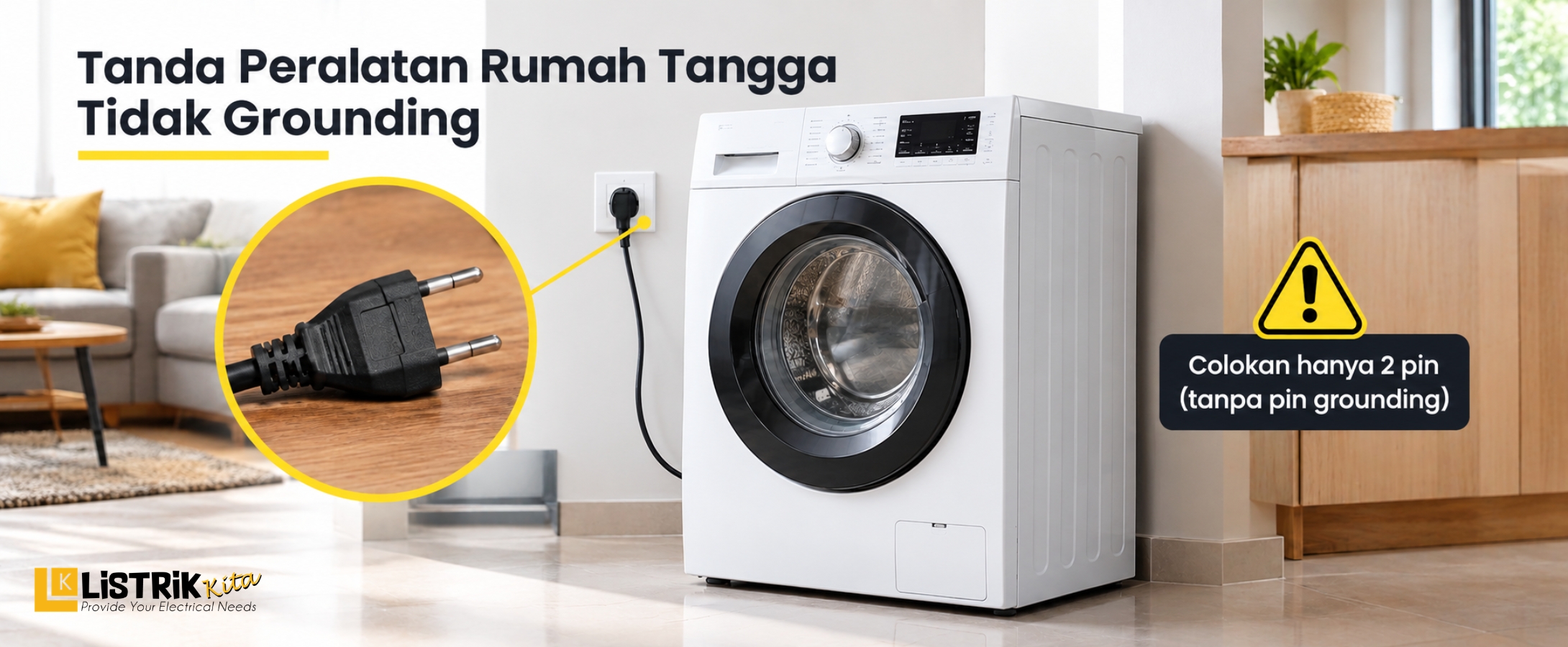
Grounding problems in household appliances are not always easy to see. However, signs such as a tingling sensation when touching a metal casing, a test pen lighting up on the appliance body, or repeated electrical problems may indicate an issue with the electrical installation. Listrik Kita is a Hioki partner that provides original and warranty-backed products for your electrical measurement needs.
Why Is Grounding Important for Household Appliances?
The Role of Grounding in Electrical Safety
Grounding is an important part of an electrical installation because it provides a path for fault current to flow safely to the ground. Under certain fault conditions, proper grounding helps reduce the risk of dangerous voltage appearing on metal parts that people may touch.
Appliances such as refrigerators, washing machines, water dispensers, ovens, water pumps, and other electronic devices may have metal parts that can become hazardous when current leakage occurs. This is why proper grounding is an important part of household electrical safety.
What Happens When an Appliance Has No Grounding?
When grounding is missing or does not work properly, fault current under certain conditions may cause a metal appliance body to have a voltage relative to ground. This can increase the risk of electric shock, especially when the appliance is touched while the user or surrounding area is wet.
Common Signs of an Ungrounded Household Appliance
A Test Pen Lights Up on the Metal Body
One common initial check is to use a test pen on the metal part of an appliance. If the test pen lights up, it may indicate the presence of voltage on the casing.
However, this result does not automatically mean that the grounding system is damaged or missing. A test pen only provides an indication of voltage and cannot confirm the overall condition of the grounding system.
The Appliance Body Feels Tingly or Vibrates
A tingling, mild shock, or vibrating sensation when touching a metal casing is a sign that should not be ignored. The risk can become higher when the appliance is used in a wet area, such as a kitchen, laundry area, or bathroom.
If this happens, avoid repeatedly touching the metal surface to test it yourself. Turn off and disconnect the appliance if it is safe to do so, then have the electrical system checked.
The Outlet Has Only Two Holes
A two-hole outlet generally does not provide a separate grounding contact like an outlet designed with a ground connection. However, the shape of the outlet alone cannot confirm the condition of the entire grounding system.
The installation should also be checked to determine whether a grounding conductor is present and properly connected.
Electronic Modules Fail Often or the MCB Trips Frequently
Repeated electronic failures may make homeowners suspect an electrical installation problem. However, frequent MCB trips or damaged electronic modules are not always caused by grounding issues.
Overloading, short circuits, loose connections, component failure, and other installation problems can also be responsible. A complete inspection is therefore needed before identifying the actual cause.
The Casing Feels Hot or There Is an Unusual Smell
An appliance casing that feels unusually hot or produces a smell similar to burning plastic should be taken seriously. This may be related to poor connections, damaged wiring, overheating components, or other electrical problems.
Do not ignore these signs because excessive heat can lead to equipment damage and potentially increase the risk of fire.
How to Detect an Ungrounded Appliance
Using a Test Pen: What Can It Detect?
A test pen can be used as an initial check to see whether there is an indication of voltage at a certain point. It is practical and easy to use, but its capabilities are limited.
A test pen cannot provide complete information about grounding quality, grounding conductor continuity, or whether the grounding system can properly carry fault current.
Using a Multimeter: More Informative Results
A multimeter can provide more detailed information because it can perform different electrical measurements depending on its function and how it is used. Compared with relying only on a test pen, a multimeter can help measure voltage and check certain circuit conditions with measurable results.
However, electrical measurements must still be performed using the correct method. Do not measure energized parts if you do not understand proper electrical safety procedures.
Why Is a Test Pen Not Enough?
A test pen provides only a limited indication and is not designed to evaluate the complete condition of a grounding system. Induced voltage and certain circuit conditions can also affect the test result.
For this reason, if an appliance appears to have a grounding problem, do not make a final conclusion based only on a test pen. Using the correct measuring instrument and checking the electrical installation as a whole can provide a clearer picture.
Real Risks of Using Ungrounded Household Appliances
Risk of Electric Shock
One of the most important risks is electric shock. If leakage current reaches the metal part of an appliance, a person may receive an electric shock when touching it. The risk can increase when the person's hands or the floor are wet.
Risk of PCB and Inverter Damage
Many modern household appliances use electronic components such as PCBs and inverters. Certain electrical disturbances can affect these components and cause the appliance to malfunction.
However, PCB or inverter damage is not always caused by grounding problems. Proper diagnosis still requires checking both the appliance and the electrical installation.
Protection May Not Work Properly Under Certain Fault Conditions
Grounding is one part of an electrical safety system and works together with protection devices according to the installation design. MCBs, RCCBs, and RCBOs have different protection functions.
Therefore, an improper grounding system can affect the effectiveness of protection under certain fault conditions. The entire protection system should be designed and inspected as a whole rather than focusing on only one component.
Risk of Excessive Heat and Fire
Electrical faults, poor connections, unsuitable wiring, or overheating components can increase the risk of fire. If you notice a burning smell, sparks, or abnormal heat, stop using the appliance if it is safe to do so and contact a qualified technician.
What Should You Do If an Appliance May Not Be Grounded?
Do Not Ignore a Tingling Sensation on the Casing
A tingling sensation from an appliance casing should not be considered normal. Avoid repeatedly touching the metal surface just to check whether the sensation is still present.
If it is safe, turn off the appliance and disconnect the power before further inspection.
Check the Electrical Installation and Grounding System
The inspection should cover the outlet, wiring, grounding terminal, and electrical connections. Using the correct measuring instrument can provide more reliable information than relying only on visual inspection.
Ask a Qualified Technician for Further Inspection
If you do not have the knowledge or experience required to perform electrical measurements, avoid opening or modifying the installation yourself. A qualified technician can inspect the appliance and electrical installation using the appropriate procedures.
Grounding is an important part of household electrical safety. A test pen can be useful for an initial check, but it is not enough to confirm the condition of a grounding system. A multimeter can provide more detailed measurement information when used correctly.
If you need a measuring instrument for electrical inspections, Listrik Kita provides original Hioki multimeters with warranty. Explore Hioki multimeter options at ListrikKita.com and choose the model that matches your electrical measurement needs.
