


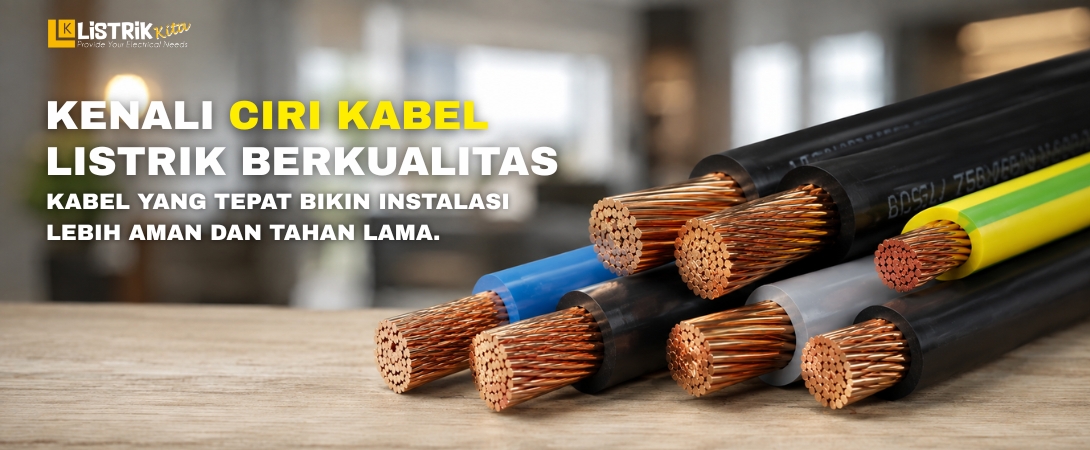
Choosing an electrical cable is not only about looking at its size or price. A cable may look good from the outside but still have poor conductor or insulation quality. Cables play an important role in electrical installations because they carry electrical current from one point to another.
Poor-quality cables can affect the performance of an electrical installation and may cause problems if they are used without proper inspection. That is why it is useful to know a few simple ways to check whether a cable has good quality or should be avoided.
Check the Cable Core or Conductor
One way to check cable quality is by looking at the conductor inside the cable. This is the part that carries electrical current, so the material used has an important effect on the cable's ability to conduct electricity.
The cable must be completely disconnected from any power source before checking the conductor. The metal inside can then be inspected carefully. Copper conductors usually have a distinctive yellowish or reddish copper color.
Good Cables Use Quality Copper Conductors
A cable with a good copper conductor should still show its copper color when the surface is carefully scraped. The color generally remains yellowish or reddish and should not turn white after the surface layer is removed.
Copper is widely used as a conductor because it has good electrical conductivity. For this reason, checking the cable core can be an initial way to identify cable quality.
However, color should not be the only factor used to judge a cable. The cable specification, type, brand, and applicable product standards should also be considered.
Be Careful with Cables That Have Mixed Conductors
Cables made from different or mixed conductor materials may show different colors inside. One condition to watch for is when the inside appears white or silver after the surface is scraped.
This may indicate that the conductor is not pure copper. However, a visual inspection is only an initial check. More detailed testing is needed to accurately identify the conductor material.
Most importantly, never scrape or cut a cable while it is connected to an electrical power source. Always make sure the power has been disconnected before checking the cable.
Check the Quality of the Cable Insulation
The cable core is not the only part that needs attention. The insulation is also important. It covers the conductor and helps protect it from direct contact and physical damage.
The quality of the insulation can be checked by looking at its physical condition. A good cable generally has insulation that does not easily break or become damaged during proper handling.
Good Cable Insulation Is Not Easily Damaged
Good-quality insulation is usually stronger and does not easily tear or crumble. When the cable is cut with the proper tool, the insulation should maintain its structure instead of immediately breaking into pieces.
This indicates that the insulation material has good physical strength. Good insulation is important because it helps keep the conductor protected during normal use.
Poor Cable Insulation Can Be Brittle
Poor-quality insulation may show signs such as cracking, breaking, or becoming brittle when the cable is cut. Insulation that breaks apart easily should be treated with caution, especially when the cable will be used in a long-term electrical installation.
Do not judge insulation quality only by its thickness. The material and manufacturing quality also affect how durable the cable will be. Choosing products from trusted manufacturers and sellers is therefore important.
Check Whether the Cable Has an SNI Label
Another important step is checking the standard information on the cable or its packaging. For cable types that are subject to mandatory standards, an SNI mark can be one of the things to consider when choosing a product in Indonesia.
Good Cables Have Clear SNI Information
Check the cable surface and packaging for product information. Besides the SNI mark, look for details such as the brand, cable type, conductor size, working voltage, and other technical specifications.
Clear product information helps buyers understand what they are purchasing and determine whether the cable is suitable for their installation. It is also a good idea to purchase cables from a distributor or seller that can provide clear product information.
Do Not Ignore Cables Without the Required SNI Information
A cable without the required standard information should not be chosen simply because it is cheaper. For electrical installations, quality and specification should be more important than price alone.
Keep in mind that not every type of cable has the same SNI requirements. Therefore, the applicable standards should be checked based on the specific cable type and product regulations.
So, How Can You Tell if a Cable Is Good or Poor Quality?
There are three basic areas you can check before buying or using a cable: the conductor, the insulation, and the product's standard information.
A good-quality cable generally has a conductor that matches its specifications, durable insulation, and clear product and standard information. On the other hand, a suspicious-looking conductor, brittle insulation, or incomplete product information should be treated as warning signs.
These simple checks cannot replace laboratory testing, but they can help consumers make more informed choices before purchasing a cable.
Do Not Choose an Electrical Cable Carelessly
Cables are an important part of an electrical installation, so choosing one should not be based on price alone. Make sure the cable has the right specifications, a suitable conductor material, durable insulation, and clear product information.
If you are looking for quality cables for residential, commercial, or industrial applications, explore the cable products available from Listrik Kita. Choose a cable that matches your installation requirements and buy quality electrical cables from Listrik Kita.
