


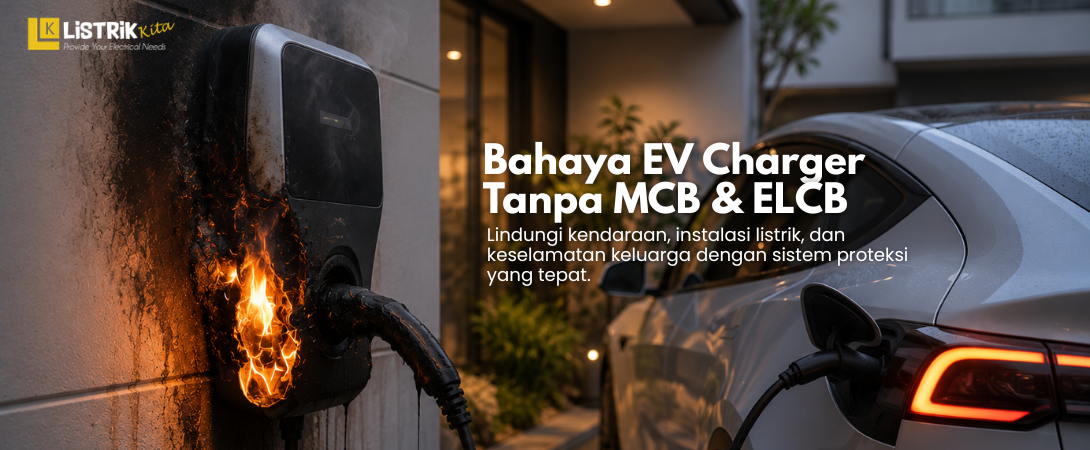
Electric vehicles are becoming more popular because they are energy efficient and environmentally friendly. However, many EV owners pay attention only to charging speed and overlook the importance of electrical protection. Using an EV charger without an MCB and ELCB can increase the risk of fire, electric shock, and expensive damage to your vehicle.
To keep EV charging safe, every charging installation should include the proper protection devices. Here is what you need to know.
What Are MCB and ELCB in an EV Charger?
An MCB, or Miniature Circuit Breaker, is a safety device that automatically disconnects the power when an overload or short circuit occurs. It helps protect electrical wiring and connected equipment from excessive current.
An ELCB, or Earth Leakage Circuit Breaker, is designed to detect current leakage to the ground. If leakage is detected, it quickly cuts off the power to reduce the risk of electric shock.
Although both devices improve electrical safety, they serve different purposes. An MCB protects against overloads and short circuits, while an ELCB protects people from dangerous leakage currents. This is why both devices should be installed together in an EV charging system.
Serious Risks of Charging Without MCB and ELCB
High Fire Risk Without an MCB
EV chargers draw a significant amount of electrical current, especially high-power models. If an overload or short circuit happens without an MCB, electricity continues flowing through the circuit, causing wires and electrical components to overheat.
Excessive heat can damage cable insulation, create sparks, and eventually lead to a serious electrical fire. An MCB automatically disconnects the circuit before the situation becomes dangerous.
Life Threatening Electric Shock Without an ELCB
Current leakage can occur because of damaged cables, moisture, faulty connectors, or internal equipment failure.
Without an ELCB, the leakage current may pass through anyone who touches the charger or the vehicle. A severe electric shock can cause serious injury or even become fatal. An ELCB quickly disconnects the power once leakage is detected, greatly reducing this risk.
Permanent Damage to the On Board Charger
The on board charger is a critical component that manages battery charging inside an electric vehicle.
Electrical faults such as overloads, short circuits, or unstable power can place excessive stress on its electronic components. In some cases, the damage can be permanent and costly to repair. Installing proper protection is much more affordable than replacing expensive vehicle components.
Essential Protection for an EV Charger
A safe EV charging installation requires more than one protective device. The following components work together to improve safety.
MCB
Choose an MCB with the correct current rating for your EV charger. A properly sized MCB helps prevent overloads and protects the electrical circuit.
ELCB or RCCB
An ELCB or RCCB detects leakage current and disconnects the power before it becomes dangerous. It is an essential safety device for EV charging installations.
Grounding
A proper grounding system safely directs leakage current into the ground and helps reduce the risk of electric shock and equipment damage.
High Quality Electrical Cables
Always use cables with the correct size and quality for the charger's electrical load. Undersized or poor quality cables are more likely to overheat and fail over time.
Why Grounding Alone Is Not Enough
Some people believe that grounding alone is enough to protect an EV charger. In reality, grounding only provides a safe path for leakage current. It cannot detect electrical faults or automatically disconnect the power.
Grounding also cannot stop overloads or short circuits. The best protection comes from combining an MCB, an ELCB or RCCB, a proper grounding system, and high quality electrical cables that meet installation standards.
Using an EV charger without MCB and ELCB protection can lead to electrical fires, dangerous electric shocks, and permanent damage to your vehicle's on board charger. For a safe and reliable charging system, make sure your installation includes an MCB, an ELCB or RCCB, proper grounding, and suitable electrical cables.
If you are looking for reliable MCB and ELCB products for your EV charger or other electrical installations, explore the quality products available at Listrik Kita. The right electrical protection helps keep your EV charging system safe, dependable, and built to last.
