


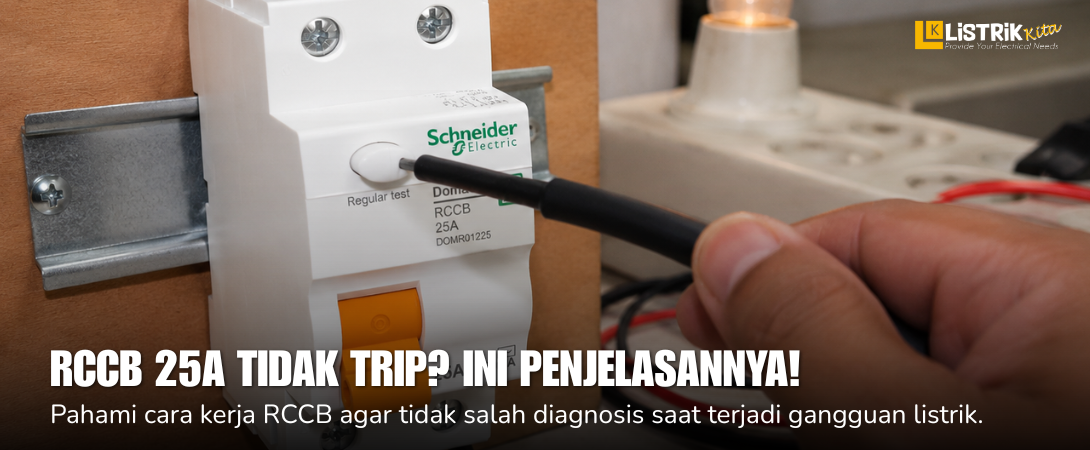
An RCCB or Residual Current Circuit Breaker is a safety device designed to protect people from electric shock caused by current leakage. When choosing an RCCB, you will often see ratings such as 25A, 40A, or 63A. Many people assume that a 25A RCCB will automatically trip whenever the current exceeds 25 amps.
In reality, the 25A rating serves a different purpose. Understanding what this rating means is important to ensure electrical systems remain safe and operate correctly.
Understanding the Meaning of 25A on an RCCB
25A Indicates the Maximum Current Capacity
The 25A marking on an RCCB refers to its rated current capacity. This means the device is designed to carry up to 25 amps continuously under normal operating conditions.
However, this does not mean the RCCB will automatically disconnect the circuit once the current exceeds 25A. The rating mainly reflects the device's ability to safely carry electrical current.
As a result, an RCCB may remain on even if the current slightly exceeds 25A, provided there is no current leakage.
The Main Protection Function Is Based on Leakage Current (mA)
The primary function of an RCCB is to detect leakage current flowing to earth. Its sensitivity is usually indicated in milliamps (mA), such as 30mA, 100mA, or 300mA.
For example, an RCCB rated at 30mA will disconnect the circuit when it detects a leakage current of 30mA or higher. This protection helps reduce the risk of electric shock and improves overall electrical safety.
Therefore, an RCCB trips because of current leakage, not simply because of high electrical load.
Why Doesn't an RCCB Trip When the Current Exceeds 25A?
An RCCB Is Not Intended to Protect Against Overloads
A common misconception is that an RCCB works the same way as an MCB. In fact, these devices serve different purposes.
An MCB protects electrical installations from overloads and short circuits. An RCCB, on the other hand, is designed to detect leakage currents.
This is why an RCCB may stay in the ON position even when the current exceeds 25A, as long as no leakage current is present.
Situations Where Current Exceeds 25A but the RCCB Does Not Trip
Imagine a home running several high-power appliances at the same time, such as air conditioners, water heaters, electric ovens, and water pumps. The combined load may push the current above 25A.
If there is no leakage current, the RCCB will likely continue operating normally without tripping. In this situation, overload protection should be handled by a properly rated MCB.
What Happens If the Load Exceeds 25A?
Risk of Physical Damage to the RCCB and Electrical System
When an RCCB continuously carries current beyond its rated capacity, internal temperatures can rise significantly. This may accelerate component wear and shorten the device's lifespan.
Excessive heat can also affect terminals, internal contacts, and connected wiring, potentially leading to physical damage.
Potential Fire Hazard Due to Overload
Long-term overload conditions can cause overheating throughout the electrical system. If cable connections are loose or insulation quality deteriorates, excessive heat may create sparks.
Under certain circumstances, these conditions can increase the risk of fire, putting both property and occupants at risk. This is why proper protection devices are essential in any electrical installation.
How to Prevent Problems with a 25A RCCB
Make Sure the Main MCB Has the Correct Rating
For complete protection, an RCCB should be installed together with an appropriately rated MCB. The MCB will disconnect the circuit during overloads or short circuits before damage occurs to the RCCB or electrical installation.
Together, these devices provide more comprehensive electrical protection.
Perform Regular Checks Using the Test Button
Most RCCBs include a TEST button that allows users to verify proper operation.
Routine testing should be carried out according to the manufacturer's recommendations. When the TEST button is pressed, the RCCB should trip immediately. If it does not, the device should be inspected by a qualified technician.
The 25A rating on an RCCB represents the maximum current the device is designed to carry under normal conditions. It is not the current level that automatically causes the RCCB to trip. The main purpose of an RCCB is to detect leakage current based on its mA sensitivity rating. Protection against overloads and short circuits must be provided by a correctly rated MCB.
If you are looking for a reliable RCCB for residential, commercial, or industrial applications, choose a trusted product that meets recognized standards. Explore a wide range of high-quality RCCBs at Listrik Kita and help ensure the safety of your electrical installation.
