


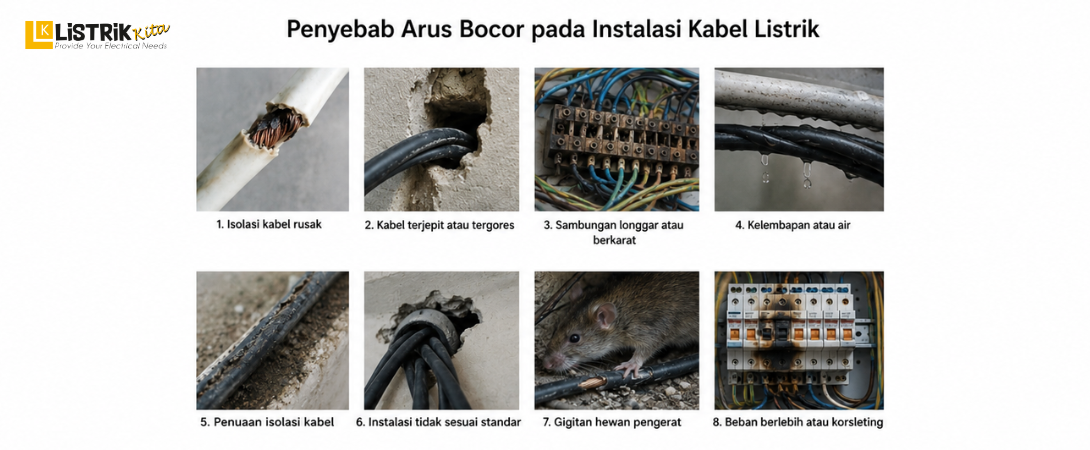
Electrical leakage is one of the most common issues found in residential, commercial, and industrial electrical systems. It occurs when part of the electrical current flows through an unintended path, such as the ground, metal structures, or other conductive materials outside the designed circuit. If left unresolved, electrical leakage can increase the risk of electric shock, equipment damage, and even fire.
Understanding the causes of electrical leakage is essential to maintaining a safe and reliable electrical system. Below are some of the most common reasons why electrical leakage occurs in cable installations.
What Is Electrical Leakage?
Electrical leakage happens when electricity escapes from its intended conductor and flows through another path with lower resistance. This issue is often invisible but can be detected using protective devices such as RCCBs or ELCBs.
Common signs of electrical leakage include circuit breakers frequently tripping, mild electric shocks when touching certain appliances, or an increased risk of short circuits within the electrical system.
Causes of Electrical Leakage in Cable Installations
Damaged or Peeling Cable Insulation
Cable insulation is designed to keep electrical current flowing safely within the conductor. Over time, insulation may deteriorate due to aging, excessive heat, rodent damage, or physical impact.
When the insulation cracks or peels away, the conductor becomes exposed and may come into contact with surrounding objects. This situation often leads to current leakage and increases the risk of electric shock and short circuits.
Poor Quality Cables
Low-quality cables often use substandard conductor materials and insulation that do not meet safety requirements. As a result, they are more likely to fail over time.
Inferior insulation can also lose its protective properties more quickly, making the system more vulnerable to electrical leakage. Choosing cables that comply with recognized safety standards is one of the best ways to reduce this risk.
Loose or Improper Cable Connections
Poorly installed cable connections can create higher electrical resistance. This resistance generates excessive heat that may gradually damage the insulation around the connection point.
As the insulation weakens, electricity may escape from its intended path and cause leakage. Proper installation techniques and suitable connectors are essential to ensure safe and stable electrical connections.
Moisture and Water Exposure
Damp environments and water exposure are also common causes of electrical leakage. Water can act as a conductor, allowing electricity to travel where it should not.
This risk is often found in outdoor installations, bathrooms, laundry areas, and locations with high humidity levels. Using cables and electrical accessories designed for wet environments can significantly reduce the possibility of leakage.
Damaged Electrical Appliances
Not all electrical leakage originates from the wiring system itself. In some cases, the source of the problem is a faulty electrical appliance.
Worn-out or damaged internal components can cause electricity to flow to the appliance casing or grounding system. This may result in electric shocks when users touch the equipment. Regular inspections can help identify appliance-related issues before they become serious.
The Risks of Ignoring Electrical Leakage
Electrical leakage can affect both safety and system performance. Potential consequences include electric shock, damage to electronic equipment, higher energy consumption, and an increased risk of fire caused by overheating or short circuits.
The longer the problem remains unresolved, the greater the potential damage. Regular electrical inspections are essential to maintain a safe environment and prevent costly repairs.
How to Prevent Electrical Leakage
Preventing electrical leakage starts with using high-quality cables, ensuring secure connections, protecting installations from water exposure, and conducting routine inspections. Installing an RCCB is also highly recommended because it can detect leakage current and automatically disconnect the power supply when a fault occurs.
Electrical leakage can be caused by damaged insulation, poor-quality cables, loose connections, moisture, or faulty electrical equipment. Identifying these causes early can help prevent electric shocks, short circuits, and fire hazards.
To keep your electrical system safe and reliable, always choose high-quality cables that meet safety standards. Find a wide range of quality electrical cables for residential, commercial, and industrial applications at Listrik Kita. Using the right products helps ensure a safer, more efficient, and longer-lasting electrical installation.
