


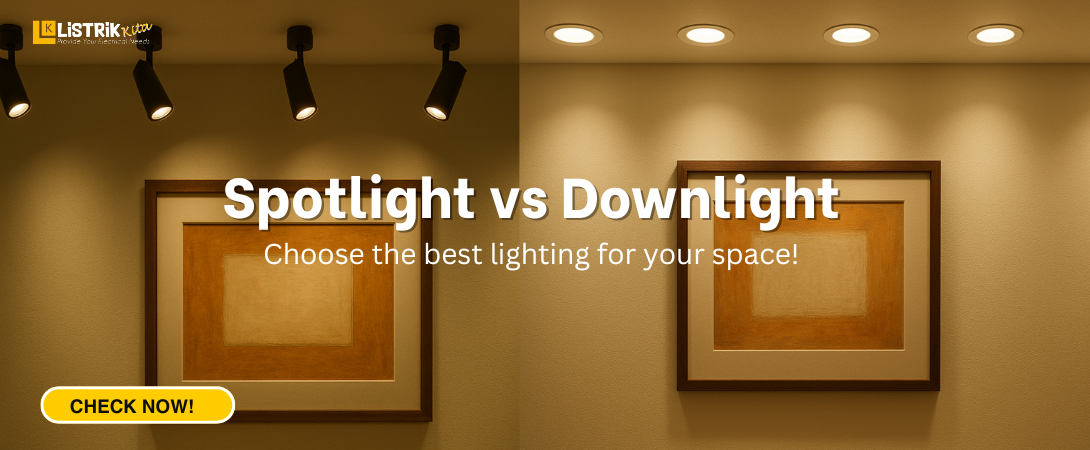
Choosing the right type of lighting is not only about making a room bright or dim. Lighting plays a big role in setting the mood, creating comfort, and even enhancing the overall aesthetics of your space. Among the many options available, downlights and spotlights are two of the most popular choices in modern interior design. At first glance, they may look similar, but in reality, they serve different purposes with unique light directions and characteristics. This article will explain the key differences between downlights and spotlights so you can pick the best option for your needs.
What is a Downlight?
A downlight is a type of lighting fixture that is recessed into the ceiling. This design makes the lamp itself almost invisible, so attention is drawn to the light rather than the fixture.
Downlights usually produce a wide beam of light, ranging from about 60° to 120°. The illumination is soft and evenly spread, making it ideal for general lighting or ambient lighting. Because of its seamless appearance, downlighting is commonly used in living rooms, bedrooms, hallways, and other areas where even illumination is required.
What is a Spotlight?
Unlike downlights, spotlights are designed to create a strong, concentrated beam of light that focuses on a specific object or area. The beam angle is much narrower, usually between 15° and 45°, which makes the light appear sharper and more dramatic.
Spotlights are typically mounted with brackets or on a track system, which allows the light to be directed as needed. Thanks to this flexibility, spotlights are often used to highlight artwork, decorative features, retail displays, or any part of a room that you want to stand out.
Differences Between Downlights and Spotlights
Although both are energy-efficient and work well in modern interiors, downlights and spotlights serve different functions and cannot simply replace one another.
1. Installation Method
- Downlight: Installed recessed into the ceiling. This requires cutting into the ceiling and leaving enough space above for the housing.
- Spotlight: Offers more flexible installation options, such as:
- Track Light: Mounted on a track system attached to the ceiling.
- Monorail Light: Similar to track lights but uses cables.
- Wall Washer: Mounted on walls or ceilings to wash a vertical surface with light.
- Bracket Spotlight: Installed on ceilings, walls, or floors with adjustable brackets.
2. Light Direction
- Downlight: Produces a wide and evenly distributed beam directed downward. The angle is fixed and cannot be adjusted.
- Spotlight: Produces a narrow, focused beam that can be directed toward specific objects or areas, creating a sense of drama.
3. Main Function
- Downlight: Serves as general or ambient lighting, providing overall illumination for daily activities in spaces such as living rooms, bedrooms, and kitchens.
- Spotlight: Works as task lighting or accent lighting, used for work areas like kitchen countertops, reading nooks, or for highlighting art, décor, and architectural details.
Applications of Downlights and Spotlights
The differences between these two types of lighting become even clearer when applied to residential and commercial settings.
1. In Residential Spaces
- Downlight:
- Living Rooms & Bedrooms: Provides an even distribution of light for a cozy and comfortable feel.
- Hallways & Entryways: Creates a clean and spacious look with soft lighting.
- Spotlight:
- Kitchen: Installed under cabinets for food preparation areas or above an island for focused lighting.
- Reading Corners: Works well as adjustable reading lights near chairs or sofas.
- Decorative Areas: Perfect for highlighting artwork, family photos, or a display shelf.
2. In Commercial Spaces
- Downlight:
- Offices: Ensures even lighting throughout the workspace for better comfort and productivity.
- Hotels & Restaurants: Commonly used in lobbies, corridors, and dining areas to create an elegant atmosphere.
- Spotlight:
- Retail Stores & Boutiques: Essential for drawing attention to featured products or mannequins.
- Art Galleries & Museums: Directs attention to artworks without over-lighting the entire room.
- Fine Dining Restaurants: Provides intimate lighting by spotlighting each table individually.
In simple terms, the main difference between downlights and spotlights lies in their function and light direction. Downlights are best for general illumination, spreading light evenly across a room, while spotlights are designed to highlight specific areas or objects with focused light.
If you want your space to feel bright, practical, and versatile, choose downlights as the foundation of your lighting. On the other hand, if you want to add drama, highlight décor, or create functional work areas, spotlights are the right solution.
The perfect balance comes from combining both: downlights for a comfortable base layer of light and spotlights for accents and focus. Together, they create a lighting design that is not only functional but also stylish, bringing your space to life.
Discover a wide range of downlight and spotlight options only at Listrik Kita!
