


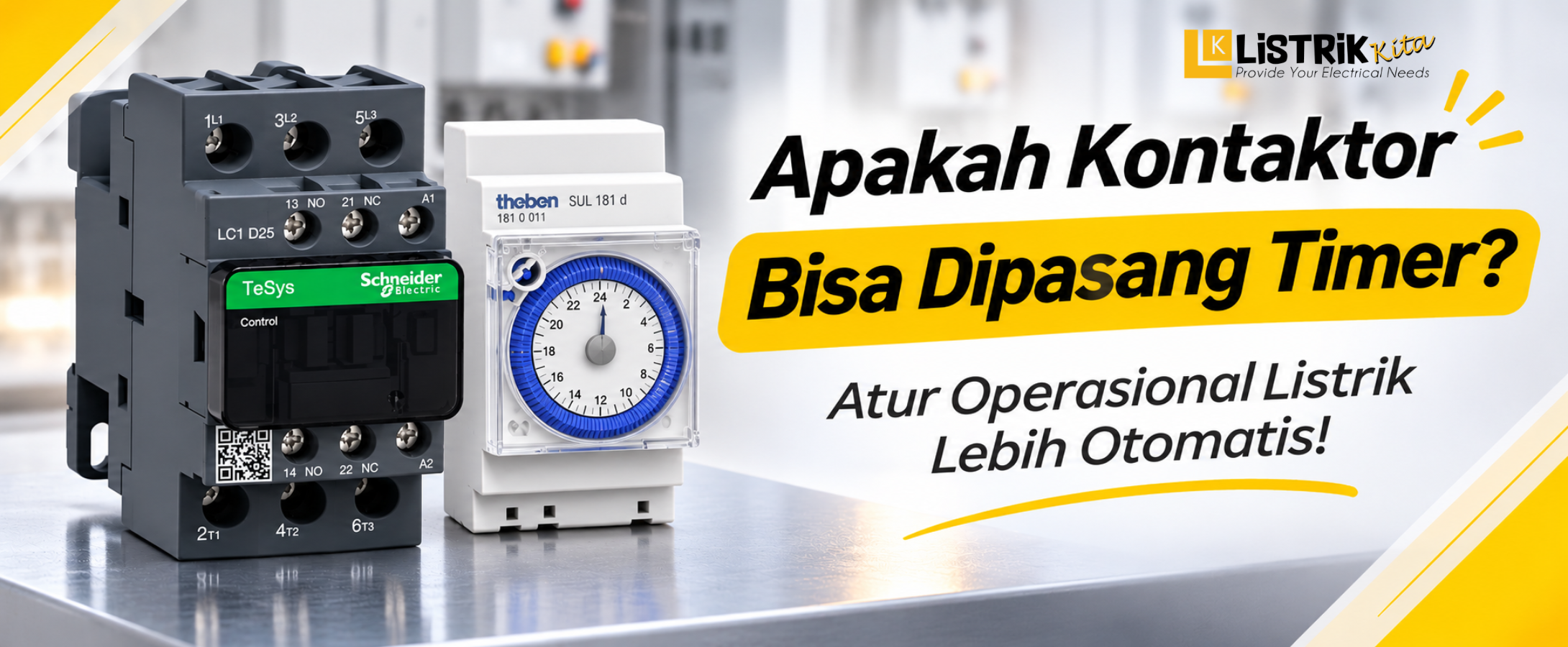
In electrical systems, automation can help equipment operate according to a schedule without requiring manual switching. One common combination is a timer and a contactor. Listrik Kita is an official Schneider Electric distributor providing original and warranty-backed products, including various components for electrical installation and control systems.
So, can a contactor be installed with a timer? Yes, it can. A timer and contactor can work together to control electrical loads based on a preset schedule. The timer provides the control signal, while the contactor handles the switching of the load. This combination is commonly used for lighting systems, water pumps, motors, exhaust fans, and other electrical equipment.
How Do a Timer and Contactor Work Together?
A timer and contactor have different functions, but they can work together as one control system.
Timer as the Time Controller
The timer determines when a circuit should turn on or off. Users can set the operating schedule based on the needs of the system. When the preset time is reached, the timer sends a signal to the control circuit.
For example, a timer can be set to turn a system on at a specific time. After the scheduled period ends, the timer can send another command to turn the system off.
Contactor as the Load Switch
A contactor is an electromagnetic switch used to connect and disconnect electrical power to a load. When the contactor coil receives voltage from the control circuit, its main contacts change position and allow the load to operate.
With this setup, the timer does not need to handle the main load current directly. The timer controls the circuit, while the contactor performs the switching function on the power circuit according to its rated capacity.
What Are the Main Functions of a Timer and Contactor Combination?
Timer as the Controller
The main function of a timer is to control when electrical equipment operates automatically. A timer can reduce the need for manual operation, especially for equipment that needs to follow a specific schedule.
For example, outdoor lighting can be programmed to turn on at night and turn off in the morning. A water pump can also be scheduled to operate at certain times based on system requirements.
Contactor as the Load Switch
A contactor is used when the controlled load requires switching that matches its electrical capacity. It can be used for different types of loads, including motors and higher-power electrical equipment.
The contactor must still be selected based on the load characteristics, operating current, voltage, and utilization category.
Supporting System Safety and Durability
Using a timer and contactor also allows the control circuit to be separated from the power circuit. This means the control device does not have to handle the main load directly.
Besides making the system more organized, choosing suitable components can help maintain system reliability. However, the timer, contactor, protection devices, cables, and other components should all be selected based on the overall system requirements.
What Should You Check Before Installing a Timer and Contactor?
There are several things to check before installing a timer and contactor to make sure the system operates properly.
Match the Operating Voltage
Check the timer's operating voltage and the contactor coil voltage before installation. Make sure the components are compatible with the voltage available in the control circuit.
For example, if the contactor coil requires a specific voltage, the timer or control device must be able to provide the correct voltage. Choosing the wrong voltage can prevent the component from operating properly or may even cause damage.
Use Proper Protection
A timer and contactor circuit still requires suitable protection devices. An MCB can be used as one form of protection against conditions such as overcurrent or short circuits, depending on the application.
The protection rating should also match the cable and load being used. Do not select protection based only on the contactor rating, because every component in the circuit must be properly matched.
Consider the Type of Load
The type of load is an important factor when selecting a contactor. Resistive loads such as lighting have different characteristics from inductive loads such as motors or pumps.
Motors usually have higher starting currents, so the contactor selection needs to consider this characteristic. Besides current and power, check the contactor's utilization category based on the application.
Examples of Timer and Contactor Applications
Automatic Lighting Control
A timer and contactor can be used to turn lights on and off according to a schedule. This setup can be applied to building lighting, outdoor areas, warehouses, or other locations that require automatic operation.
Water Pump Control
In a pump system, the timer can determine the operating schedule. The contactor then controls the pump motor according to its required capacity and specifications.
Automatic Electrical Systems
A timer and contactor combination can also be applied to various automated systems that require time-based control. With proper planning and component selection, equipment operation can become more practical and easier to control.
Conclusion: Can a Contactor Be Installed with a Timer?
Yes, a contactor can be controlled using a timer. The timer acts as the time controller, while the contactor performs the switching function for the load. This combination can be used in various electrical automation applications, as long as the operating voltage, contactor capacity, load type, and protection system are properly considered.
For reliable Schneider Electric contactors, you can find products suitable for different applications and load capacities at Listrik Kita. Choose original, warranty-backed Schneider Electric contactors for installation, motor control, and other electrical system requirements.
