


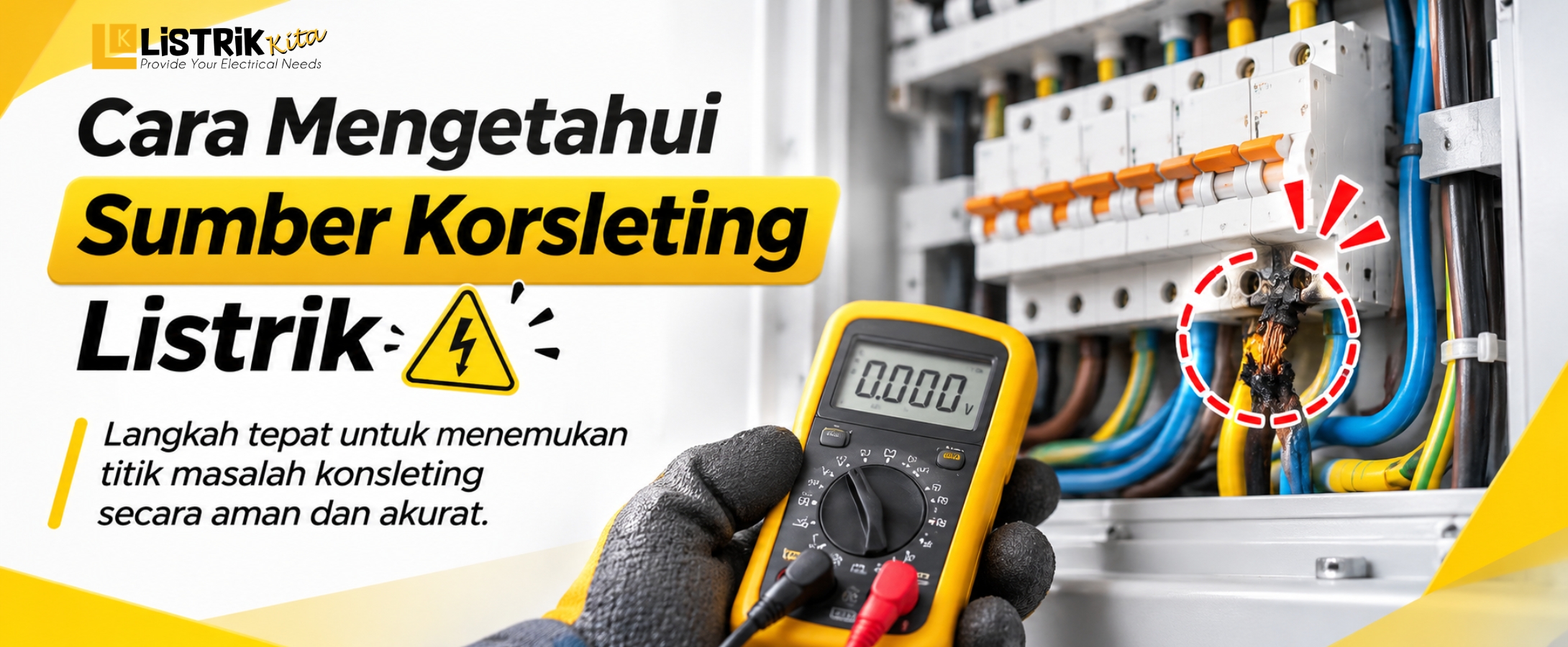
Listrik Kita is an official Schneider Electric distributor that provides original and guaranteed electrical products for various applications. One important component in an electrical system is the MCB, which helps protect circuits from excessive current. When a short circuit occurs, the MCB will usually trip as a protection measure. But how can you find the source of an electrical short circuit so the problem can be handled properly?
Finding a short circuit is not always easy, especially when the problem is hidden behind a wall or caused by one of several connected electrical devices. However, some physical signs and simple isolation methods can help narrow down the possible source. Here are several ways to identify the source of an electrical short circuit.
Recognize the Signs of an Electrical Short Circuit
Before checking the electrical system further, look at the condition of the electrical installation. Several signs can indicate that there is a problem in the circuit.
The MCB Keeps Tripping
An MCB that suddenly trips is one of the most common signs of an electrical problem. An MCB can trip when it detects current above its safe limit, including current caused by a short circuit.
If the MCB trips again immediately after being switched on, do not keep forcing it back to the ON position. This may indicate that the problem is still present somewhere in the circuit protected by that MCB.
A Burning or Burnt Smell
A smell coming from burnt plastic, cables, or electrical components should not be ignored. Excessive heat caused by loose connections, overloads, or short circuits can damage cable insulation and other components.
If you notice a burnt smell near an outlet, switch, electrical panel, or another specific area, turn off the power and investigate the problem safely.
Small Popping Sounds
Small popping, crackling, or sparking sounds from an outlet or switch can also be a warning sign. These sounds may occur when electrical arcing happens because of an improper connection or damaged component.
Do not touch or open a component that makes these sounds while it may still be energized.
Burn Marks or Unusual Heat
Check for brown or black marks on outlets, switches, plugs, or cables. Components that feel unusually hot compared with their normal condition should also be checked.
Physical signs such as melted plastic, darkened surfaces, or burn marks can help identify the area where an electrical problem may be occurring.
Find the Source Using the Isolation Method
If the source is still unclear, an isolation method can help. This means separating electrical loads one by one to identify which circuit or device may be causing the MCB to trip.
Turn Off All Light Switches and Unplug All Devices
Start by turning off all light switches and unplugging electrical devices from the outlets. Removing the loads makes it easier to narrow down the possible source of the problem.
Always work carefully and avoid touching exposed wires or visibly damaged components.
Turn the Main MCB and Circuit MCBs Back On
After disconnecting the electrical loads, check the MCBs again. If an MCB still cannot remain in the ON position even when the appliances are unplugged, the problem may be related to the electrical installation or circuit wiring.
If the MCB remains on, continue the inspection step by step.
Turn On the Light Switches One by One
Turn on each light switch one at a time while observing the MCB. If the MCB trips again after a particular switch is turned on, that lighting circuit may need further inspection.
This method can help narrow down the problem without checking the entire electrical installation at once.
Plug Electrical Devices Back In One by One
After checking the lighting circuits, reconnect electrical devices one at a time. Wait and make sure the electrical system remains stable before connecting the next device.
If the MCB trips again after a particular appliance is connected, the appliance, cable, or plug may be the source of the problem and should not be used until it has been checked.
Check the Circuit Using Measuring Tools
Besides observing symptoms and isolating electrical loads, measuring tools can also help with the inspection. However, electrical measuring tools should only be used properly and safely to avoid electric shock or equipment damage.
Using a Multimeter
A multimeter can help check the condition of an electrical circuit, including continuity and other electrical parameters. It can help a technician identify whether there is an unintended connection within the circuit.
Measurements must be performed using the correct method and according to the type of circuit. Do not use a multimeter on an energized installation unless you understand the proper measurement and safety procedures.
Using a Short Circuit Detector or Wall Cable Detector
A wall cable detector can help locate cables installed behind walls. This can be useful when a visual inspection cannot identify where the wiring runs.
For problems that are difficult to locate, especially in concealed wiring, having the installation checked by a qualified electrical technician is the safest option.
Safety Tips When Finding an Electrical Short Circuit
Do Not Touch Damaged Wires or Components
Exposed cables, burnt outlets, and damaged electrical components can still be dangerous. Avoid touching them directly.
Do Not Keep Resetting the MCB
If the MCB keeps tripping, do not repeatedly force it back on. Find the cause first to prevent the problem from becoming more serious.
Contact a Qualified Technician If the Source Is Unknown
If the source of the short circuit cannot be identified or may be located inside a wall, electrical panel, or another difficult-to-reach area, it is better to have the system checked by a qualified electrical technician.
Finding the source of an electrical short circuit can help prevent further damage to electrical installations and equipment. For proper circuit protection, choose an MCB that matches the requirements of your electrical system. Listrik Kita provides original and guaranteed Schneider Electric MCBs for various electrical applications. Find the right Schneider Electric MCB and complete your electrical needs at Listrik Kita.
