


Electrical current leakage is a problem that should never be taken lightly. It happens when part of the electrical current leaves its intended path and flows to the ground or another unintended path. Damaged cable insulation, loose connections, and aging electrical equipment are some of the common causes.
Besides potentially increasing electricity consumption, current leakage can also create safety hazards. A person may receive an electric shock when touching faulty equipment. In some situations, heat generated around a damaged connection can also increase the risk of component failure or even electrical fires.
What Is Electrical Current Leakage?
In a normal electrical installation, current flows through its intended circuit, such as the phase and neutral conductors. Leakage occurs when part of the current takes another path, such as flowing to ground or through a metal part of electrical equipment.
There are several possible causes, including damaged cable insulation, loose connections, aging electrical devices, and moisture around the installation.
Some common warning signs include:
- Feeling an electric shock when touching certain equipment
- MCB or ELCB trips without an obvious reason
- A socket outlet or switch feels unusually hot
- A burning smell comes from the installation
- Hissing sounds or electrical sparks appear
- Electrical equipment behaves abnormally
If you notice any of these signs, do not ignore them. The source of the problem should be checked as soon as possible.
How to Detect Electrical Current Leakage
Finding leakage early can help prevent more serious electrical problems. The inspection can start with the condition of the electrical installation and the equipment connected to it.
Check the Cables and Electrical Installation
The physical condition of an installation can provide early clues about a possible problem. Look for cables that are damaged, cracked, exposed, discolored, or burned.
Check the sockets and switches as well. If a component feels unusually hot, smells burnt, or makes strange noises, stop using it immediately.
Older electrical installations also need extra attention, especially if they have experienced repeated electrical problems or have not been inspected for a long time.
Any inspection involving live electrical parts should be handled by a qualified electrical technician who understands proper safety procedures.
Check Electrical Equipment One by One
Electrical appliances can also become a source of current leakage. One simple first check is to unplug the appliances and reconnect them one at a time.
Pay attention to whether a particular appliance causes the MCB or ELCB to trip after it is switched on. Also inspect its power cable, plug, adapter, and outer casing.
If an appliance gives you an electric shock when touched or repeatedly causes the protective device to trip, stop using it. Have it inspected by a qualified technician before using it again.
Use a Clamp Meter to Measure Current
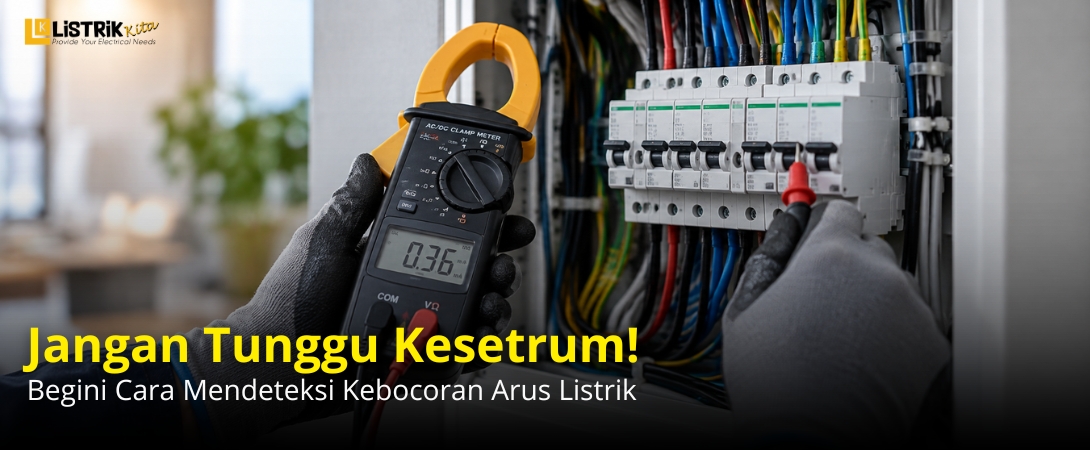
A clamp meter can help identify current that does not return through the normal circuit path. When checking for leakage current, the phase and neutral conductors can be clamped together using a suitable clamp meter.
Under normal conditions, the current flowing through the phase conductor and returning through the neutral conductor should be nearly equal. If there is a difference, that difference may indicate current flowing through another path.
For very small leakage currents, a leakage current clamp meter is a better choice because it is designed to detect residual current with higher sensitivity.
Measurements on live electrical installations can be dangerous. Always use measuring equipment that is suitable for the installation and follow proper electrical safety procedures. If you are not trained to work with electrical systems, ask a qualified technician for help.
How to Prevent Electrical Current Leakage
Detecting leakage is only part of the solution. Proper installation, maintenance, and equipment use are also important for reducing the risk.
Use the Right Cables and Installation Methods
The cable type and size should match the installation and electrical load. Cables such as NYM or NYY can be suitable for certain fixed-installation applications depending on the system requirements and specifications.
Make sure cable connections are properly installed and protected. Avoid exposed connections or temporary repairs using inadequate insulation.
An electrical installation designed and installed according to applicable standards and requirements can improve both safety and system reliability.
Install the Right MCB and ELCB
Different protective devices have different functions, so they should be selected based on the requirements of the electrical system.
An MCB (Miniature Circuit Breaker) protects a circuit against conditions such as overload and short circuit. An MCB is not the primary device for detecting earth leakage current.
An ELCB (Earth Leakage Circuit Breaker) is designed to provide protection against electrical leakage conditions. Other residual-current protection devices, such as RCDs, can also be used depending on the installation design and requirements.
Using the right combination of protective devices can help reduce the risk of equipment damage and electric shock.
Inspect the Electrical Installation Regularly
Do not wait for an electrical problem before checking the installation. Regular inspection is important, especially in buildings with older electrical systems.
Extra attention should be given to areas with high-power equipment such as air conditioners, water heaters, ovens, and electric stoves. Wet areas such as bathrooms, kitchens, and outdoor installations also require careful inspection.
Use Electrical Equipment Properly
Daily habits can also affect the condition of an electrical installation.
Avoid connecting too many loads to one socket or relying heavily on extension and multi-socket connections. Do not use equipment with damaged cables or cracked housings.
In wet areas, use electrical equipment and protection systems that are suitable for the environment. Appliances that will not be used for a long period can also be unplugged when appropriate.
Do Not Ignore the Early Warning Signs
Electrical current leakage often shows warning signs before it becomes a more serious problem. Flickering lights, frequent trips, hot sockets, burning smells, or a tingling sensation when touching electrical equipment should all be taken seriously.
The sooner the source of the problem is identified, the better the chance of preventing equipment damage and safety hazards. Never attempt to repair a live electrical installation unless you have the proper knowledge, training, and safety equipment.
To support electrical inspections and improve installation protection, make sure you have the right clamp meter, MCB, and ELCB for your needs. Explore a wide range of electrical equipment for residential, commercial, and industrial applications at Listrik Kita.
