


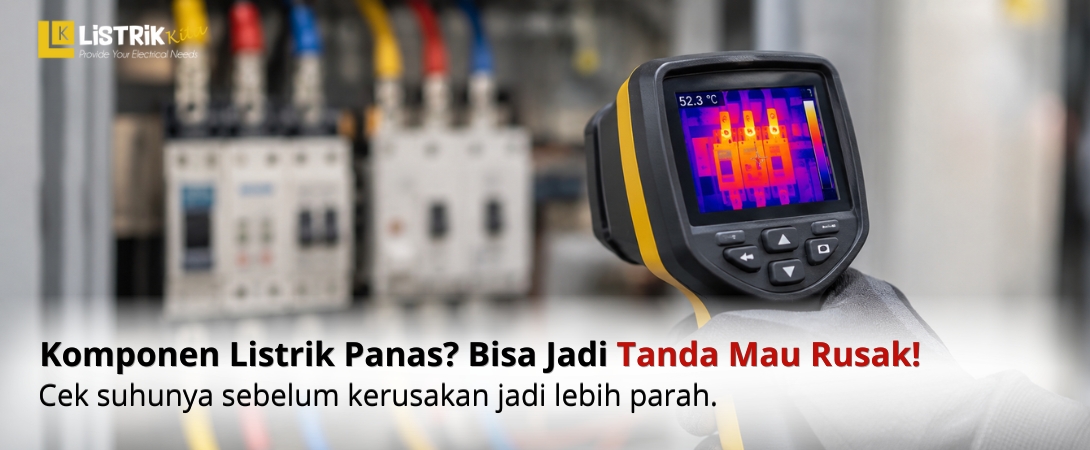
An electrical component that becomes too hot can be an early sign of a problem in the installation. The issue may not always be visible at first, but leaving it unchecked can cause premature component failure, insulation damage, and even increase the risk of an electrical fire. Regular temperature checks can therefore help identify problems before they turn into more serious failures.
Temperature inspections can be done using several types of equipment, including a thermal camera, infrared thermometer, and electrical measuring tools such as a clamp meter. By checking both temperature changes and electrical load, technicians can better determine whether a component is operating normally or starting to overheat.
Use a Thermal Camera to Find Hotspots
A thermal camera, also known as a thermal imager, is a useful tool for inspecting electrical installations. It detects infrared radiation from an object's surface and converts the temperature differences into a visual thermal image.
One of its main advantages is the ability to find hotspots without touching the component. For example, when inspecting an electrical panel, a technician can identify terminals, breakers, cables, or connections that are significantly hotter than nearby components.
A thermal camera is also useful for checking larger areas. A single scan can show the temperature condition of several components at once. This makes it practical for electrical panels, motors, cables, and installations where direct contact measurements may be difficult or unsafe.
Some thermal cameras also allow users to save images and temperature readings. These records can be compared with previous inspections to determine whether the temperature of a component is gradually increasing.
Tip: Make sure the emissivity setting on the thermal camera matches the material being inspected. Shiny metal surfaces, for example, can produce inaccurate readings if the setting is not adjusted correctly.
Use an Infrared Thermometer for Specific Points
For simple checks on specific areas, an infrared thermometer can be a practical option. It allows users to measure surface temperature without touching the component.
The process is simple. Point the device toward the area you want to inspect and read the temperature shown on the display. This method can be used to check breaker terminals, cable connections, motors, and other electrical components.
However, an infrared thermometer only provides temperature information from the area being targeted. It is therefore less suitable when you need to see the overall heat distribution across an entire electrical panel.
It is also important to remember that the laser on an infrared thermometer is only a targeting guide, not a distance measurement tool. Keep the correct distance from the object according to the device's distance-to-spot ratio for a more reliable reading.
Check for Changes in Color, Shape, and Smell
Temperature measurements should be supported by a visual inspection. Components that have been exposed to excessive heat for a long time may show physical signs that are easy to notice.
Look for changes in cable insulation, darkened terminals, or plastic housings that appear yellow, burned, or discolored. Hardened cables or melted plastic can also indicate prolonged exposure to excessive heat.
Do not ignore unusual smells either. The smell of burning plastic, rubber, or a burnt odor coming from an electrical panel can indicate a problem with a cable or component.
If you notice a burning smell from the main electrical panel, do not immediately touch or open the components. Turn off the power source if it can be done safely and contact a qualified technician for further inspection.
Measure Current and Voltage to Find the Cause
High temperature is usually a symptom rather than the actual cause of a problem. One possible cause is excessive electrical load or an unbalanced system.
Use a clamp meter to measure the current flowing through the circuit. The result can then be compared with the rating of the cable, breaker, or other component. Excessive current can make electrical components work harder and produce more heat.
For three-phase systems, checking voltage and current balance is also important. An imbalance can make motors and electrical equipment operate inefficiently and cause their temperature to rise.
Power factor should also be considered in certain electrical systems. A low power factor can increase the current required for the same amount of active power. This can increase losses and heat within the electrical system.
It is best to perform measurements when the installation is operating under a relatively high load. This provides a more realistic picture of the actual operating temperature and current.
Do Not Wait Until the Component Fails
Temperature inspection is an important part of preventive maintenance for electrical installations. Finding hotspots, temperature changes, or early signs of overheating allows corrective action to be taken before the problem becomes more serious.
For electrical inspection needs, a thermal camera can help identify hotspots quickly and provide a clear visual picture of temperature conditions. If you are looking for thermal camera equipment for inspecting electrical panels, cables, motors, and installations, explore the range of electrical equipment available at Listrik Kita.
