


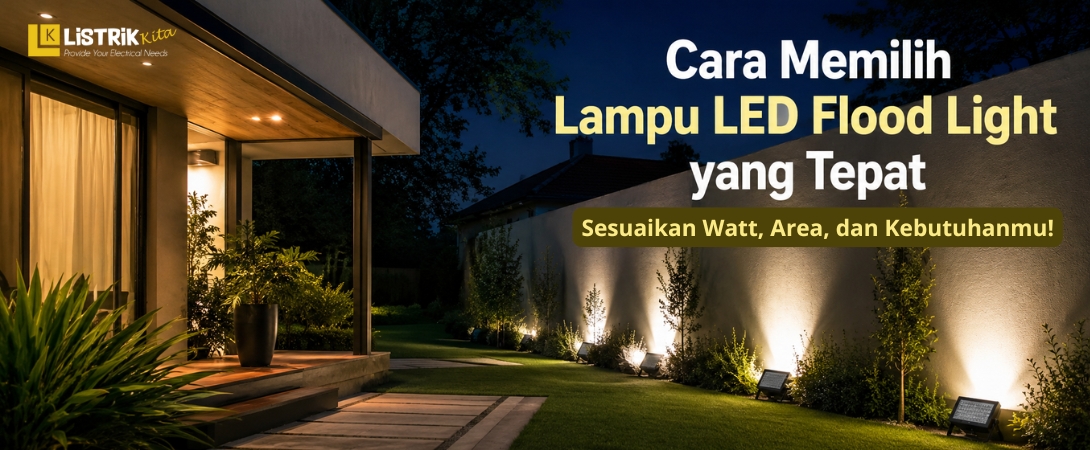
LED flood lights are widely used to illuminate areas that need broad and bright lighting, especially outdoor spaces. They are commonly installed in home yards, parking areas, warehouses, gardens, building facades, and work areas. Compared with conventional lighting, LED flood lights are known for their energy efficiency and can be used for a wide range of lighting needs.
However, choosing a flood light is not simply about looking at its size or wattage. Several specifications should be considered to make sure the light output matches the size and conditions of the installation area. Here are some important factors to check before buying an LED flood light.
How to Choose an LED Flood Light for Your Needs
1. Consider the Right Wattage
Wattage indicates how much electrical power a light uses. LED flood lights are available in different wattage options, making it easier to choose a model based on your lighting requirements.
A higher wattage does not always mean it is the best choice. A small area may not need a high-power flood light. On the other hand, larger spaces such as warehouses or parking areas may require a higher wattage to provide sufficient illumination.
In addition to the size of the area, consider the installation height and the number of lights needed. Choosing the right wattage can help provide adequate lighting without using more energy than necessary.
2. Choose a Higher Lumen Output for Better Brightness
Besides wattage, check the lumen rating of the light. Lumens indicate the amount of visible light produced by a lamp. A higher lumen output generally means the light can produce more brightness.
This is important because two lights with the same wattage may not provide exactly the same level of brightness. For this reason, do not compare products based only on wattage. Check the lumen output as well to understand how much light the product can provide.
For areas that require stronger illumination, such as large yards, warehouses, parking lots, or work areas, choose a flood light with a lumen output that matches the lighting requirements.
3. Check the Beam Angle
The beam angle affects the width of the area illuminated by the light fixture. This specification is especially important when a flood light is installed to illuminate a specific area.
A narrower beam angle creates a more focused light direction. This can be useful when the light needs to highlight a particular object or location. Meanwhile, a wider beam angle can spread light across a larger area.
The installation position should also be considered. Choosing the right beam angle allows the light to reach the areas that need illumination and helps minimize dark spots.
4. Check the IP Rating
If the flood light will be installed outdoors, the IP rating is an important specification to consider. IP, or Ingress Protection, indicates how well a product is protected against solid objects such as dust and water.
Outdoor lights are more likely to be exposed to rain, dust, and changing environmental conditions. Therefore, choose a flood light with an IP rating that matches the installation environment. The right IP rating can provide better protection against external factors.
Before purchasing, check the product specifications and make sure the IP rating is suitable for the location, especially if the fixture will be installed in an exposed outdoor area.
5. Check the Color Temperature (Kelvin)
Light color can affect the atmosphere and comfort of an area. The color temperature of a lamp is usually measured in Kelvin (K).
Warm white produces a warmer tone and can work well in areas where a more comfortable atmosphere is desired. Cool white provides a more neutral appearance, while daylight produces a brighter white light that can be suitable for areas where better visibility is needed.
Choose the color temperature based on the function and location of the area. A yard, garden, workplace, warehouse, or parking area may require different lighting characteristics. Consider the atmosphere and level of visibility you want before selecting the light color.
Match the Flood Light to the Installation Area
Flood Lights for Outdoor Areas
For yards, gardens, building facades, and parking areas, consider the combination of lumen output, beam angle, and IP rating. The fixture should also be positioned properly to provide suitable light coverage.
Flood Lights for Warehouses and Work Areas
Warehouses and work areas need lighting that supports daily activities. Besides choosing the right lumen output, consider the installation height and beam angle to help distribute light effectively.
Flood Lights for Security Lighting
Flood lights can also provide additional lighting around fences, garages, entrances, and other areas that need better visibility at night. Proper placement can help make these spaces brighter and easier to see.
Tips for Using LED Flood Lights More Effectively
Before purchasing, determine the size of the area, installation position, mounting height, and environmental conditions. Then, compare the wattage, lumen output, beam angle, IP rating, and color temperature of different products.
By considering these factors together, you can choose an LED flood light that better matches your needs instead of relying only on wattage when making a decision.
Choosing the right LED flood light can help provide bright, suitable, and efficient lighting for different areas. If you are looking for LED floodlights for your home, warehouse, parking area, business premises, or other applications, explore the range of LED floodlights at Listrik Kita and choose the specifications that match your lighting needs.
