


Electricity plays a vital role in our daily lives. From lighting your home to powering household appliances, a reliable electrical system keeps everything running smoothly. That is why having the right electrical protection is just as important as having a stable power supply.
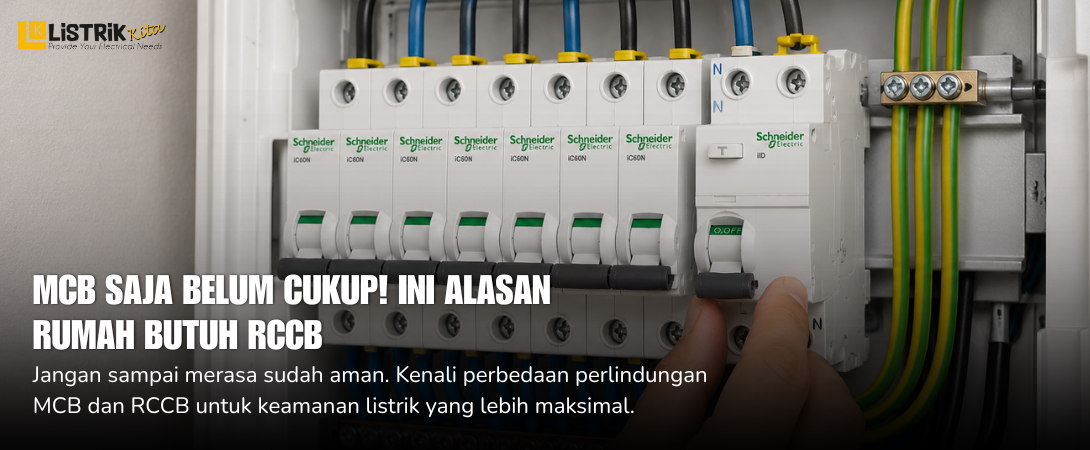
Many homeowners believe that installing an MCB is enough to keep their electrical system safe. In reality, an MCB and an RCCB serve different purposes. While an MCB protects electrical wiring and equipment, an RCCB is designed to protect people from electric shock.
So, if your home already has an MCB, do you still need an RCCB? The answer is yes. Here is why.
What Is an MCB (Miniature Circuit Breaker)?
An MCB, or Miniature Circuit Breaker, is a protective device that automatically cuts off the electrical supply when it detects an overload or a short circuit. It is one of the most common safety devices found in residential and commercial electrical installations.
How an MCB Protects an Electrical System
The main purpose of an MCB is to protect electrical wiring and connected equipment from excessive current. When the current exceeds its rated capacity or a short circuit occurs, the MCB disconnects the power to prevent damage.
This protection also helps reduce the risk of electrical fires caused by overheating cables or faulty wiring.
What an MCB Cannot Protect Against
Although an MCB is essential, it cannot detect small leakage currents that pass through the human body.
For example, if someone accidentally touches a live wire, the leakage current may not be high enough to trip the MCB. In this situation, the person can still receive an electric shock.
What Is an RCCB (Residual Current Circuit Breaker)?
An RCCB is a safety device that detects leakage current. It monitors the difference between the live and neutral currents. If it detects an imbalance, it disconnects the power almost instantly.
This fast response helps reduce the risk of serious electric shock.
How an RCCB Protects People
Unlike an MCB, which focuses on protecting the electrical installation, an RCCB is designed to protect people.
It works by disconnecting the power whenever leakage current is detected, helping minimize injuries caused by accidental contact with electricity.
When Does an RCCB Operate?
An RCCB may trip in situations such as:
- Someone touches a live conductor.
- An electrical appliance develops a leakage fault.
- Damaged cable insulation allows current to flow to earth.
- Water exposure causes leakage current in the electrical system.
MCB vs. RCCB: What's the Difference?
Although both are electrical protection devices, they have different responsibilities.
An MCB Protects the Installation While an RCCB Protects People
The key differences include:
MCB | RCCB |
| Protects wiring and electrical installation | Protects people from electric shock |
| Detects overload and short circuit | Detects leakage current |
| Helps prevent wiring damage | Helps reduce electric shock risk |
| Cannot detect small leakage current | Highly sensitive to leakage current |
Why an MCB by Itself Is Not Enough
An MCB is excellent for protecting electrical wiring, but it is not designed to prevent electric shock.
A person can still be exposed to leakage current that is too small to trigger the MCB. This is why an RCCB is recommended as an additional layer of protection.
If You Already Have an MCB, Do You Still Need an RCCB?
The answer is yes.
They Provide Different Types of Protection
An MCB and an RCCB complement each other.
The MCB protects wiring and property from overloads and short circuits, while the RCCB protects people from leakage current that could lead to electric shock.
Using both devices creates a safer electrical system.
Using an MCB and an RCCB Together Provides Better Protection
Installing both devices provides several benefits:
- Better protection for your electrical installation.
- Lower risk of electrical fires.
- Reduced risk of electric shock.
- Improved safety for everyone in the building.
Where Should You Install an RCCB?
Certain areas of a home are more prone to electrical leakage.
Bathrooms and Wet Areas
Water increases the risk of electric shock, making bathrooms one of the most important places to install an RCCB.
Kitchen
Kitchens contain many electrical appliances and are often exposed to water, making RCCB protection highly recommended.
Outdoor Areas
Outdoor outlets, water pumps, and garden lighting are exposed to rain and moisture. An RCCB adds an extra level of safety in these environments.
Common Mistakes People Make
Assuming an MCB Protects Against Electric Shock
Many people believe that an MCB can handle every electrical problem. In fact, protection against leakage current is the main job of an RCCB.
Never Testing the RCCB
Most RCCBs include a TEST button. Pressing this button periodically according to the manufacturer's instructions helps verify that the device is operating correctly and will respond when needed.
An MCB and an RCCB perform different but equally important roles in an electrical system. An MCB protects wiring, electrical equipment, and property from overloads and short circuits, while an RCCB protects people by detecting leakage current that could cause electric shock. Using both devices together provides more complete electrical protection for homes and commercial buildings.
If you are looking for a reliable RCCB to improve electrical safety, explore the selection of genuine RCCBs available at Listrik Kita. Choosing high quality protection devices is a smart investment in the safety of your family, property, and electrical installation.
