


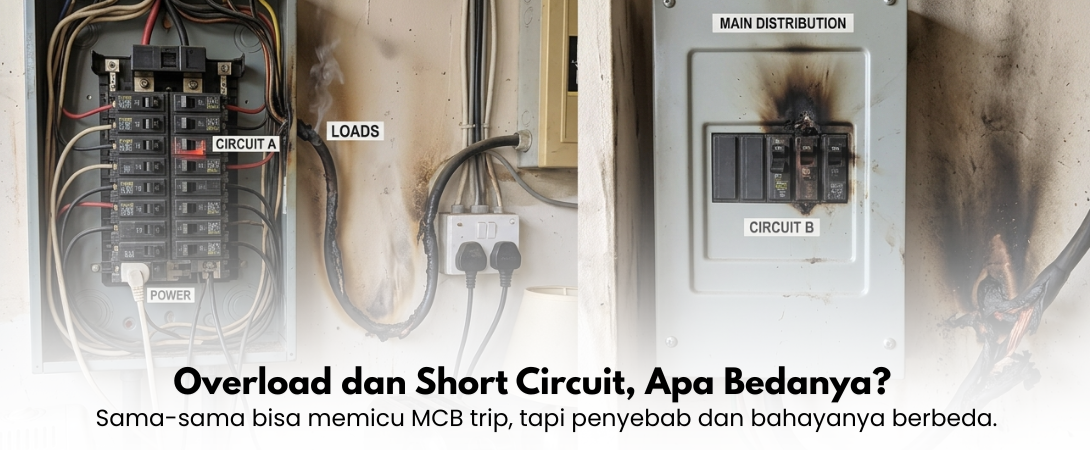
In electrical systems, overload and short circuit are two common problems that can both cause power outages. Although they may seem similar because both can make an MCB trip, they have different causes, characteristics, and levels of danger. Understanding the difference is important so you can choose the right solution and prevention method to keep your electrical installation safe.
What Are Overload and Short Circuit?
What Is an Overload?
An overload happens when the electrical current flowing through a circuit exceeds the designed capacity. This usually occurs when too many electrical devices are used on the same circuit at the same time. For example, running an air conditioner, water heater, microwave, and several other appliances on one outlet can cause the load to exceed the installation's capacity.
What Is a Short Circuit?
A short circuit occurs when two conductors with different electrical potentials come into direct contact. This creates a very low resistance path, causing the current to rise dramatically in a very short time. Common causes include damaged insulation, exposed wires, loose connections, or water entering the electrical system.
Differences in Their Causes
Common Causes of Overload
- Connecting too many electrical devices to one circuit.
- Using several high-power appliances at the same time.
- Adding new equipment without calculating electrical capacity.
- Using an MCB that does not match the load requirements.
Common Causes of Short Circuit
- Exposed wires touching each other.
- Old or cracked cable insulation.
- Loose or poor cable connections.
- Water entering electrical panels or outlets.
- Damaged electrical equipment.
How Does the Current Increase?
Current Behavior During Overload
In an overload condition, the current increases gradually as more load is added. The MCB usually does not trip immediately because it allows a limited amount of excess current for a short time. If the overload continues, the MCB disconnects the power to prevent overheating.
Current Behavior During Short Circuit
A short circuit is very different. The current can surge to an extremely high level almost instantly. Because the increase is so sudden and severe, the MCB or fuse usually disconnects the power immediately. This is why short circuits often produce sparks and cause more serious damage.
Risks and Effects of Overload vs Short Circuit
Effects of Overload
- Excessive cable heating.
- Faster deterioration of cable insulation.
- Shorter lifespan of electrical equipment.
- Higher risk of fire caused by overheating.
Effects of Short Circuit
- Electrical sparks in cables or panels.
- Damage to electronic components.
- Possible small explosions in some installations.
- Greater risk of fire and electric shock.
How to Prevent Overload and Short Circuit
Preventing Overload
- Avoid excessive use of multi-outlet adapters.
- Calculate total power before adding new appliances.
- Separate high-power loads onto different circuits.
- Use an MCB with the correct rating.
Preventing Short Circuit
- Inspect cables regularly.
- Replace damaged or brittle wires.
- Make sure cable connections are installed properly.
- Protect electrical installations from water and excessive moisture.
- Use quality electrical equipment.
An MCB plays an important role in protecting electrical installations from both overload and short circuit conditions. When the current exceeds the safe limit, the MCB automatically disconnects the power, reducing the risk of damage and fire. That is why choosing the right MCB is very important. It should match the installation's capacity and come from a trusted quality manufacturer.
Overload and short circuit both involve abnormal electrical current, but they are clearly different problems. Overload happens when the electrical load exceeds the circuit's capacity, while a short circuit occurs when conductors make direct contact and create an extremely large current surge. By understanding their causes, risks, and prevention methods, you can keep your electrical system safer and more reliable for long-term use.
For better protection, choose a high-quality MCB that can operate reliably during electrical disturbances. You can find various quality MCB options at Listrik Kita to help protect electrical installations in homes, offices, and other buildings.
