


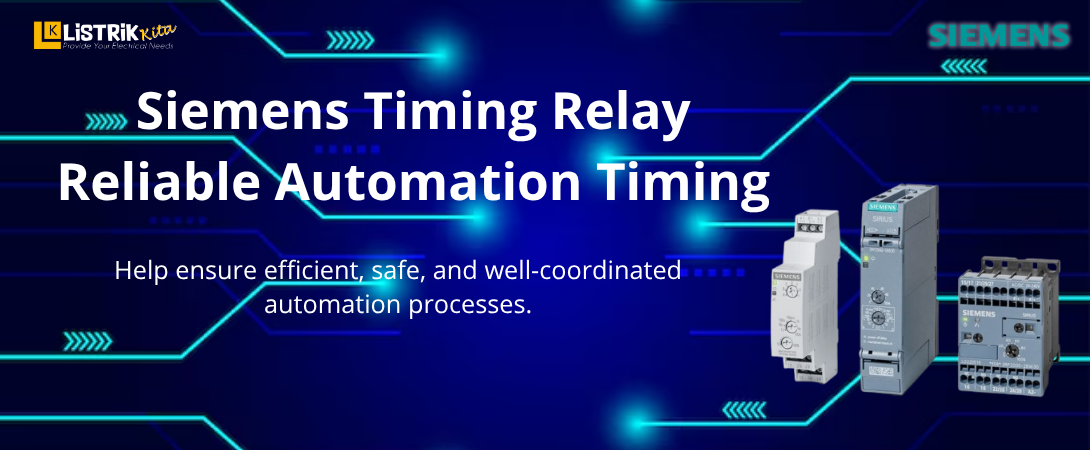
In the world of industrial automation, timing precision and process control are two critical elements. In this context, timing relays serve an essential function. Among the many brands available, Siemens stands out as a trusted and widely used name. Siemens timing relays are designed to manage time delays in the operation of electrical systems, ensuring that each process follows the correct sequence and duration.
What Is a Siemens Timing Relay?
A timing relay is an electronic component designed to manage delay intervals within electrical systems. Siemens, a global leader in industrial technology, offers a range of reliable and flexible timing relays suited for various automation needs.
Basic Functions of Timing Relays
Siemens timing relays support a variety of operating modes, including:
-
ON-delay: The relay activates after a preset delay once an input signal is received.
-
OFF-delay: The relay stays active for a certain time even after the input signal is removed.
-
Star-delta: Typically used to reduce the starting current of electric motors.
-
Multifunction: Supports multiple timing modes in a single device, making it ideal for complex systems.
These functions help ensure efficient, safe, and well-coordinated automation processes.
Siemens Timing Relay Series
Siemens offers several timing relay series, each with unique features:
-
SIRIUS 3RP20: A popular choice for standard applications. It includes basic ON-delay and OFF-delay functions in a compact design that fits well in space-limited control panels.
-
SIRIUS 3RP25: A more advanced multifunctional relay that includes an internal simulator. It offers higher flexibility in timing settings and supports a wider range of functions.
-
7PV15: Designed for high-precision timing and harsh environments, this series is ideal for industries that require extreme durability and performance.
Industrial Applications of Siemens Timing Relays
Control Panels and Automation Systems
Siemens timing relays are commonly used in control panels to manage motor start/stop sequences, conveyor systems, and automated production processes. For example, in conveyor systems, timing relays help regulate the delay between machines to prevent overlapping loads.
HVAC Systems and Compressors
In HVAC systems (Heating, Ventilation, and Air Conditioning), timing relays control delays to ensure that fans and pumps do not operate simultaneously, which could lead to overloads. In compressors, the relays maintain operating intervals to prevent overheating or mechanical failure.
Key Features and Advantages of Siemens Timing Relays
Compact Design and Easy Installation
One of the standout benefits of Siemens timing relays is their space-saving design, which is compatible with standard DIN rails. This makes installation quick and easy, especially in cramped electrical panels. Siemens also offers different terminal options—screw or spring-loaded—so technicians can choose based on their preferences.
Wide Voltage and Timing Range
Siemens timing relays are compatible with a broad input voltage range from 12V to 240V AC/DC, making them suitable for various power systems. Their time settings are also highly versatile, ranging from as short as 0.05 seconds to as long as 600 seconds. This flexibility allows them to meet the demands of both fast-response and long-delay operations.
Built-in Safety and Reliability Features
Key safety and durability features include:
-
LED indicators for clear status monitoring
-
Cadmium-free contacts, making them more environmentally friendly
-
Strong housings constructed to endure severe industrial conditions.
These features ensure the long-term reliability of Siemens relays, even in demanding work environments.
Choosing the Right Siemens Timing Relay
Match the Relay to Your Application
Selecting the appropriate timing relay begins with clearly understanding your specific requirements. Do you require a basic ON-delay function, or do you need a multifunctional relay for more complex operations? Take into account the operating conditions too—will the device be subjected to extreme heat, humidity, or vibrations? These factors will determine which model is best suited for the job.
Installation and Maintenance Tips
Proper Installation Steps
To ensure your Siemens timing relay functions optimally:
-
Verify the input voltage matches the relay's specifications.
-
Choose the appropriate terminal type (screw or spring).
-
Mount the relay securely on the DIN rail in the correct position.
-
Double-check all wiring before powering the system.
-
Test the relay’s functions before integrating it into the full system.
Maintenance Best Practices
To keep your relay reliable and long-lasting, follow these maintenance tips:
-
Frequently monitor the LED indicators for any error warnings.
-
Clean off dust and debris from the control panel.
-
Tighten terminal connections periodically.
-
Replace the relay if it shows signs of malfunction, such as inconsistent timing.
Siemens timing relays offer dependable and efficient time control for a wide range of industrial automation systems. With their variety of types, flexible functions, and robust safety features, they are a top choice for HVAC systems, motor control, and complex industrial processes. By choosing the right relay and maintaining it properly, you can ensure stable and long-lasting system performance.
Looking to buy? You can find Siemens timing relays at Listrik Kita!
