


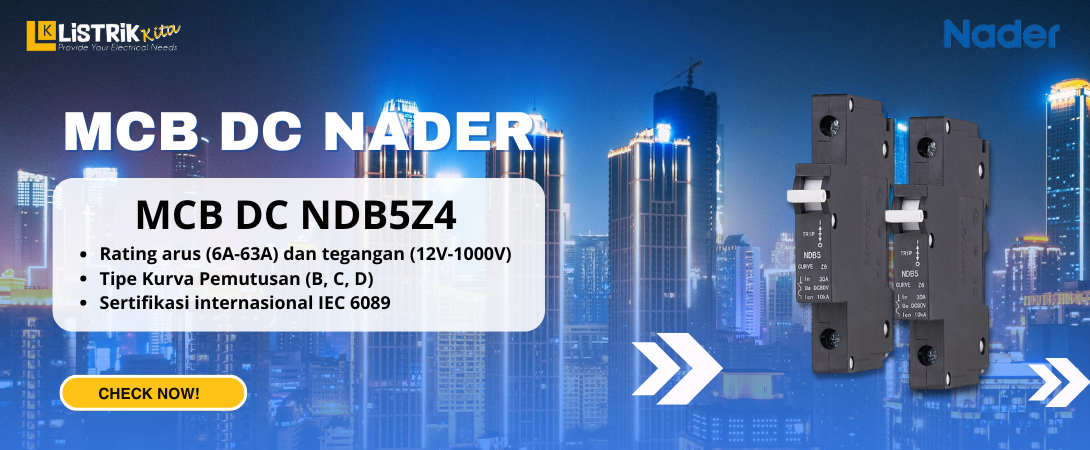
The advancement of renewable energy technology, particularly PV (photovoltaic) systems and EVs (electric vehicles), has significantly increased the implementation of DC power systems. However, DC systems require different protection mechanisms compared to AC (alternating current) systems due to their unique characteristics. MCB DC Nader emerges as a reliable protection system that effectively safeguards DC installations from overcurrent and short-circuit hazards. This article will discuss the definition, functions, working principles, and tips for selecting the right MCB DC Nader.
Understanding MCB DC Nader
What is an MCB DC?
An MCB (Miniature Circuit Breaker) DC is a compact circuit breaker specifically designed for direct current (DC) electrical systems. Its function is to automatically cut off electrical flow during faults such as overcurrent or short circuits, preventing equipment damage and fire hazards.
Difference Between MCB DC and MCB AC
The key difference lies in their current-breaking capabilities. Unlike AC, which has a natural zero-crossing point, DC requires a specialized interruption mechanism due to its constant current flow. Thanks to its unique construction, MCB DC Nader operates flawlessly in DC systems.
Functions and Benefits of MCB DC Nader
Overcurrent and Short-Circuit Protection
The primary function of MCB DC Nader is to serve as the main safeguard in DC power networks. When current exceeds safe limits or a short circuit occurs, it instantly disconnects the circuit to prevent further damage.
Benefits of Using MCB DC in DC Systems
-
Enhanced Safety: Prevents fire risks caused by overcurrent.
-
Asset Protection: Safeguards critical components like solar panels and batteries.
-
Improved Efficiency: Ensures stable power distribution and minimizes operational disruptions.
Advantages of MCB DC Nader in Green Energy Applications
Engineered with premium heat-defying and rust-proof components combined with ultra-accurate circuit interruption, MCB DC Nader offers unmatched protective performance.
Components and Structure of MCB DC Nader
Internal Components
-
Thermal Bimetal: Cuts off current during overheating.
-
Magnetic Coil: Reacts instantly to short circuits.
-
Switch Mechanism: Allows manual reset after fault resolution.
Materials and Technology Used
MCB DC Nader utilizes heat- and corrosion-resistant materials, combined with precision current interruption technology for optimal performance.
How MCB DC Nader Works
Current Interruption Mechanism
When current exceeds rated limits, the thermal bimetal expands to break the circuit. For short circuits, the magnetic coil reacts within milliseconds.
Thermal and Magnetic Protection System
The dual protection system ensures effective handling of various electrical faults.
Reset and Reoperation Process
After resolving the fault, the MCB can be manually reset by flipping the switch lever to the "ON" position.
Technical Specifications of MCB DC Nader
Current and Voltage Ratings
Available in various current ratings (6A–63A) and voltage ranges (12V–1000V) to suit different system requirements.
Trip Curve Types (B, C, D)
-
Curve B: For applications with low inrush current.
-
Curve C: Suitable for moderate inrush current devices.
-
Curve D: Ideal for high inrush current equipment like motors.
Certifications and Standards
With international certifications such as IEC 60898 and TUV, MCB DC Nader guarantees top-tier safety and quality.
Applications of MCB DC Nader
Solar PV Systems
Protects solar modules and inverters from overcurrent due to sunlight fluctuations.
Electric Vehicles (EVs)
Ensures the safety of battery systems and charging circuits in EVs.
Telecommunications and Industrial Systems
Used to secure telecom devices and industrial machinery relying on DC power.
Maintenance and Care for MCB DC Nader
Regular Inspection Schedule
For optimal performance, conduct routine checks every six months.
Cleaning and Maintenance
Use a dry brush to remove dust; avoid water or chemical cleaners.
Signs That Your MCB DC Nader Needs Replacement
-
Frequent tripping without apparent cause.
-
Visible physical damage (cracks, burns).
Tips for Choosing the Right MCB DC Nader
-
Match System Capacity: Select appropriate current/voltage ratings.
-
Prioritize Certifications: Ensure compliance with safety standards.
-
Consult Experts: Seek professional advice for complex installations.
Proper implementation of MCB DC Nader ensures both safety and efficiency in DC power systems. Choose the right product, perform regular maintenance, and enjoy top-tier protection for your renewable energy investments!
Get MCB DC Nader only at Listrik Kita!
