


Electricity is an important part of everyday life at home. From lights and televisions to refrigerators, air conditioners, and other electronic devices, everything depends on a safe and reliable electrical installation. As an official distributor of Schneider Electric and Simon Electric, Listrik Kita provides original and warranty-backed electrical products for residential, building, and project needs.
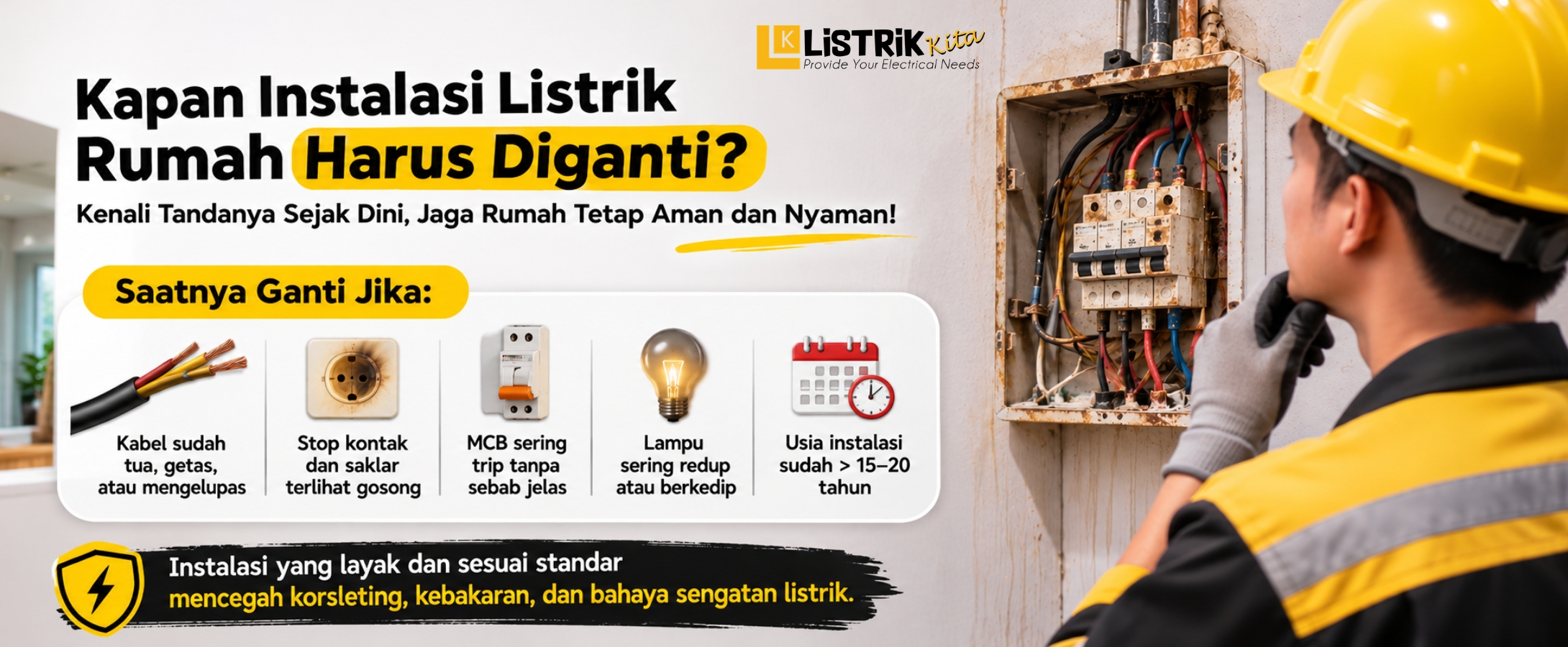
But have you ever wondered whether your home's electrical installation is still safe? Like other parts of a building, electrical components can deteriorate over time. Cables can age, circuit breakers can lose performance, while switches and sockets can wear out after years of regular use.
So, when should a home electrical installation actually be replaced?
Why Does an Electrical Installation Have a Limited Lifespan?
An electrical installation does not remain in the same condition forever. Long-term use, heat, moisture, dust, and excessive electrical loads can affect the condition of its components.
Home electricity needs can also change over time. A house that originally used only a few electrical appliances may now have several air conditioners, water heaters, water pumps, computers, or other high-power equipment.
That is why older electrical installations should be inspected to make sure their capacity and components are still suitable for current needs.
How Long Do Home Electrical Components Last?
Not every electrical component has the same lifespan. Replacement should not be based on age alone. Physical condition, frequency of use, environment, and electrical load should also be considered.
Electrical Cables
Electrical cables can last for many years when they are installed correctly and protected from damaging conditions. However, excessive heat, moisture, improper loads, and physical damage can cause the cable insulation to deteriorate faster.
Pay attention if the insulation becomes cracked, brittle, or damaged, or if the cable becomes unusually hot during use. These signs may indicate that the cable needs to be inspected and possibly replaced.
MCB
An MCB or Miniature Circuit Breaker protects an electrical circuit from overcurrent and short circuits. Although an MCB can operate repeatedly when a fault occurs, its condition and performance should still be monitored over time.
If an MCB trips frequently without an obvious reason, becomes hot, is difficult to reset, or shows physical damage, it should be inspected. Replacement may also be necessary if the home's electrical demand has increased.
Sockets and Switches
Electrical sockets and switches are among the components used most frequently in a home. Continuous use can loosen connections and cause components to wear out.
Watch for signs such as a hot socket, a burning smell, discoloration, buzzing sounds, or a switch that no longer works normally. These conditions should not be ignored.
Grounding
Grounding helps direct fault current safely into the ground and plays an important role in electrical safety. The grounding system should also be inspected regularly, especially in older homes.
If the grounding system does not work properly, protection against electric shock may not be effective. Grounding should be checked by a qualified technician.
Electrical Panel / MCB Box
The electrical panel houses protective devices and distributes electricity to different circuits throughout the home. As more appliances are added, a panel that was once sufficient may become overloaded or no longer provide enough space for additional circuits.
The panel should also be inspected if there are messy cables, hot terminals, burn marks, or insufficient space for new circuits. In some cases, upgrading or replacing the panel may be the safer option.
Signs Your Home Electrical Installation Needs Replacement
Besides age, several warning signs may indicate that your electrical installation needs inspection or an upgrade.
Frequent Electrical Problems
Frequent MCB trips, sudden power loss in certain areas, or electrical problems with appliances should not be considered normal. These issues may indicate problems with the electrical load, cables, connections, or protection system.
Burning Smell or Burn Marks
A burning plastic smell, blackened sockets, or heat marks around the electrical panel should be taken seriously. Stop using the affected component and have it inspected before using it again.
Old or Damaged Cables
Cables with cracked, brittle, or damaged insulation can increase the risk of electrical problems. Cables that become excessively hot should also be checked to make sure their size is suitable for the electrical load.
Increased Electrical Load
Adding air conditioners, water heaters, ovens, pumps, or other high-power appliances can significantly change the home's electrical requirements. Simply adding more sockets is not enough. The cables, MCBs, and circuit distribution must also be suitable for the additional load.
Tips to Keep Your Home Electrical Installation Safe
Inspect the Installation Regularly
Check the condition of cables, MCBs, sockets, switches, grounding, and the electrical panel regularly. Routine inspections can help identify potential problems before they become more serious.
Use Quality Electrical Components
Choose electrical components that match the installation specifications and electrical requirements. Quality products that meet the appropriate standards can support a safer and more reliable electrical system.
Match the Installation to the Electrical Load
Avoid connecting too many appliances to a single socket. When electricity demand increases, consider adding separate circuits and selecting cables and MCBs that are suitable for the load.
Do Not Ignore Warning Signs
Hot sockets, burning smells, sparks, damaged cables, or frequently tripping MCBs should never be ignored. Have the installation checked to identify and address the source of the problem.
There is no single age that automatically means an entire home electrical installation must be replaced. The condition of each component, installation quality, environment, installation age, and changes in electrical demand should all be considered.
If an electrical installation is old and starts showing signs of damage, a complete inspection can help determine which components are still safe to use and which ones need to be replaced. For Schneider Electric MCBs and other electrical products such as Simon Electric switches and sockets, you can find original and warranty-backed products at Listrik Kita.
