


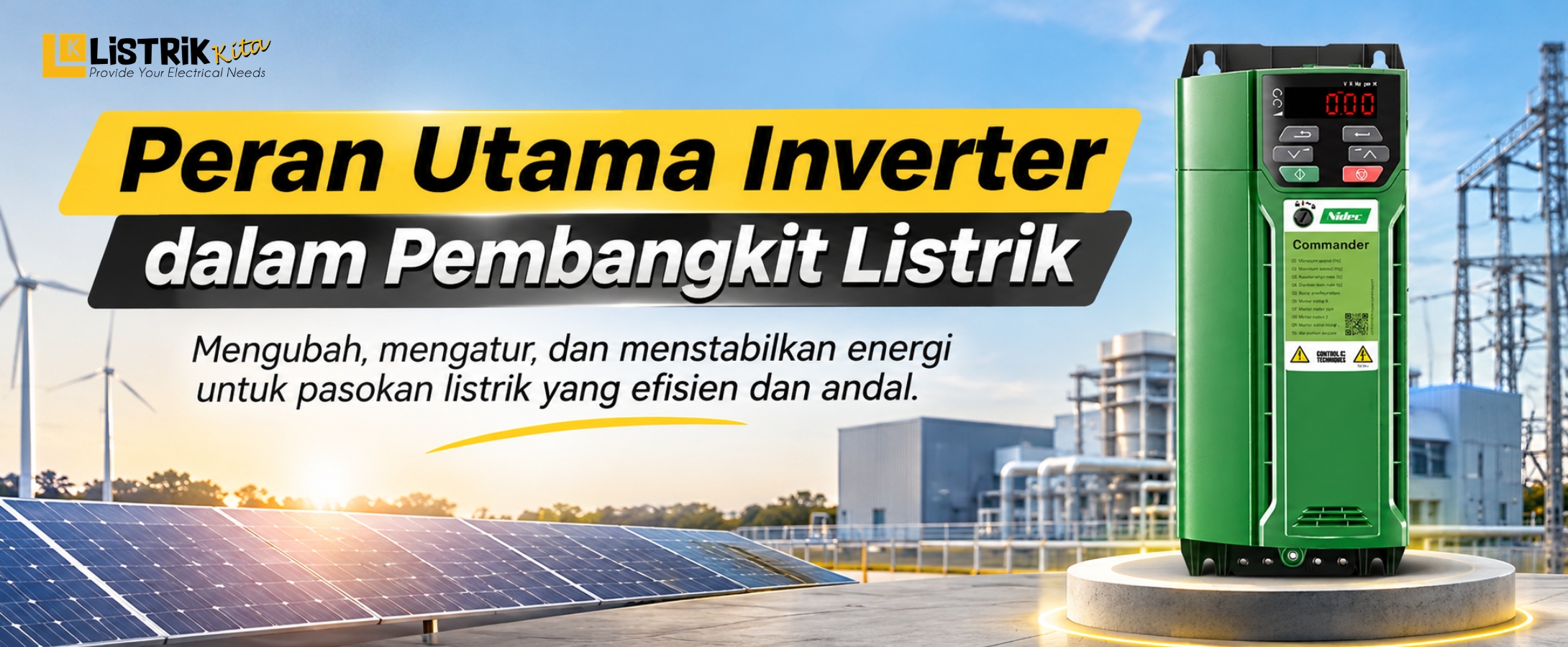
As energy demand continues to grow, power generation systems need equipment that can manage and optimize energy flow effectively. Listrik Kita is an official Nidec distributor that provides original and warranty-backed products, including inverters for various electrical applications. In a power generation system, an inverter does more than simply convert electrical current. It also plays an important role in maintaining system stability and improving energy efficiency.
What Is an Inverter and How Does It Work?
An inverter is a device that converts Direct Current (DC) into Alternating Current (AC). This function is important because many energy sources, such as solar panels and batteries, produce or store electricity as DC, while most electrical equipment and power grids use AC.
Modern inverters can also help control voltage, frequency, and power flow based on system requirements. Because of these capabilities, inverters are widely used in renewable energy systems and industrial applications.
1. Converting Electrical Current from DC to AC
Converting DC Energy into AC Power
One of the main functions of an inverter in a power generation system is converting DC electricity into AC electricity. This process allows energy from solar panels or batteries to be used by electrical equipment that requires an AC supply.
For example, solar panels generate DC electricity. The electricity then goes through an inverter and is converted into AC before being used by electrical loads or supplied to the power grid.
Why Is DC to AC Conversion Important?
This conversion allows energy from DC sources to be used by a wider range of electrical equipment. Without an inverter, electricity generated by solar panels or stored in batteries cannot be directly used by many AC-based electrical systems.
With proper conversion, electrical energy can be delivered according to the requirements of the system, making energy use more practical and efficient.
2. Integrating Renewable Energy and Energy Storage
Inverters in Solar Power Systems
An inverter is one of the key components in a solar power system. It connects the electricity generated by solar panels to electrical loads or the power grid. It also helps adjust the electrical output so it can be used safely and according to system requirements.
The use of an inverter allows renewable energy sources such as solar power to be integrated into electrical systems that operate with AC power.
The Role of Inverters in Energy Storage Systems
Inverters also play an important role in battery energy storage systems. Electricity stored in a battery is in DC form, so an inverter is needed to convert it into AC when the stored energy is used by electrical loads.
In some systems, the inverter can also manage power flow from the grid to the battery during charging. This makes energy storage systems more flexible and allows stored energy to be used when it is needed.
3. Frequency Regulation and Voltage Stabilization
Controlling Electrical Voltage and Frequency
Changes in electrical loads and energy sources can affect power quality. An inverter can help regulate electrical output so that voltage and frequency remain within suitable operating conditions.
This capability is especially useful in renewable energy systems because power generation can change depending on the available energy source, such as sunlight.
Supporting Electrical System Stability
Inverters with power control features can help a system respond to changes in load demand. Better power management can improve power supply stability and reduce the risk of disruptions caused by changing system conditions.
4. Motor Control and Load Efficiency
Using Inverters to Control Motor Speed
In industrial applications, inverters are also widely used to control electric motors. By adjusting the frequency and voltage supplied to a motor, its operating speed can be matched to the process requirements.
For example, a motor used for a pump or fan does not always need to run at maximum speed. With an inverter, the motor speed can be adjusted according to demand, helping prevent unnecessary energy consumption.
Improving Energy Efficiency
Adjusting motor speed according to actual requirements can help reduce energy consumption. It also allows the motor to operate more appropriately under different load conditions, making the overall operation more efficient.
Inverters can also make production processes more flexible because motor speed can be adjusted without always operating the motor at full capacity.
Inverters for Various Industrial Applications
Inverters can be used in many applications, including pumps, fans, conveyors, compressors, and production machines. Choosing the right inverter requires consideration of the motor characteristics, load capacity, control requirements, and operating conditions.
Inverters play an important role in modern power generation and electrical systems. Besides converting DC into AC, they can support renewable energy and energy storage integration, help maintain voltage and frequency stability, and control electric motors for better energy efficiency.
If you are looking for an inverter for industrial and electrical applications, Listrik Kita provides original and warranty-backed Nidec inverters. Find the right Nidec inverter for your application and get quality electrical products from Listrik Kita.
