


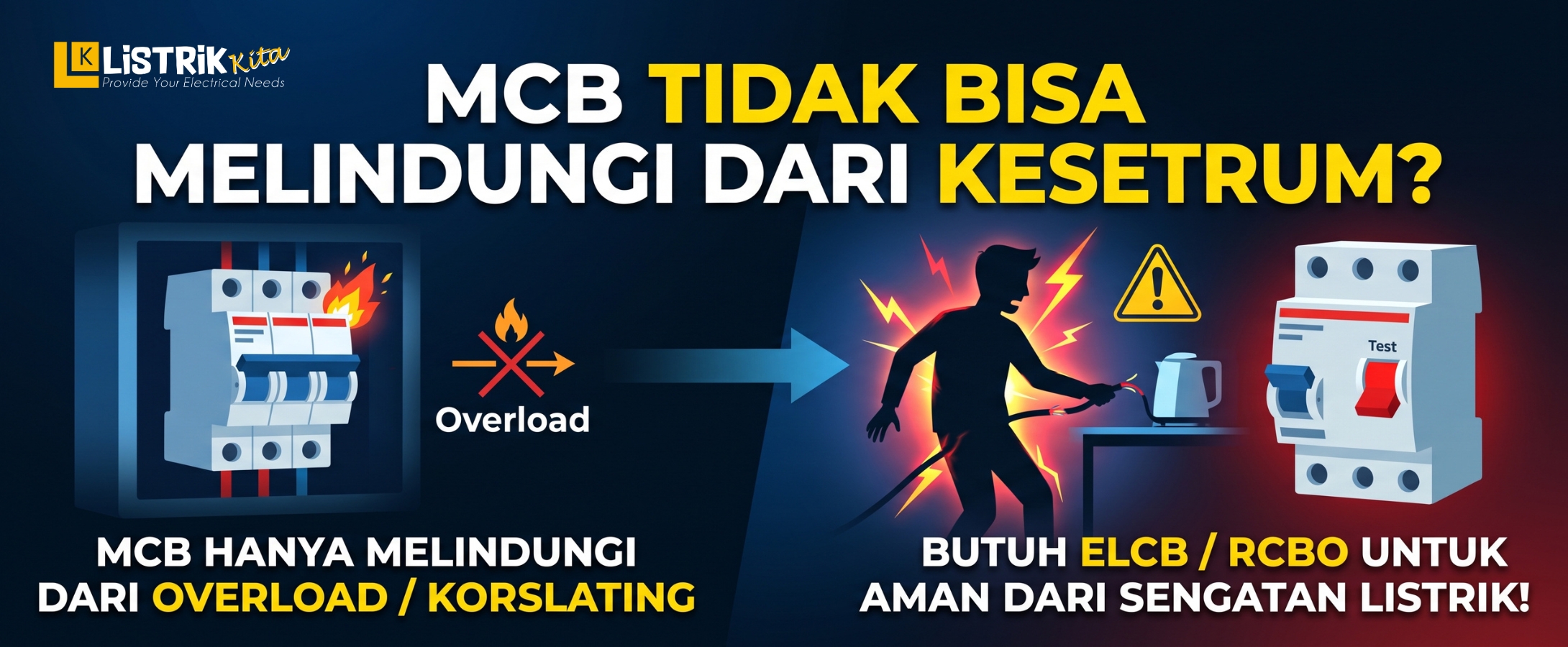
Listrik Kita is an official Schneider Electric distributor that provides original and warranty-backed products for various electrical installation needs. In an electrical system, protective devices such as MCBs and RCBOs play an important role in improving safety. However, many people still believe that an MCB can protect them when an electric shock occurs. In reality, MCBs and RCBOs have different functions.
Can an MCB Protect You from Electric Shock?
An MCB, or Miniature Circuit Breaker, is one of the most common protective devices used in electrical installations. It is designed to interrupt the electrical circuit when a condition could damage the installation, mainly due to overloads and short circuits.
The Main Function of an MCB in an Electrical Installation
An MCB works by detecting current that exceeds a specified limit. When too many electrical devices are connected to the same circuit and the current becomes too high, the MCB trips to help prevent excessive heating of the cables.
Besides overload protection, an MCB also protects against short circuits. During a short circuit, the current can increase very quickly. The MCB responds by disconnecting the circuit to help prevent further damage.
Why Is an MCB Not Designed to Detect Electric Shock?
An electric shock occurs when a person's body becomes part of an electrical current path. In some situations, the current flowing through the body may be below the level required to trip an MCB. This means a person can still receive an electric shock even though the MCB does not trip.
This is why an MCB should not be considered the main protective device against electric shock. Its primary purpose is to protect the electrical installation from excessive current and short circuits.
How Does an MCB Work During an Electrical Fault?
To understand the difference, it is important to know what conditions normally cause an MCB to disconnect a circuit.
An MCB Trips During an Overload
An overload occurs when the current used by electrical devices exceeds the capacity of a circuit. For example, several high-power appliances may be connected to the same circuit and operated at the same time.
When this happens, the MCB detects the excessive current and trips. This helps prevent cables and other electrical components from overheating and becoming damaged.
An MCB Disconnects the Circuit During a Short Circuit
A short circuit occurs when electrical conductors come into an unintended connection, causing a very high current to flow. This condition can damage electrical equipment and increase the risk of fire.
An MCB is designed to respond to this condition by disconnecting the electrical circuit, helping protect the installation from further damage.
An MCB Protects the Installation, Not the Human Body
Based on how it works, an MCB mainly focuses on protecting the electrical circuit. It responds when the current reaches certain conditions, rather than specifically detecting whether a person is being exposed to an electric shock.
Therefore, installing an MCB alone is not enough when additional protection against leakage current and electric shock is required.
What Happens When Someone Gets an Electric Shock?
When a person touches a live electrical part and there is a path to ground, the human body can become part of the electrical current path.
Electrical Current Can Flow Through the Human Body
The amount of current flowing through the body depends on several factors, including voltage, the current path, and the contact conditions. Electric shock can create serious safety risks, which is why protection against leakage current is an important part of an electrical installation.
Leakage Current Does Not Always Trip an MCB
One common misunderstanding is that an MCB will always trip when someone receives an electric shock. In reality, the current flowing through the human body may not be high enough to trip the MCB.
This is where an RCBO can provide an important additional layer of protection because it is designed to detect residual current or current imbalance in a circuit.
RCBO as Protection Against Leakage Current
An RCBO, or Residual Current Circuit Breaker with Overcurrent Protection, combines two protection functions in one device. It provides protection against overcurrent as well as residual or leakage current.
What Is an RCBO?
Simply put, an RCBO provides protection not only against overloads and short circuits but also against leakage current. It is designed to disconnect the circuit when it detects residual current conditions according to its specified trip characteristics and rating.
How Does an RCBO Detect Leakage Current?
An RCBO monitors the balance between the current flowing through a circuit and the current returning through it. If there is a difference indicating that some current is flowing through an unintended path, the RCBO can disconnect the circuit.
This mechanism makes an RCBO an important option for providing additional protection against the risk of electric shock caused by leakage current.
An RCBO Helps Reduce the Risk of Electric Shock
Using an RCBO does not mean that a person is completely protected from every possible electric shock. However, it can provide an additional layer of protection by detecting residual current conditions that are not the primary focus of an MCB.
The RCBO should also be selected according to the installation requirements, current rating, sensitivity, number of poles, and characteristics of the electrical system.
MCB vs RCBO: What Is the Difference?
Understanding the difference between an MCB and an RCBO helps you choose the right protection device for an electrical installation.
MCB vs RCBO Protection Functions
Device | Main Protection |
| MCB | Overload and short circuit |
| RCBO | Residual or leakage current, overload, and short circuit |
An MCB is suitable for protecting electrical circuits against overloads and short circuits. An RCBO provides an additional residual current protection function that can help reduce the risk of electric shock.
When Should You Use an MCB?
An MCB can be used to protect electrical circuits from overloads and short circuits. Its current rating should be selected according to the cable capacity and electrical load of the circuit.
When Should You Use an RCBO?
An RCBO can be considered for circuits that require additional protection against leakage current. It can be particularly useful in areas or applications where user safety requires additional protection.
Do Not Rely on an MCB for Electric Shock Protection
MCBs and RCBOs have different functions, so they should not be treated as interchangeable devices in every situation. An MCB is designed primarily to protect an installation against overloads and short circuits, while an RCBO also provides residual current protection.
Use the Right Electrical Protection
A safe electrical system requires protective devices that match the characteristics of the installation. In addition to MCBs or RCBOs, other factors such as grounding, cable size, and proper installation should also be considered.
Have Your Electrical Installation Checked by a Qualified Professional
The selection and installation of electrical protection devices should take into account the installation conditions and applicable safety standards. If additional protection against leakage current is required, an RCBO can be one of the options worth considering.
In short, an MCB is not specifically designed to protect people from electric shock. Its main function is to protect the electrical installation against overloads and short circuits, while an RCBO provides additional protection against residual or leakage current. If you are looking for original and warranty-backed Schneider Electric RCBO products, you can purchase them through Listrik Kita for your electrical protection needs.
