


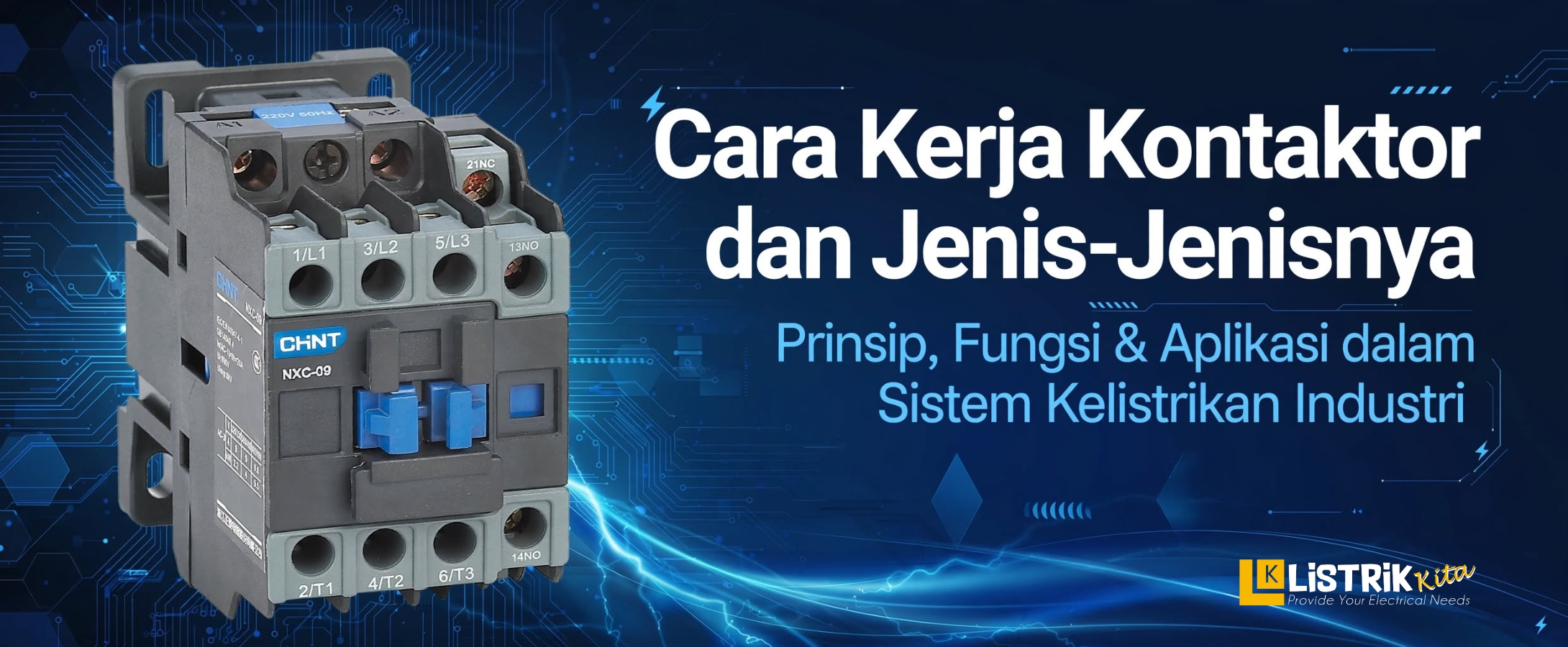
In an electrical system, a contactor is an important component used to control the flow of electricity to different types of loads. Contactors are commonly used for electric motors, lighting systems, capacitors, and industrial equipment. Listrik Kita is an official Schneider Electric distributor that provides original and warranty-backed electrical products for various applications.
Understanding how a contactor works is important to make sure it is selected and used correctly. In simple terms, a contactor uses a magnetic field to open or close electrical contacts based on a signal from a control circuit.
What Is a Contactor?
A contactor is an electromechanical device used to connect or disconnect electrical power to a load in a controlled way. It is commonly used in circuits with relatively high power requirements, allowing the load to be controlled through a lower-power control circuit.
Unlike a regular switch that is usually operated manually, a contactor can operate automatically based on a signal from a control circuit. This makes contactors widely used in automation systems and industrial electrical installations.
Function of a Contactor in an Electrical Installation
The main function of a contactor is to control the flow of electricity to a load. It can be used to control motors, lights, capacitors, heaters, and various other electrical equipment.
A contactor also allows high-power loads to be controlled using a simpler control circuit. This makes an electrical system more practical and easier to integrate with automation equipment.
Working Principle of a Contactor
A contactor works based on electromagnetic force. When the coil receives voltage from the control circuit, it creates a magnetic field. This magnetic field attracts the armature and changes the position of the electrical contacts.
When the contactor is energized, the main contacts close and allow electrical current to flow to the load. When power to the coil is removed, the magnetic field disappears and a spring mechanism returns the armature to its original position. The main contacts then open, stopping the current flow to the load.
The Role of the Coil
The coil is an important part of the contactor because it activates the internal mechanism. It receives voltage from the control circuit and creates a magnetic field when energized.
The coil voltage must match the control voltage used in the electrical system. Choosing the correct coil specification helps the contactor operate properly and reduces the risk of problems in the control circuit.
Magnetic Field and Armature Movement
When the coil is energized, the magnetic field attracts the armature. This movement changes the position of the contactor contacts.
This mechanism allows electrical current to be connected or disconnected quickly according to the control signal.
How Does a Contactor Work?
The operation of a contactor can generally be explained through several simple stages. Each stage works together to make sure the load operates according to the control command.
The Control System Sends a Signal to the Coil
The process starts when the control circuit sends voltage to the contactor coil. The signal may come from a push button, relay, timer, PLC, or another control device.
The Coil Creates a Magnetic Field
Once voltage reaches the coil, it creates a magnetic field. This magnetic field provides the force needed to move the internal mechanism of the contactor.
The Armature Moves and the Contacts Close
The magnetic field attracts the armature, causing the contacts to change position. The normally open main contacts close when the contactor is energized.
Electrical Current Flows to the Load
Once the main contacts are closed, the electrical circuit is connected and current can flow to the load. The load may be an electric motor, lighting system, capacitor, or other electrical equipment.
The Signal Stops and the Contacts Open Again
When the signal to the coil is removed, the magnetic field disappears. The spring mechanism then returns the armature to its original position. The main contacts open and stop the flow of electricity to the load.
Types of Contactors
Contactors are available in different types for different applications. The right type should be selected based on the characteristics of the load and the electrical system.
Power Contactor
A power contactor is commonly used to control electrical loads such as motors and equipment with relatively high power requirements. It is widely used in motor control panels and industrial applications.
Capacitor Switching Contactor
A capacitor switching contactor is designed for switching capacitor loads. This type of contactor has specific characteristics that support capacitor switching applications in electrical systems.
Lighting Contactor
A lighting contactor is used to control lighting circuits. It can help control multiple lighting groups through a single control system, making it useful for commercial buildings and other large installations.
Definite Purpose Contactor
A definite purpose contactor is designed for specific applications and is commonly used in equipment such as HVAC systems, refrigeration equipment, and other commercial applications. The selection should match the characteristics of the equipment being controlled.
Factors to Consider When Choosing a Contactor
Choosing a contactor is not only about its physical size. Several specifications should be considered to make sure the contactor is suitable for the application.
Load Voltage and Current
Make sure the operating voltage and load current are within the contactor's rated capacity. Selecting the right rating helps maintain system reliability.
Coil Voltage
The coil voltage must match the voltage supplied by the control circuit. Coil specifications can vary depending on the contactor type and application.
Type of Load
The type of load also affects the contactor selection. Motors, capacitors, lighting systems, and special applications may require different types of contactors.
A contactor uses electromagnetic principles to connect and disconnect electrical power to a load. The process starts when a control signal energizes the coil, creates a magnetic field, moves the armature, and closes the contacts so current can flow to the load. When the signal stops, the contacts open again and disconnect the electrical supply.
If you need a contactor for motors, electrical panels, lighting systems, or other applications, make sure to choose a product that matches your system specifications. You can buy original and warranty-backed Schneider Electric contactors from Listrik Kita for residential, commercial, and industrial electrical needs.
