


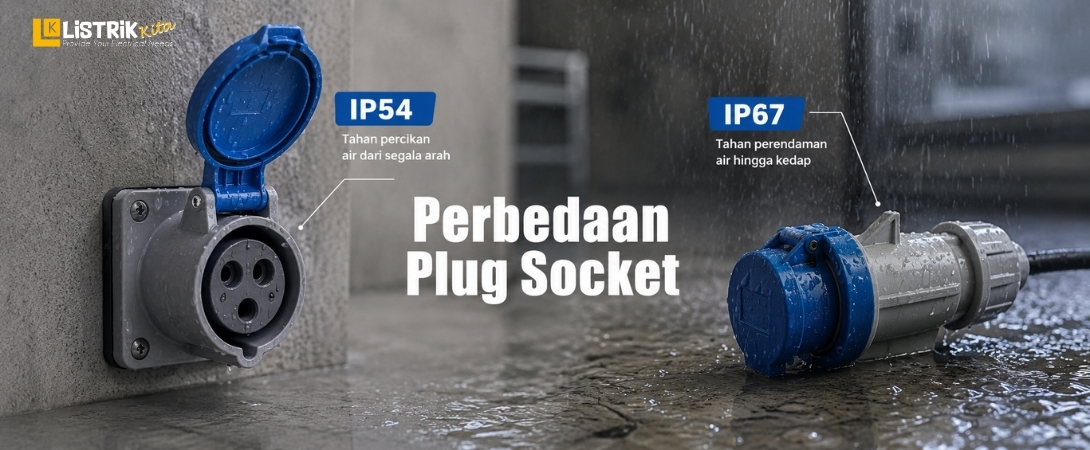
When choosing a plug socket for an electrical installation, the shape, electrical capacity, and connector type are not the only things to consider. The environment where the socket will be installed is also important, especially if the area is exposed to dust or water. This is why understanding the IP rating is useful when selecting an industrial plug socket.
Two common ratings found on industrial plug sockets are IP54 and IP67. Both provide protection against solid particles and water, but their protection levels are different. So, what is the difference between IP54 and IP67 plug sockets, and when should each type be used?
What Is an IP Rating on a Plug Socket?
IP stands for Ingress Protection. It is a code used to show how well an electrical product is protected against the entry of solid objects and water. The code normally consists of two numbers, such as IP54 or IP67.
The first number shows the level of protection against solid objects and dust. The second number shows the level of protection against water.
How to Read the Numbers in an IP Code
On an IP54 plug socket, the number 5 indicates protection against dust to a level that does not interfere with normal operation. The number 4 means the product is protected against water splashes from different directions.
On an IP67 plug socket, the number 6 indicates a dust-tight enclosure. The number 7 means the product is protected against temporary immersion in water under the specified test conditions.
Why Is the IP Rating Important for a Plug Socket?
Plug sockets used in certain environments need the right level of protection. Dust, water splashes, rain, and outdoor conditions can affect the safety and durability of electrical components if the wrong product is used.
By checking the IP rating, users can choose a plug socket based on the actual installation environment, rather than simply looking at its appearance or electrical specifications.
IP54 vs IP67 Plug Socket Specifications
Although both ratings provide additional protection, IP54 and IP67 have different capabilities.
IP54 Plug Socket Specifications
An IP54 plug socket has the number 5 as its first digit, which indicates protection against dust to a certain level. A small amount of dust may enter, but it should not interfere with the main operation of the product under suitable conditions.
The second digit, 4, means protection against water splashes from different directions. Therefore, IP54 is more suitable for environments where the product may experience water splashes or light rain, rather than conditions where it may be immersed in water.
IP67 Plug Socket Specifications
For an IP67 plug socket, the first digit, 6, indicates full protection against dust. This makes it more suitable for environments where a higher level of dust protection is needed.
The second digit, 7, indicates protection against temporary immersion in water under the specified test conditions. Because of this higher protection level, IP67 can be considered for outdoor applications and more demanding environments.
Comparing IP54 and IP67 Plug Sockets
The main difference between the two ratings can be seen in their protection against dust and water.
Protection Against Solid Objects
IP54 uses the number 5 for dust protection, while IP67 uses the number 6. Therefore, IP67 provides a higher level of dust protection because its enclosure is designed to prevent dust from entering.
Protection Against Water
IP54 has the number 4 as its second digit, meaning it is protected against water splashes. IP67 has the number 7, which provides protection against temporary immersion in water under specified test conditions.
This means IP67 offers a higher level of protection against temporary immersion than IP54. However, the installation conditions and the complete product specifications should still be checked before use.
Which One Is More Suitable for Harsh Environments?
Based on the IP rating, IP67 provides a higher level of protection against dust and temporary water immersion compared with IP54. Therefore, IP67 is more suitable when a plug socket will be installed in a more demanding environment.
However, this does not mean IP67 is always the best choice. If the installation area only has light dust and occasional water splashes, IP54 may be a more suitable option.
Ideal Applications for IP54 Plug Sockets
IP54 plug sockets can be used in areas that need basic protection against dust and water splashes.
Suitable for Areas with Light Dust
IP54 can be considered for rooms or work areas with light dust exposure. Examples may include workshops, certain workspaces, and industrial environments where dust exposure is relatively controlled.
Outdoor Areas with Water Splashes
For outdoor areas where the socket may only be exposed to water splashes or light rain, an IP54 plug socket can be a suitable option. However, the installation position should still be considered to prevent exposure beyond the product's rated protection.
Examples of Suitable IP54 Areas
IP54 can be used in semi-outdoor areas, workshops, certain industrial work areas, and other locations with light dust and water splash exposure.
Ideal Applications for IP67 Plug Sockets
IP67 plug sockets are more suitable for environments that require stronger protection against dust and temporary water immersion.
Suitable for Outdoor and Harsh Environments
With protection against dust and temporary immersion, IP67 can be used in various outdoor areas and demanding work environments.
This type of plug socket can be considered for industrial installations, outdoor work locations, and areas where exposure to water is more likely.
Protection Against Water and Temporary Immersion
One of the key benefits of IP67 is its protection against temporary immersion in water under the specified test conditions. However, this does not mean the plug socket can be permanently used underwater.
Examples of Suitable IP67 Areas
IP67 is suitable for outdoor areas, demanding industrial environments, dusty work locations, and other areas where the risk of water exposure is higher.
IP54 vs IP67 Plug Socket: Which One Should You Choose?
The choice between IP54 and IP67 should depend on the actual installation environment. If the required protection is mainly against light dust and water splashes, IP54 can be a suitable option.
On the other hand, if the installation requires a higher level of dust protection and there is a risk of temporary water immersion, IP67 is a better option to consider.
So, do not simply choose the higher IP number. Make sure the rating matches the environmental conditions, installation method, and electrical requirements.
IP54 and IP67 plug sockets both provide environmental protection, but their protection levels are different. IP54 provides protection against dust to a certain level and water splashes, making it suitable for relatively mild conditions. IP67 provides full dust protection and protection against temporary water immersion, making it more suitable for outdoor and demanding environments.
If you are looking for an industrial plug socket for your electrical installation, choose a product based on the environmental conditions and protection level required. Explore various industrial plug socket options at Listrik Kita to support your electrical installation needs.
