


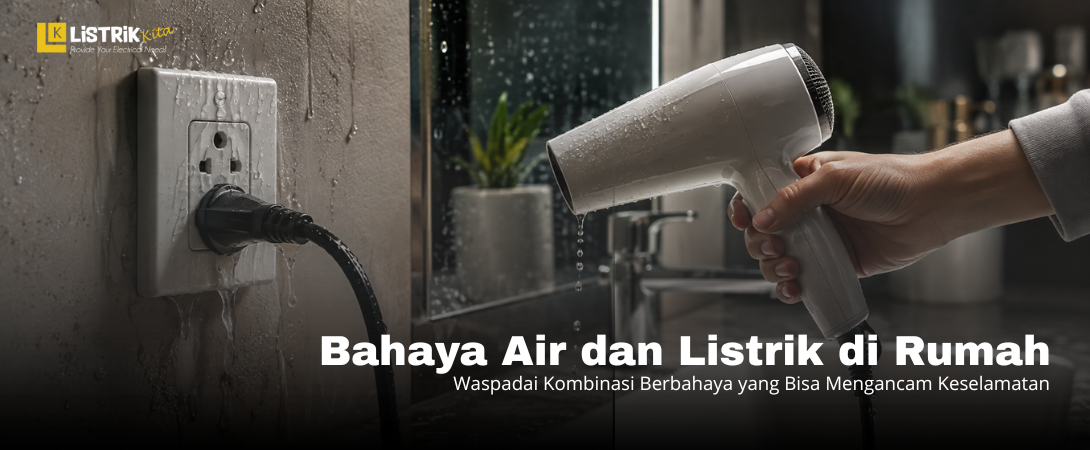
Water can help electrical current flow, especially when it contains minerals, salts, or other substances that increase its ability to conduct electricity. If someone touches electrical equipment that has come into contact with water, the current may pass through the body and cause an electric shock.
The risk becomes higher when your hands or body are wet. For this reason, avoid using electrical appliances with wet hands or touching electrical outlets in damp conditions.
The Risk of Electric Shock in Wet Areas
Wet areas can increase the risk of electric shock. Water on the floor can also become part of the path for electrical current if there is a current leak.
Something as simple as touching a plug, cable, or electrical outlet after it has been exposed to water can be dangerous. Always make sure your hands are dry before handling electrical equipment.
Water and Electricity Can Cause Short Circuits
Water can cause more than electric shocks. If it enters electrical equipment or installations, it can also cause a short circuit. This happens when electrical current flows through an unintended path.
A short circuit can damage equipment, create sparks, and in certain situations increase the risk of fire. Electrical equipment exposed to water should not be used again until it has been properly checked and confirmed to be safe.
Areas at Home That Need Extra Attention
Bathroom: A High-Risk Area for Water and Electricity
The bathroom needs extra attention because it is constantly exposed to water. Devices such as water heaters, lights, exhaust fans, and other electrical equipment should be installed and used properly.
Avoid placing cables or electrical equipment where they can easily come into contact with splashing water. Make sure the electrical installation in the bathroom is properly protected.
Kitchen: Keep Water Away from Electrical Appliances
Kitchens contain many electrical appliances, including rice cookers, blenders, microwaves, water dispensers, and other equipment. At the same time, the kitchen is often used for activities involving water.
Keep electrical appliances away from water sources. Do not place cables or plugs near the sink if they could be exposed to splashes. After using an electrical appliance, make sure the surrounding area remains dry.
Laundry Area: Keep Cables and Appliances Away from Water
Laundry areas also require attention because they usually contain water, washing machines, and electrical equipment. Make sure washing machine cables and other electrical devices are kept away from areas where water can collect or splash.
If the floor around the laundry area is wet, dry it first before checking or moving electrical equipment.
Outdoor Areas That May Be Exposed to Water
Outdoor areas such as patios, garages, and yards can also become risky during heavy rain or flooding. Extension cables and electrical equipment used outdoors should be suitable for outdoor use and properly protected from water.
How to Keep Electricity Safe at Home
Avoid Touching Electrical Outlets with Wet Hands
Wet hands can increase the risk of electric shock. Before plugging in or unplugging an appliance, dry your hands first. This simple habit can help reduce the risk of electrical accidents at home.
Do Not Use Electrical Appliances Near Standing Water
Keep electrical appliances away from puddles, splashes, and other water sources. If an appliance accidentally gets wet, do not immediately touch or turn it on. Make sure it has been checked and is safe before using it again.
Turn Off the Power During Leaks or Flooding
If there is a water leak or flooding that may reach electrical installations, do not immediately inspect the equipment by hand. Turn off the power from a safe location and avoid touching electrical components that are under water.
If it is not safe to turn off the power yourself, contact a qualified technician or professional.
Check Cables, Plugs, and Outlets Regularly
Regular inspections can help identify problems before they become more serious. Look for damaged insulation, cracks, loose connections, discoloration, or cables that become unusually hot.
Plugs and electrical outlets should also be checked. If you find any damage, stop using them and replace the damaged components with suitable, quality products.
What Should You Do If Water Reaches Electrical Equipment?
Do Not Immediately Touch Equipment Exposed to Water
When water reaches electrical equipment, do not immediately touch or move it. Equipment that appears to be turned off may still be dangerous if it remains connected to a power source.
Turn Off the Power from a Safe Location
If it can be done safely, switch off the power from the electrical panel or circuit breaker located in a dry area away from the water. Never walk through standing water just to reach an electrical switch.
Have the Installation Checked Before Using It Again
Once the situation is safe, electrical equipment and installations exposed to water should be inspected before being used again. Do not assume that equipment is safe simply because the outside appears dry.
Electrical safety at home starts with simple habits, including keeping cables and electrical equipment away from water. If you're looking for electrical cables for your home, Listrik Kita offers a range of options to meet your installation needs. Choose cables according to your installation requirements to help make your home electrical system safer and more reliable.
