


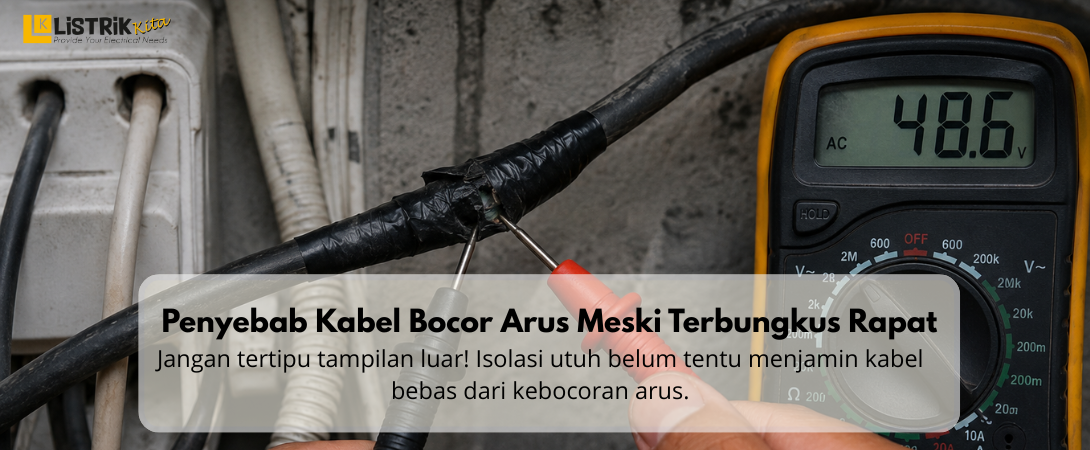
Electrical cables are covered with insulation to keep current inside the conductor and protect people from electric shock. Many people assume that if the outer jacket looks intact, the cable must be completely safe. In reality, a cable can still experience current leakage even when its outer covering appears to be in good condition.
Current leakage is not always caused by visible damage to the insulation. Capacitive induction, hidden internal damage, and poor insulation materials can all reduce the cable's ability to contain electricity. Understanding these causes helps prevent electrical failures, equipment damage, short circuits, and even fire hazards.
Does an Intact Cable Insulation Always Mean It Is Safe?
Understanding the Difference Between Normal Current and Leakage Current
Under normal conditions, electrical current flows only through the conductor inside the cable to the connected load. Leakage current happens when a small portion of that current flows through an unintended path, such as the ground, a metal frame, or another conductive surface.
The amount of leakage current is often very small and may not produce obvious symptoms. However, if it continues over time, it can reduce the reliability of the electrical system and increase safety risks.
Why Current Leakage Is Not Always Visible
The outer insulation protects the cable, but it does not always reveal what is happening inside. Internal insulation and conductors may deteriorate because of heat, aging, or mechanical stress while the cable jacket still looks perfectly normal.
Capacitive Induction Can Create Leakage-Like Current
What Is Capacitive Induction?
When two or more cables are installed close to each other, an electrical field forms between the conductors. This creates a capacitive effect that allows a very small amount of electrical energy to be induced into a nearby cable without a direct electrical connection.
This phenomenon is called capacitive induction. Although the current is usually very small, it can affect electrical measurements, especially in long cable runs or industrial installations.
Why Do Nearby Cables Influence Each Other?
An energized cable creates an electric field around it. When another conductor is placed nearby, the field can induce a small voltage or current in that conductor. The longer the cable run and the closer the spacing, the greater the capacitive effect may become.
This is not the same as insulation failure, but it is often mistaken for leakage current during testing.
Pinched or Aging Cables Can Damage the Internal Insulation
Mechanical Stress Can Damage the Cable
A cable that is repeatedly pinched by doors, compressed under heavy objects, or bent beyond its recommended limit can suffer internal insulation damage. In many cases, the outer jacket remains intact while the inside has already deteriorated.
Over time, these hidden defects can create a path for unwanted current flow.
Heat, Aging, and Vibration Reduce Insulation Performance
Continuous exposure to high temperatures speeds up insulation aging. Machine vibration and repeated temperature changes can also make insulation harder and more brittle, increasing the chance of cracks.
For this reason, older cables should be inspected regularly even if they still look good from the outside.
Poor Insulation Quality Increases the Risk of Current Leakage
Why Insulation Material Matters
High-quality insulation is designed to withstand electrical stress, heat, and moisture for many years. Lower-quality materials tend to degrade faster, making current leakage more likely over time.
Choosing cables that meet recognized quality standards is one of the best ways to improve electrical safety.
The Impact of Low-Quality Cables
Poor-quality cable insulation may harden, crack, or absorb moisture more easily. These changes reduce insulation resistance and increase the possibility of leakage current, especially in humid or high-temperature environments.
How to Detect Current Leakage
A multimeter can be used for basic continuity and resistance testing. However, insulation condition is more accurately evaluated with an insulation resistance tester, also known as a megger.
It is also important to perform a visual inspection. Look for discoloration, burn marks, cracks, or sections that have been pinched. If any damage is found, replace the cable before it leads to a short circuit or other serious electrical problems.
A cable that appears to be tightly insulated is not always free from current leakage. Capacitive induction, hidden insulation damage caused by aging or mechanical stress, and poor insulation materials are among the most common causes. Regular inspections and the proper testing equipment are essential to keep electrical systems safe and reliable.
If you are looking for a reliable multimeter to inspect electrical wiring, explore the selection available at Listrik Kita. You can find quality measuring tools from trusted brands to help you test electrical installations accurately, safely, and with confidence.
