


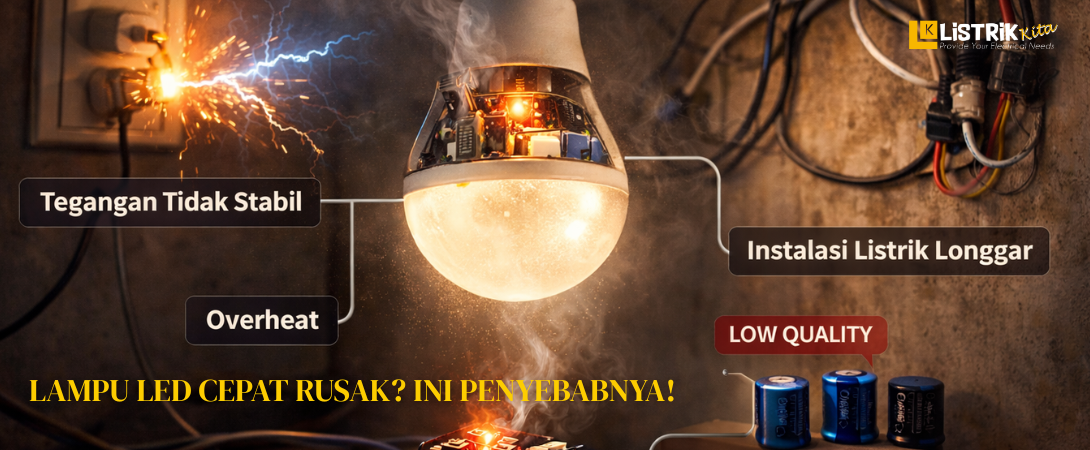
LED lights have become the top choice for home lighting because they save electricity and last long. But have you ever experienced an LED light that suddenly dies after just a few months? It's definitely frustrating because you have to spend more money to buy a new one.
Actually, there are many factors that cause LED lights to break quickly. Understanding these reasons is important so we can be wiser in choosing and caring for LED lights. Here are eight main reasons why LED lights need to be replaced immediately.
Problems with the Power Source
An unsuitable power source is the most common cause of LED light damage. When there is a mismatch, the components inside can break quickly.
Incorrect Adapter or Driver
Certain types of LED lights, such as LED strips or 12V/24V garden lights, need a special adapter. The adapter functions to convert the 220V PLN electricity into the low voltage that the light needs.
If you use an adapter with higher voltage, the light will receive too much voltage and the components inside can burn out. On the other hand, if the voltage is too low, the light will shine dimly or flicker, which actually makes the internal driver work extra hard. Always use an adapter that matches the manufacturer's specifications.
Loose or Damaged Cables
Loose cable connections cause unstable electricity flow. The uneven flow of electricity creates small sparks and excess heat at the connection points. This condition not only damages the LED driver but also risks causing fires. Frayed or corroded cables also reduce their ability to conduct electricity.
Disturbances in the Home Electrical Network
Poor quality electricity from the home network will shorten the life of all electronic devices, including LED lights.
Power Overload
Overload happens when too many electrical devices use power from the same circuit. Even though LED lights consume low power, if one circuit has many other devices like refrigerators and air conditioners running at the same time, the total load can exceed capacity.
As a result, the voltage drops dramatically or rises unpredictably. Sensitive LED lights will respond by flickering or suddenly turning off. If this keeps happening, the light driver can break down.
Voltage Fluctuations
Voltage fluctuation is the rise and fall of electrical voltage in a short time. This phenomenon often occurs when large appliances like water pumps or refrigerators start up. They draw large currents which cause the voltage to momentarily drop, then rise again.
LED lights actually come with voltage stabilizing drivers. However, if fluctuations happen too often or are too extreme, the driver cannot survive. As a result, the light dies completely.
Environmental and Usage Factors
How we install and where we place the lights greatly affects their lifespan.
Excessive Heat Buildup
Although LED lights feel cool to touch, the components inside actually produce heat. This heat is released through cooling fins (heatsinks) on the light housing.
Problems arise when the light is installed in a space that is too narrow and enclosed, like a ceiling without ventilation. Hot air gets trapped, the internal temperature of the LED chip rises dramatically, and the light dies quickly before its time.
Dust and Dirt Accumulation
Dust that sticks to the light surface or cooling fins acts like heat insulation. Dust blocks the process of releasing heat into the surrounding air. The thicker the dust, the harder it is for heat to escape. Cleaning the lights regularly can help maintain cooling performance.
Damage to Supporting Components and Product Quality
Not all lights are created equal. Component quality greatly determines how long a light will last.
Damage to Dimmer Switch
Compatibility between LED lights and dimmers varies, so not every dimmer will work with every LED bulb. Older dimmers designed for incandescent bulbs work on different principles. Using an incompatible dimmer will produce buzzing sounds, abnormal flickering, or permanent damage to the LED driver.
Poor Quality LED Lights
Cheap prices often go hand in hand with low quality. Cheap LED lights usually use second-class components, from the chip to the driver. Low quality drivers do not have protection against voltage surges. Investing a little more in quality lights usually pays off with longer lifespan.
Natural Factor: End of Lifespan
All electronic devices have a limit to their age, including LED lights.
Damage Due to Age
LED lights do not die suddenly. Instead, they experience a gradual decrease in brightness. This phenomenon is called lumen depreciation. Quality LED lights typically have a lifespan of 15,000 to 50,000 hours. After passing that period, the light produced becomes dimmer. It's time to replace it with a new one.
Understanding the causes of LED light damage helps us be more careful in choosing and caring for them. Make sure the electrical installation is in good condition, use lights according to specifications, and maintain cleanliness and air circulation around the lights. With proper care, LED lights can last longer and save money in the long run.
If the LED lights in your home are showing signs of damage or you want to replace them with better quality ones, make sure you buy trusted products. As a trusted electrical equipment provider, Listrik Kita offers products from well-known brands that have proven durability. Shop now at Listrik Kita, because good lighting starts with choosing the right product!
