


What Is CRI?
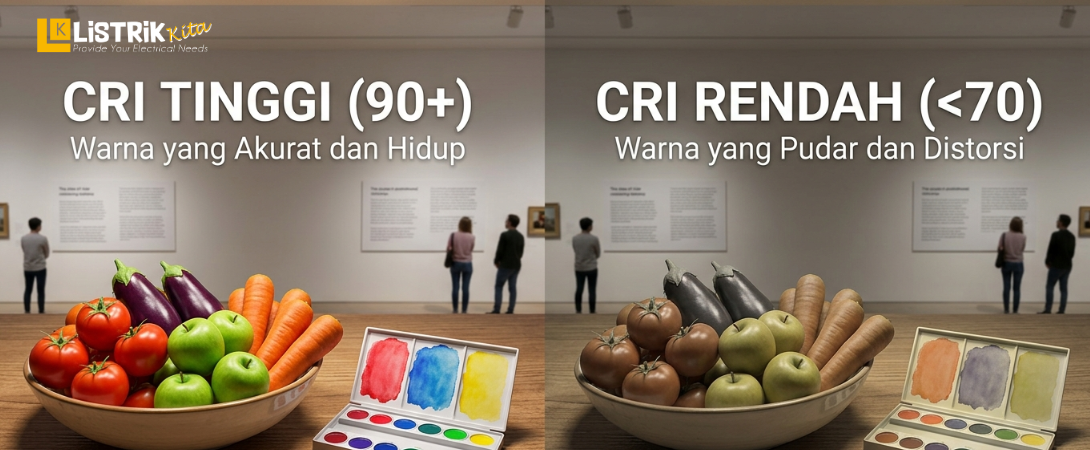
CRI or Color Rendering Index is a measurement used to determine how accurately a light source displays the true colors of an object compared to a reference light source. The CRI scale ranges from 0 to 100. The higher the value, the more natural and accurate the colors appear.
CRI plays an important role in modern lighting, especially for LED lamps. Good CRI lighting helps objects look more vibrant, clear, and closer to their real colors.
The Basics of CRI: How Does It Work?
a. CRI Scale and Range
The CRI scale ranges from 0 to 100. The higher the value, the more accurately colors appear under the light source. Here is the common CRI classification:
- CRI 0-50: Poor quality, colors appear dull and inaccurate
- CRI 60-70: Acceptable for basic lighting needs
- CRI 80: Good quality and commonly used for homes, offices, and commercial spaces
- CRI 90-100: Excellent quality with highly accurate and natural color rendering
Lighting with a low CRI often makes colors look different from their true appearance. In contrast, high CRI lighting produces more vibrant and realistic colors.
b. Measuring the Quality of Artificial White Light Sources
CRI is used to evaluate the quality of artificial white light sources such as LED, fluorescent, and halogen lamps. The process compares how colors appear under a specific light source against a standard reference light.
The closer the colors look to their original appearance, the higher the CRI value.
c. CRI Measures and Compares Reflected Object Colors Under Artificial Light
Different light sources produce different color spectrums. Because of this, the appearance of an object can change depending on the type of lighting used.
For example, fresh produce in supermarkets looks more attractive under high CRI lighting. On the other hand, low CRI lighting can make colors appear faded and less appealing.
d. You Cannot Determine CRI Without Comparing Color Output
CRI cannot be measured without comparing the light source to a reference light. This comparison is necessary to evaluate how accurately artificial lighting reproduces colors.
That is why two lights with similar brightness may still produce very different color quality.
The Difference Between High and Low CRI
Characteristics of High CRI Lighting
High CRI lamps produce more natural and detailed colors. This type of lighting is ideal for retail stores, photography studios, makeup rooms, art galleries, and workspaces that require accurate color visibility.
It also improves visual comfort and helps people see object details more clearly.
Characteristics of Low CRI Lighting
Low CRI lighting often makes colors look flat and inaccurate. In some cases, skin tones, food, and products may appear different from their actual colors.
However, low CRI lighting is still commonly used in areas where color accuracy is not a priority, such as warehouses and utility spaces.
Main Factors That Affect CRI Scores
Light Source
The type of lamp greatly affects the CRI value. Modern LED lighting usually offers better CRI performance compared to some traditional lighting technologies.
Object Material
The texture and material of an object influence how colors reflect under light.
Distance and Angle
Lighting position and angle can affect how colors appear to the human eye.
Specific Colors and Object Quality
Some colors are harder to reproduce accurately, especially under poor-quality lighting.
Lighting Environment
Natural light and surrounding room conditions also affect color perception.
Understanding the difference between high and low CRI is important before choosing lighting for homes or businesses. High CRI lighting provides better color accuracy, improved visual comfort, and better overall lighting quality.
If you are looking for high-quality lighting products for residential, commercial, or industrial needs, explore trusted lighting solutions from Listrik Kita.
