


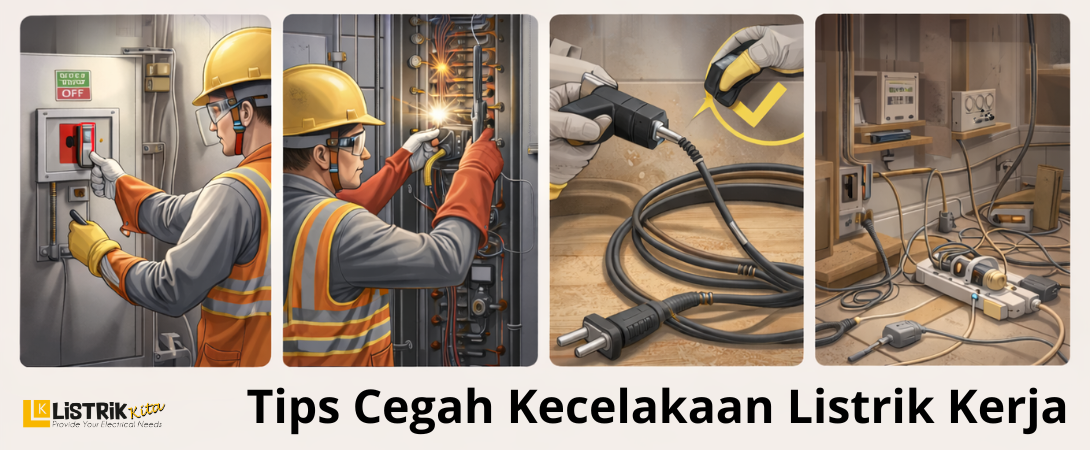
Electrical accidents at work remain one of the leading causes of serious injuries and even deaths across many industries. Most of these incidents can actually be prevented if everyone understands and follows proper safety procedures. This article presents ten practical steps you can apply right away in your workplace, starting from the installation stage all the way to the shared responsibilities between managers and workers.
1. Follow the Applicable Standards for Electrical Installation
The most basic step is to make sure every electrical installation follows official regulations. In Indonesia, this means complying with PUIL. Internationally, standards like IEC apply. An installation that meets the standards does not only extend the life of your equipment. It also lowers the risk of short circuits, fires, and electric shocks. Always hire certified technicians who have proven their skills in electrical work.
2. Watch Out for Old Equipment That Is Still Being Used
Many companies still keep old electrical equipment that is decades old. They do this to save money. But old devices usually have brittle cable insulation, lack proper grounding, and no longer meet modern safety standards. The risks are high. You could face current leakage or even sparks that can start a fire. Conduct regular audits and prioritize replacing critical equipment step by step.
3. Do Not Underestimate Low Voltage Equipment
Some people wrongly believe that low voltage devices, such as 12V or 24V equipment, are completely safe and cannot shock you. It is true that low voltage rarely causes a fatal electric shock. However, a sudden jolt can still happen. This jolt can trigger a startle reflex. That reflex is often more dangerous because it can cause a worker to fall from a height, trip, or grab something hazardous nearby. Always apply caution for all types of electrical devices, no matter the voltage.
4. Choose Equipment That Matches Your Work Environment
Every work environment has different challenges. Wet areas, dusty places, corrosive vapor zones, or locations with chemical splashes all need different equipment specifications. Make sure you choose devices with the right IP rating, which stands for Ingress Protection. For example, use water resistant equipment with at least IP65 in a car wash or a wet food processing plant. Equipment that does not match its environment will break down quickly and put the user at risk.
5. Workers Must Confirm That Electrical Equipment Is Safe Before Use
Before plugging a cable into an outlet, workers should get into the habit of doing a quick visual check. Look for frayed cables, cracked plugs, loose connections, or a burning smell. If available, use a simple testing tool like a test pen or a portable multimeter. This habit takes only a few seconds but can save a life. Never ignore a feeling that a piece of equipment seems unsafe.
6. Avoid Using Electrical Equipment in Hard to Reach Places
Working with electrical devices in tight spaces, dark attics, cluttered areas, or places that are hard to escape from increases the risk of a fatal accident. If a short circuit or fire occurs, a worker will struggle to get out quickly. In addition, confined spaces limit your movement. It becomes easier to accidentally come into contact with a live electrical part. Whenever possible, move the task to a more open and accessible area. Alternatively, use battery powered cordless equipment.
7. Managers Must Develop Clear Systems and Procedures
A company cannot rely only on individual awareness. Managers are responsible for creating a comprehensive standard operating procedure or SOP. This system should include lockout/tagout rules, also known as LOTO, regular inspection schedules, and a clear mechanism for reporting damaged equipment. The system must be well documented and easy for all employees to access. You can post it on bulletin boards, the company intranet, or keep a manual in every work area.
8. Safety Rules Must Be Written Clearly and in a Complete Format
Safety rules should never be just verbal instructions or general reminders. Every rule must be written explicitly in a complete format. This includes prohibitions, obligations, emergency procedures, and consequences for violations. Use language that is easy to understand. Add illustrations or flow diagrams. Post a summary of the rules in strategic locations such as near electrical panels, control rooms, and production area entrances.
9. Provide Regular Training Related to OHS Programs
Safety training for electrical work is not enough if you only do it once during new employee orientation. Schedule refresher training every six to twelve months with updated materials. Include emergency drills, real accident case studies, and hands on practice with personal protective equipment and electrical safety devices. Well trained workers will take the right actions much faster when facing a dangerous situation.
10. Everyone Is Responsible for Providing Safe Equipment
Safety is a shared responsibility. Managers provide the budget and supporting policies. Supervisors ensure compliance in their respective work areas. Workers actively report any sign of damage. Each party must make sure that the equipment being used is actually suitable for the specific job, is in good condition, and can be operated safely. Do not blame each other when an accident happens. It is much better to prevent it together from the very beginning.
After applying the ten steps above, one thing you should not miss is using the right personal protective equipment or PPE. Working with electrical equipment requires extra protection such as safety shoes, gloves, and a protective helmet. Safety Jogger provides various high quality PPE products designed specifically to reduce the risk of electric shock in the workplace. You can get authentic Safety Jogger products only at Listrik Kita, a trusted partner that understands the electrical safety needs of industries. Visit Listrik Kita now and complete your team's protection.
