


When choosing lighting, many people only pay attention to brightness without understanding the quality of the light itself. In fact, there are two important terms in lighting that greatly affect comfort and color appearance: CRI and CCT. Both have different functions, but they are equally important in determining lighting quality.
Understanding the difference between CRI and CCT can help you choose the right lighting for homes, offices, stores, and industrial spaces.
What Are CRI and CCT?
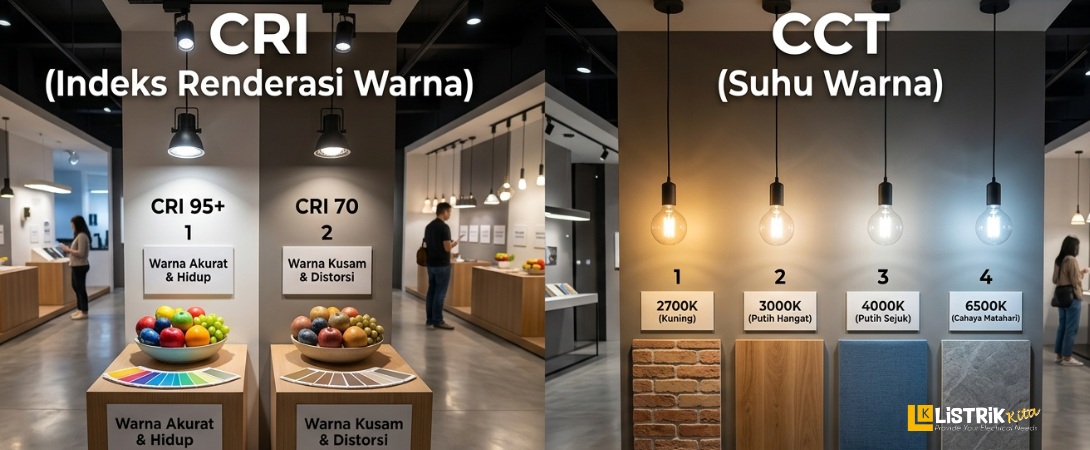
CRI, or Color Rendering Index, measures how accurately a light source displays the true colors of objects compared to natural light. The higher the CRI value, the more natural colors will appear under the lighting.
CCT, or Correlated Color Temperature, describes the color appearance of the light itself. It is measured in Kelvin (K). CCT does not determine brightness, but instead shows whether the light appears warm, neutral, or cool.
In simple terms, CRI is related to color accuracy, while CCT is related to the tone of the light.
CRI vs CCT: What Is the Real Difference?
The main difference between CRI and CCT lies in what they measure. CRI evaluates how accurately colors are displayed under a light source. High CRI lighting is ideal for clothing stores, photography studios, and workspaces that require accurate color visibility.
Meanwhile, CCT affects the atmosphere created by the lighting. Different light tones can create different moods and levels of comfort.
Many people assume that bright white lighting always means better quality. However, lighting quality is not only about color temperature. It also depends on CRI and the purpose of the space.
Understanding CCT Values in Lighting
Warm White (2700K–3000K)
Warm white lighting creates a soft yellowish glow that feels warm and relaxing. It is commonly used in bedrooms, living rooms, restaurants, and lounge areas because it creates a comfortable atmosphere.
Neutral White (3500K–4000K)
Neutral white provides balanced lighting that is neither too yellow nor too bright white. This type is suitable for offices, kitchens, workspaces, and commercial areas because it offers good visual comfort.
Cool White (5000K–6500K)
Cool white produces bright white light that supports focus and visibility. It is often used in warehouses, industrial areas, hospitals, and places that require high visibility.
Why Is CCT Important?
CCT has a strong impact on eye comfort and room atmosphere. Choosing the wrong light color can cause eye strain and make a space feel uncomfortable.
For example, cool white lighting in a bedroom may feel too harsh for relaxation. On the other hand, warm white lighting in a workspace may reduce concentration.
Understanding CCT helps you choose lighting that matches the activity and purpose of each room.
Does a Higher CCT Mean Better Lighting Quality?
Not always. Many people believe that a higher Kelvin rating means better lighting quality. In reality, each CCT range serves a different purpose.
Warm white lighting is ideal for comfort and relaxation, while cool white is better for focus and visibility. The best choice depends on the function of the space.
Lighting quality is also influenced by CRI. A lamp with high CCT but low CRI may still make object colors appear unnatural.
CRI and CCT are two important factors to consider before choosing lighting. CRI affects how accurately colors appear, while CCT determines the mood and tone of the light.
By understanding both, you can choose lighting that is more comfortable, efficient, and suitable for your needs. If you are looking for high quality lighting products for homes, offices, or industrial spaces, explore trusted lighting solutions at Listrik Kita.
