


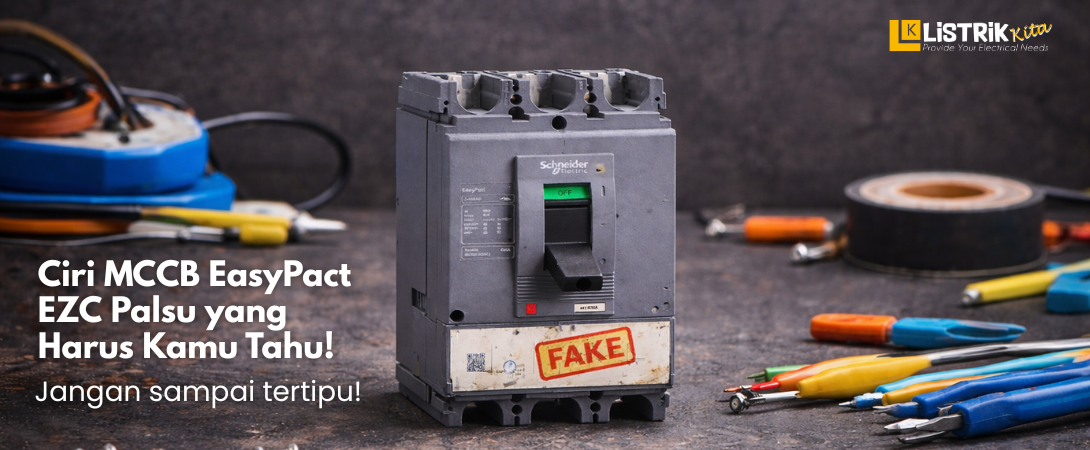
The Schneider Electric EasyPact EZC MCCB has become a go-to choice for circuit protection in commercial buildings, industrial facilities, and residential projects. Its reliability and reputation, however, have made it a frequent target for counterfeiters. Fake versions look similar on the surface but fall dangerously short when it comes to performance and safety. Here is what you need to check before buying.
Validating the QR Code and Serial Number
How to Scan the QR Code on a Genuine Product
Every authentic EasyPact EZC unit comes with a QR code that links directly to Schneider Electric's official verification system. When scanned through the official app or website, it returns product details including the model type, technical specs, and authenticity status. The whole process takes just a few seconds.
What a Fake QR Code Looks Like
On counterfeit units, the QR code either fails to scan entirely or redirects to an unrelated page. In some cases, the serial number shown has already been registered to a different unit elsewhere, which is a clear sign of duplication. This is one of the easiest indicators to check on the spot.
The Format of a Genuine Schneider Serial Number
Authentic serial numbers follow a consistent format, printed in Schneider's standard font, always placed in the same position across all units. If the number looks faded, misaligned, or formatted differently from other units you have seen, treat that as a red flag.
Print Quality as a Key Indicator
Text and Label Sharpness: Real vs Fake
On a genuine MCCB, every label, number, and technical symbol is printed with precision. Text is sharp and readable even up close. On fake units, printing tends to be blurry or uneven, and ink may already be flaking off even on what appears to be a brand new product.
Ink Consistency on Counterfeit Units
The labels on genuine products have consistent, uniform coloring that does not fade easily. Counterfeits often show uneven color between units, some appearing too bright or too dark, and the print tends to smear when rubbed with a damp cloth.
Incorrect Technical Specifications on the Label
Pay close attention to the ampere rating, operating voltage, and IEC standard codes printed on the unit. Fake products frequently display inaccurate specifications or use fonts that do not match Schneider Electric's standard label format.
Checking the Schneider Electric Logo
What the Genuine Logo Looks Like
The Schneider Electric logo on a real unit is either embossed or printed with exact proportions, a consistent signature green color, and a clean finish throughout. Every line is sharp and symmetrical with no blurring or rough edges anywhere on the logo.
Common Logo Mistakes on Fake Products
Counterfeit units often display a logo with slightly off proportions, a washed-out or overly saturated green, or one that is simply a sticker that peels off easily. Also check whether the logo is positioned exactly where it should be for that specific product type.
Reading the Production Code
What the Official Production Code Means
Schneider Electric production codes carry structured information including the year of manufacture, production facility, and batch number. On genuine units, this code is clearly printed and consistently placed in the same location on every single unit.
Production Codes on Fake Units
On counterfeits, the production code often does not follow Schneider's official format. It may appear in different positions across units, or it may be missing altogether. Attempting to verify such codes through official channels will return no results.
How to Verify Through an Authorized Distributor
The safest way to confirm a production code is to contact an authorized Schneider Electric distributor or use the official online verification portal. Always do this before placing large orders, and do not hesitate to ask for documentation.
Material Differences Between Real and Fake MCCB Units
Casing Material: Engineering Thermoplastic vs Recycled Plastic
Genuine EasyPact EZC units use a specially formulated thermoplastic casing that resists heat, resists cracking, and has a smooth, uniform surface texture. Fake units typically use lower-grade recycled plastic, which feels lighter, has an uneven surface, and deforms more easily under heat.
Internal Components: Bimetal, Contacts, and Busbar
This is where counterfeit products are most dangerous. Key internal components like the bimetal strip, electrical contacts, and busbar are often made from substandard materials. A thin bimetal strip will not respond correctly during an overcurrent event, and low-grade contacts significantly increase the risk of arcing.
Weight and Physical Finish as Authenticity Clues
Pick it up and feel the weight. A genuine MCCB feels solid and substantial because all internal components are properly installed. Fake units feel noticeably lighter and can sound hollow when tapped. Screws and bolts on counterfeit products also tend to strip much more easily.
Now that you know what to look for, the most important step is making sure you buy from a trusted source. Listrik Kita is an authorized distributor of Schneider Electric products in Indonesia, guaranteeing that every unit sold is 100% genuine. No risk of counterfeits, no compromise on quality. All products come with official warranty and can be verified through Schneider Electric's system. Visit Listrik Kita today and make sure your electrical installation is protected by components that truly meet the standard.
