


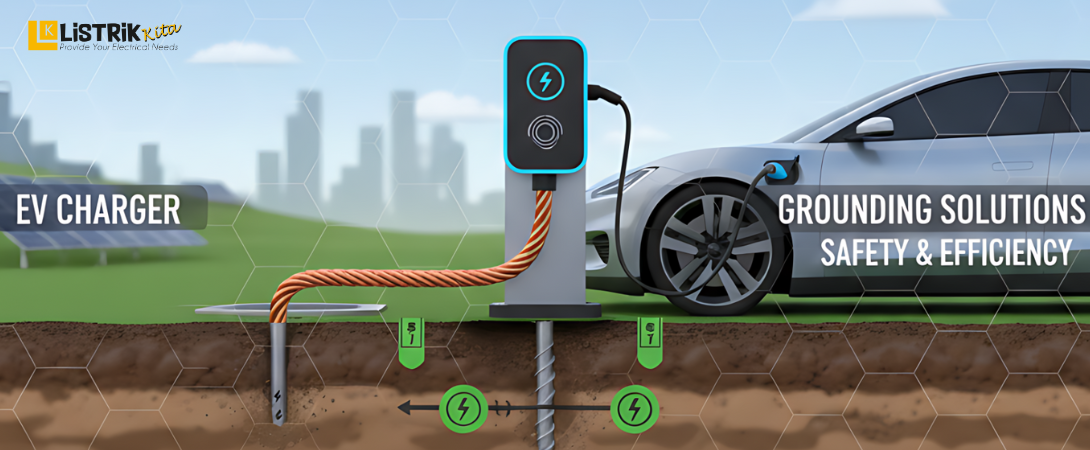
Electric vehicles come with modern technology that offers high efficiency and eco-friendly performance. However, behind all this sophistication, there are basic safety principles that must always be maintained. One of them is grounding. Although often considered a minor technical detail, grounding is actually the backbone of electrical safety during the charging process. Without proper grounding, the risks of electric shock, component damage, and even fire can increase significantly.
What is Grounding in an Electric Vehicle Electrical System?
Grounding, also known as earthing, is a method of connecting an electrical device to the earth through a dedicated pathway. Its main purpose is to provide a safe route for unwanted electrical currents.
Think of electricity like water that always looks for the lowest point to flow to. In this case, the earth acts as a “lake” or “sea” where the water finally settles. When there is a current leak, insulation failure, or a sudden surge, the current will flow through the grounding cable, which has very low resistance, instead of passing through a human body or damaging the device.
On an EV charger, the grounding cable (commonly green-yellow) connects from the household outlet, to the charger body, and then to the vehicle chassis. From there, it integrates with the high-voltage system of the car, keeping the entire charging circuit properly protected.
10 Vital Roles of Grounding for EV Chargers
1. Protecting Users from Electric Shock
The primary purpose of grounding is to protect people. If there is any current leakage on the charger body or cables, the current will be safely directed to the ground. Safety devices such as RCD (Residual Current Device) or ELCB (Earth Leakage Circuit Breaker) detect the imbalance and immediately cut off the electricity. This prevents dangerous electric shocks.
2. Protecting Against Voltage Surges from Lightning
A lightning strike on the power grid can cause a sudden surge. Without grounding, this energy could damage the charger or the vehicle’s battery. Grounding works as a discharge pathway that directs this excess energy into the earth, keeping your equipment safe.
3. Ensuring Stable Charging Performance
Grounding provides a stable voltage reference point for the charging system. Without it, fluctuations or electrical noise may occur, leading to unstable charging, slower performance, or even interrupted charging sessions.
4. Protecting Sensitive Electronic Components
Electric vehicles are packed with advanced components such as the Battery Management System (BMS), inverters, and controllers. These sensitive parts can be damaged by stray currents or static charges. Grounding channels these disturbances to the earth, protecting these expensive components.
5. Reducing the Risk of Fire
Damaged or exposed cables may allow current to flow onto the metal body of the charger. If not redirected, this can generate high heat and sparks, potentially causing a fire. Grounding safely directs the current into the ground, minimizing fire hazards.
6. Improving Charging Efficiency
A stable and disturbance-free system allows power to flow more effectively into the battery. This reduces energy loss and makes charging more efficient and reliable.
7. Increasing Charger Reliability
Both portable and wallbox chargers contain complex internal circuits. Without grounding protection, these circuits are more vulnerable to damage from sudden surges. Proper grounding extends the lifespan of the charger and makes it safer for long-term use.
8. Minimizing Electromagnetic Interference (EMI)
High-power components in EVs can generate electromagnetic interference that disrupts GPS, radio, or communication systems. Grounding helps neutralize these unwanted signals by safely discharging them into the earth.
9. Complying with International Safety Standards
Grounding is not just a recommendation but a mandatory requirement under safety standards such as IEC, UL, and SNI. Without proper grounding, an EV charger installation is considered unsafe and may void warranties or insurance claims.
10. Extending the Lifespan of Electric Vehicles
With proper grounding, key components like the battery and electrical system are well protected from potential damage. This not only extends the overall life of the vehicle but also preserves its performance and resale value.
Grounding in EV chargers is not an optional feature. It is the first line of defense that ensures every charging session is safe, stable, and efficient.
That is why you should always make sure your EV charger installation includes proper grounding, done by a qualified technician and in compliance with official standards. This is a small investment with major benefits. Grounding does not only protect you and your family but also safeguards your vehicle and property from electrical hazards.
If you are looking for EV chargers for your electric vehicle, visit Listrik Kita and explore a wide range of models and options to suit your needs.
