


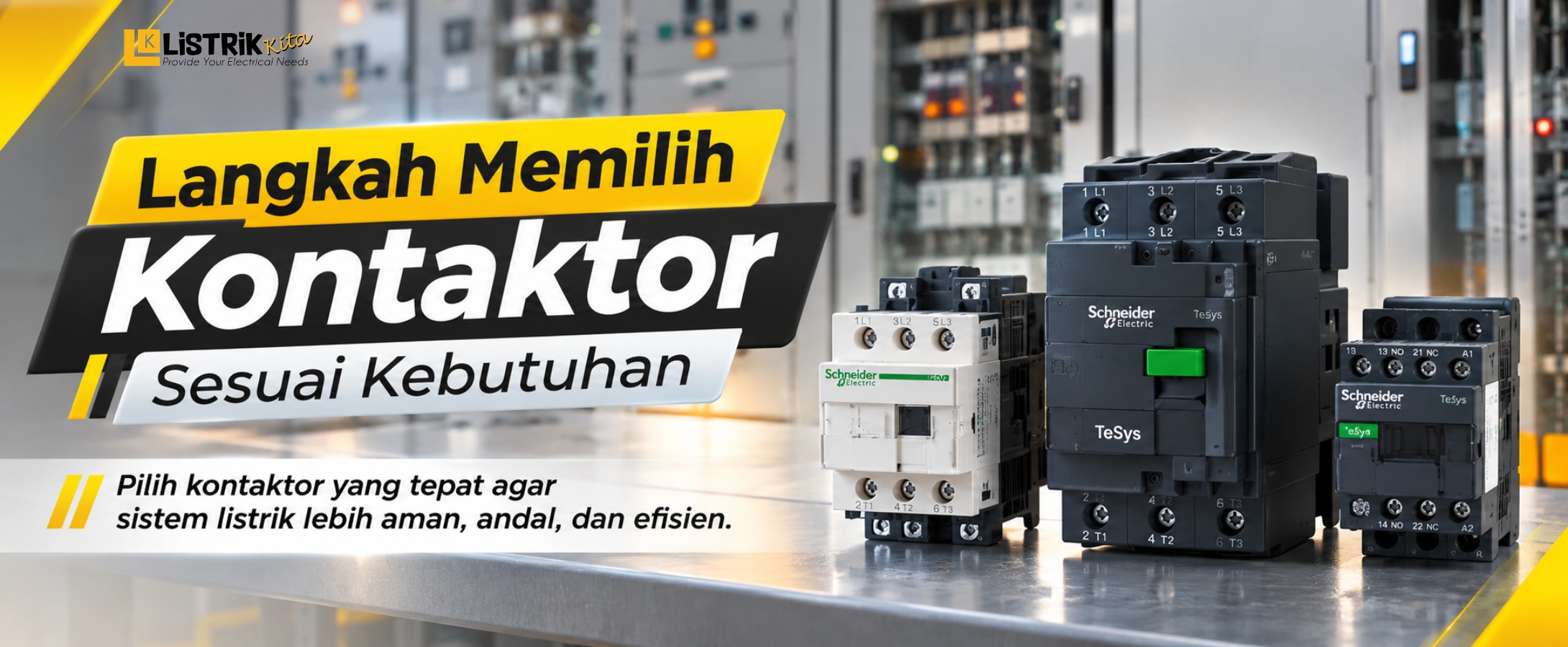
A contactor is an important component in electrical systems, especially for controlling loads such as electric motors, heaters, lighting, and industrial equipment. Choosing a contactor should not be based only on its physical size or current rating. Several factors need to be considered to make sure the contactor works properly for the intended application.
As an official Schneider Electric distributor, Listrik Kita provides original and warranty-backed products for various electrical needs, including contactors. Before choosing a product, it is important to understand the basic specifications so the contactor matches both the load and the control system.
Steps to Choose the Right Contactor
1. Check the Full Load Ampere (FLA)
The first thing to check is the Full Load Ampere (FLA). FLA refers to the current required by a load when it operates under normal full-load conditions. For electric motor applications, this value can usually be found on the motor nameplate or in its technical documentation.
FLA is an important reference when determining the contactor capacity. The contactor must be able to carry and control the current required by the load.
However, choosing a contactor based only on its current rating is not always enough. The type of load and its operating conditions also affect the selection. This is why FLA should be considered together with the contactor's utilization category.
2. Determine the Utilization Category
After checking the load current, the next step is to determine the utilization category. This category describes the type of load and operating conditions that the contactor is designed to handle.
One commonly used category is AC-1, which is generally associated with non-inductive loads or loads with relatively low inductive characteristics. Meanwhile, AC-3 is commonly used for squirrel cage induction motors, particularly for normal motor starting and stopping operations.
Because load characteristics are different, a contactor's current rating in one utilization category may not be the same as its rating in another category. Therefore, do not look only at the current value in the product catalog. Make sure the contactor rating matches the utilization category and the type of load being controlled.
3. Match the Coil Voltage
The coil is the part of the contactor that activates the contact mechanism when it receives the control voltage. Therefore, the coil voltage must match the voltage available in the control circuit.
Contactors are available with different coil voltage options for both AC and DC control systems. Before purchasing a contactor, check the control voltage used in the electrical panel or circuit.
For example, if a control circuit uses a specific voltage, select a contactor with a matching coil voltage. Using an unsuitable coil voltage can prevent the contactor from operating properly and may affect system reliability.
4. Check the Poles and Auxiliary Contacts
In addition to current capacity and coil voltage, the number of poles should also match the requirements of the circuit. For certain applications, especially three-phase motor control, a 3-pole contactor is commonly used to control the three phases.
You should also check the auxiliary contacts. Auxiliary contacts are used as part of the control circuit for functions such as status indication, interlocking, and other control operations.
Auxiliary contacts are commonly available in NO (Normally Open) and NC (Normally Closed) configurations. Choose the right configuration and number of auxiliary contacts based on the requirements of your control circuit.
Why Is Proper Contactor Selection Important?
Choosing the right contactor helps ensure that the electrical system operates according to the application's requirements. A contactor that does not match the load characteristics, coil voltage, or circuit configuration may not perform as expected.
Before purchasing a contactor, check the main parameters carefully. These include FLA, utilization category, coil voltage, number of poles, and auxiliary contacts. For specific applications, always consider the manufacturer's technical specifications to make sure the selected product is suitable for the system.
Choose a Contactor for Your Application
Choosing the right contactor becomes easier when you understand the key parameters. Start by checking the Full Load Ampere (FLA), then determine the utilization category based on the type of load. After that, make sure the coil voltage matches the control circuit and check the required number of poles and auxiliary contacts.
If you are looking for a contactor for residential, commercial, or industrial applications, you can find Schneider Electric contactors at Listrik Kita. As an official Schneider Electric distributor, Listrik Kita provides original and warranty-backed products for various electrical system needs.
