


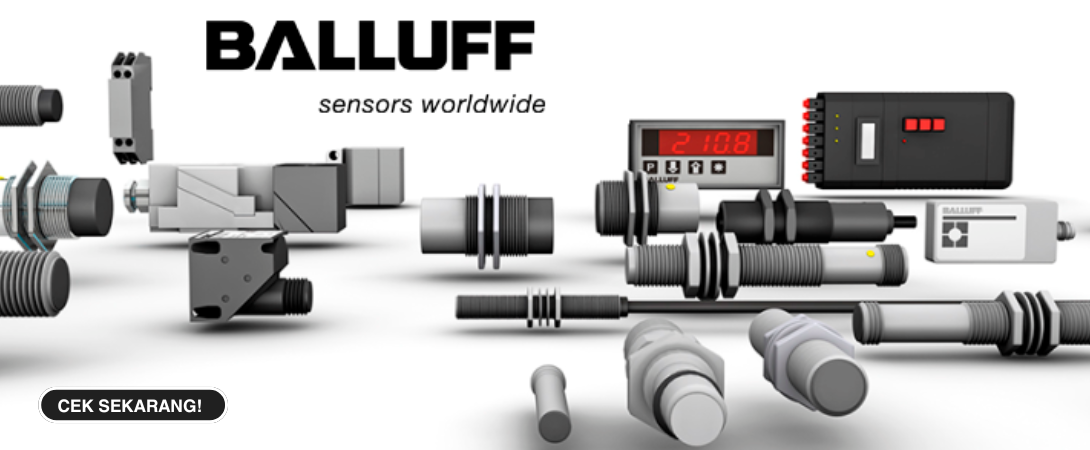
Electronic sensors can detect various things, ranging from light, distance, to acceleration. Sensors are a way for a product to sense anything in the real world, and there are almost countless types of sensors available. Sensors measure real-world quantities, which are then converted into electrical signals.
Various Types of Sensors and Their Applications
Depending on their mechanisms and applications, sensors can be divided into several types. Various industrial sensors serve different needs and markets. Some focus on efficient operations, while others must keep safety risks under control.
Temperature & Humidity Sensors
Machines and electronics must remain cool during operation. Therefore, industrial temperature sensors are one of the best indicators of a system’s health. Temperature sensors collect data on heat levels and interpret it in a way that other devices can understand. Like in UPS systems, temperature sensors must be reliable in air, water, and even underground.
Their main benefit, of course, is the prevention of overheating (or freezing, in some cases). With accurate temperature readings, your system can:
- Operate efficiently
- Avoid system failures
- Prolong the lifespan of batteries and other components
Similarly, industrial humidity sensors (also known as hygrometers) can measure the moisture in the air, both indoors and outdoors. In industrial settings, these sensors do more than create a comfortable, energy-efficient environment. Humidity sensors also control air quality and reduce the risk of degradation or contamination in:
- Food processing
- Pharmaceuticals
- Clean rooms
The key criteria in choosing a humidity sensor model are response time, sensitivity, and repeatability.
Some versatile sensors help measure both temperature and humidity. A thermo-hygrometer is a valuable purchase when both conditions pose a threat, such as in:
- Data centers
- Industrial processes
- HVAC systems
- Greenhouses
Motion Sensors
Industrial motion sensors convert movement within their “field of view” into electrical signals, which can then serve as input. In addition to building security, motion sensors have several key functions that help prevent significant losses. For example, connecting a motion sensor to a circuit breaker can avert disasters in cases of worn-out bearings or when an operator inadvertently inserts a hand into a dangerous area.
The type of sensor solution you install can have significant implications for costs and safety for both the assembly and its users.
Position Sensors
Consistency is key to automation. Imagine a production line or inspection station where nothing is in its proper place. Automated equipment would lack reference points, robotic arms would continuously miss the objects they need to pick up, and potential defects would go undetected.
Industrial-grade position sensors help integrate processes so that machines—and humans—can work more efficiently. If equipment or workpieces need to be in the right place, position sensors are the solution. They determine the presence or absence of a target by monitoring distance, direction, or speed.
Common uses for position sensors include:
- Automotive
- Material handling & logistics
- Robotic manufacturing
- Medical & laboratory applications
Generally, position sensors are differentiated based on their measurement methods—rotary, linear, or angular. The data they provide can be categorized as either static or dynamic. Ensure the sensor you choose provides the right type of measurement for your application. Static position data is for stationary objects and is used when precise positioning is crucial for assembly, inspection, or calibration. Dynamic data involves measuring moving objects, either at intervals or continuously, which is essential for real-time applications such as vehicle navigation and the movement of automated machines.
Pressure & Force Sensors
Pressure sensors and force sensors have very similar functions, even though technically they measure two different quantities. Force measures the push or pull, both in magnitude and direction, while pressure only measures the magnitude of force applied to a surface.
Pressure sensors are one of the most common types in manufacturing, especially in maintenance. These devices use pressure-sensitive components to generate signals that assess whether the flow pressure is higher or lower than normal. If the readings deviate too far from normal levels, the sensor will trigger an alert.
In pipelines for fluids and gases, using pressure sensors can inform operators about the need for maintenance, whether scheduled or unscheduled. This results in more uptime and the ability to fix small issues before they become large and costly.
Force sensors (also known as force transducers or load cells) work similarly, except they detect mechanical pressure. When a force physically presses into the sensor’s strain gauge, it creates an electrical signal that represents a readable value. Industrial-grade force sensors are critical in high-precision products and high-risk systems. In several industries, both pressure and force require constant monitoring to ensure system integrity.
Ultrasonic Sensors
Ultrasonic sensors are electronic devices that emit ultrasonic waves and convert the reflected sound into electrical signals to determine the distance to an object. These sensors are primarily used for distance measurements and can be found in automatic parking systems as well as collision prevention safety systems in cars. Additionally, ultrasonic sensors are used as level sensors in enclosed containers to detect, monitor, and manage the height of liquids, such as in tanks at chemical plants.
OPTICS FOR ULTRASONIC SENSORS BUS BAM01YU

Inductive Sensors
Inductive sensors are electronic devices that can detect ferromagnetic metal targets without physical contact. They can also detect non-ferromagnetic metals such as aluminum, brass, and copper. As solid-state devices with no moving parts, inductive sensors are highly reliable and typically only need replacement if they suffer physical damage. They continue to function even when exposed to contaminants like dust, sawdust, oil, or grease, since the magnetic field they generate is not affected by non-metal substances. Below is an inductive sensor from Balluff:
INDUCTIVE SENSOR BES003L M8X1 2MM 10-30VDC CABLE 3.00M

In addition to sensors from Balluff, if you have other electrical needs, you can visit listrikkita.com directly.
