


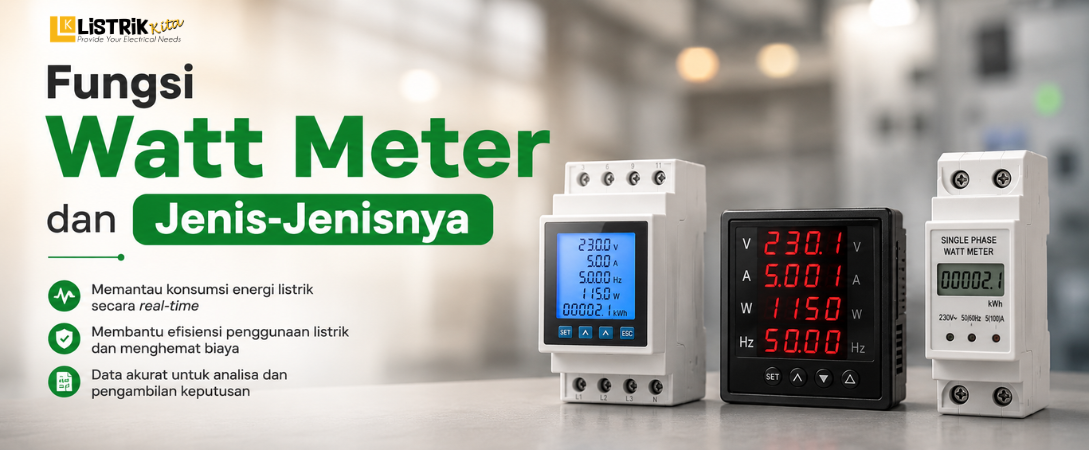
Electricity is part of almost every daily activity, from turning on lights and household appliances to operating machines in industrial environments. But do you know how much power an electrical device actually uses? One simple way to find out is by using a watt meter.
A watt meter is an electrical measuring device used to determine the amount of electrical power consumed by a load. It gives users a clearer picture of how electricity is being used. Watt meters are available in several types, including traditional analog models and practical digital versions that can be connected through a power outlet.
What Is a Watt Meter?
A watt meter is a device used to measure active electrical power, which is commonly expressed in watts (W). Active power represents the amount of electrical energy that is actually used by equipment to perform its intended function.
In practice, a watt meter can help users check whether the power consumption of a device matches its specifications or is higher than expected. This information can be useful when inspecting equipment or managing electricity consumption.
Main Functions of Watt Meters
A watt meter is not only useful for showing the power used by electrical equipment. Depending on its type and features, it can also provide a better understanding of overall electricity consumption.
1. Measuring Active Power in Electrical Equipment
The main function of a watt meter is to measure the active power used by an electrical load. The measurement is generally shown in watts.
For example, a watt meter can be used to check the power consumption of lights, computers, televisions, electric motors, and other equipment. Knowing the actual power consumption allows users to compare it with the power rating listed in the product specifications.
This measurement is also useful when the actual electricity consumption seems different from the expected value. Instead of relying only on estimates, users can make decisions based on actual measurement data.
2. Estimating Electricity Costs
A watt meter can also help estimate electricity costs by showing how much power a device uses and how long it operates.
For example, if a device consumes a certain amount of power for several hours each day, the data can be used to estimate energy consumption in kilowatt-hours or kWh. This value can then be used to estimate electricity costs based on the applicable electricity tariff.
This information can help identify which devices require more energy. Users can then adjust their electricity usage to improve overall efficiency.
3. Monitoring Electrical Parameters
Some digital watt meters provide more than just power measurements. Depending on the model, they may also display electrical parameters such as voltage, current, energy consumption, and power factor.
Monitoring these parameters provides a more complete picture of electrical usage. For certain applications, the information can also support equipment inspections and help users track changes in electricity consumption over time.
Types of Watt Meters
Watt meters come in different designs and measurement methods. Two common types are analog watt meters and digital watt meters designed for use with power outlets.
1. Analog Watt Meter
An analog watt meter uses a pointer and measurement scale to display the result. Users need to read the position of the pointer against the scale to determine the measured value.
This type has a relatively simple design and can be found in various electrical measurement applications. However, reading the result requires more attention because the user needs to accurately identify the pointer's position.
2. Digital Plug-In Watt Meter
A digital plug-in watt meter provides a more convenient way to measure electricity consumption. It can be installed between the power outlet and the electrical device being tested.
Once the equipment is connected, the digital display shows the measurement based on the parameters supported by the device. This type is useful for monitoring individual appliances and is suitable for homes, offices, or basic electrical inspections.
Difference Between Analog and Digital Watt Meters
The main difference between analog and digital watt meters is how the measurement is displayed. Analog watt meters use a pointer and scale, while digital watt meters show the result directly as numbers on a screen.
Digital watt meters are generally easier to read because the measurement is displayed directly. Some models can also provide additional information, such as voltage, current, and energy consumption.
Meanwhile, analog watt meters can still be a suitable option for applications that require a simple and conventional measurement method.
Why Is a Watt Meter Important for Electricity Monitoring?
Using a watt meter helps users understand how electricity is being consumed by different equipment. Measurement data can be used to identify devices with higher power consumption, check electricity usage, and support better energy management.
By knowing actual power consumption, users can make decisions based on real data instead of assumptions. This becomes even more useful when a building or workspace has many electrical devices operating at the same time.
How to Choose the Right Watt Meter
Before choosing a watt meter, consider the type of equipment you want to measure and which electrical parameters you need. If you only need basic measurements, a digital plug-in watt meter can be a practical choice.
For applications that require more detailed monitoring, consider a watt meter that can measure several electrical parameters at once. It is also important to make sure that the measurement range is suitable for the electrical installation or equipment being tested.
Choosing the right measuring device can make electricity monitoring easier and provide useful data for improving energy efficiency. If you are looking for a watthour meter for electricity measurement and energy monitoring, you can find various options at Listrik Kita. Choose the product that matches your application and get the right measurement solution for residential, commercial, or industrial needs.
